Turistas y viajeros
I dragged myself out of bed this morning at 6:30 and got ready to go on a run through the town with Destiny. We laced up our running shoes, pulled our hair back in ponytails, and came uncomfortably close to a speedy car before we even got started. Compared to running in Virginia Beach where there are wide sidewalks, streetlights, and drivers more or less have respect for pedestrians, running through Valladolid was a bit frightening. The sidewalks are very narrow and extremely uneven, there are stray dogs everywhere, and people drive very differently. After running about a mile, we made it to a paved bike path that was a lot safer to run on than the side of the road. Even though I was a little on-edge, running through the town allowed me to see the buildings and houses up close as well as briefly interact with the local people with a passing “buenos días.”
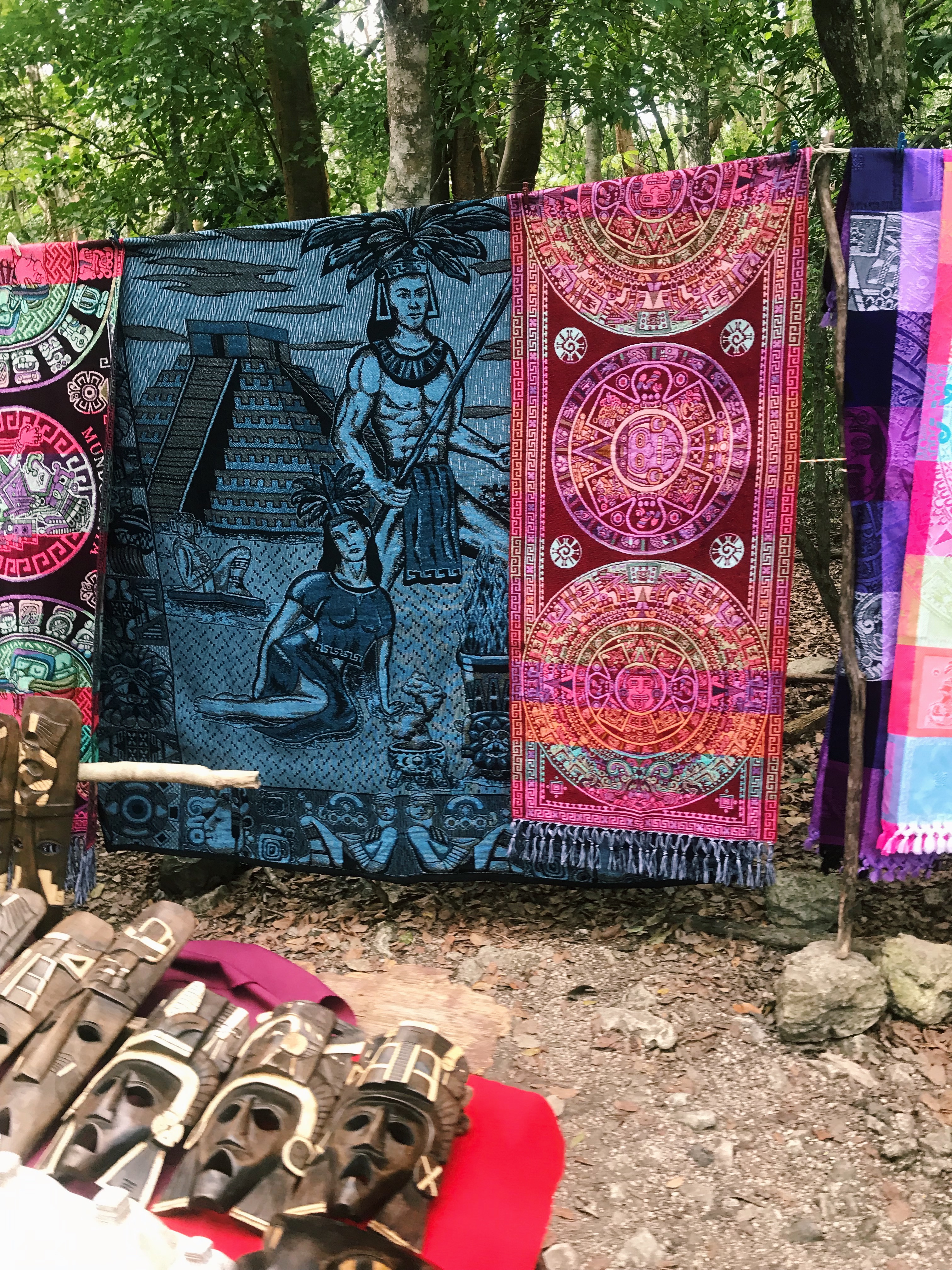
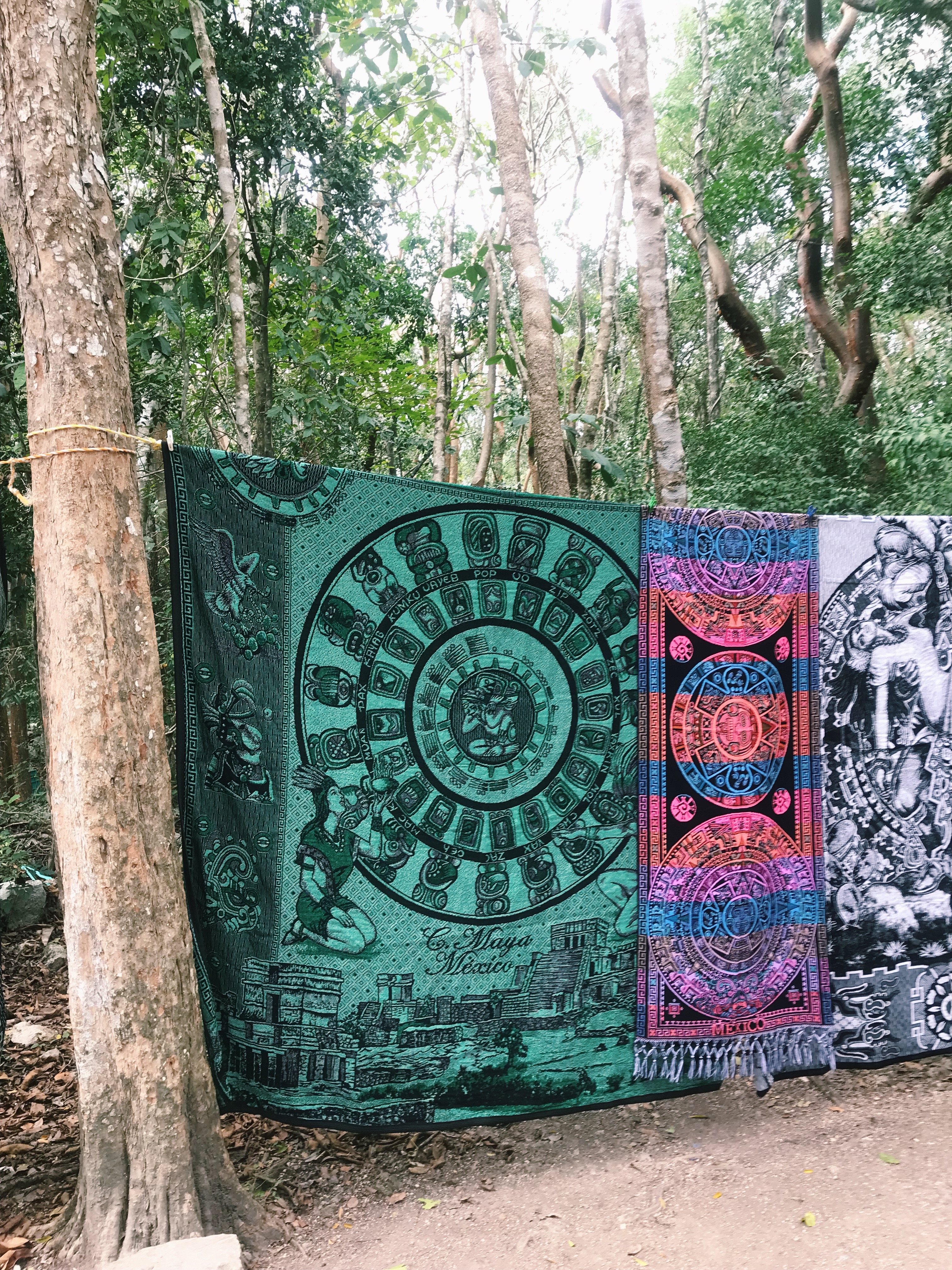
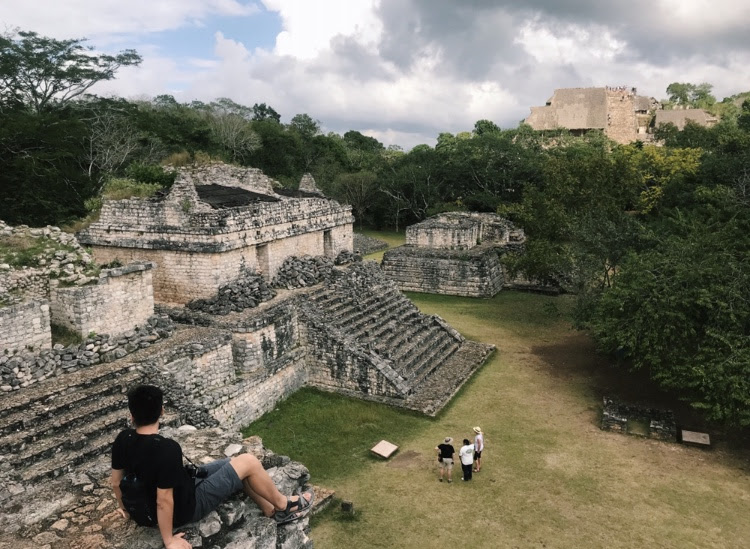
Following breakfast, we sat in the van for about an hour riding to Chichén Itzá, another archaeological site that was active from approximately 600-1200 A.D. Chichén Itzá is the most popular Mayan site among tourists, which was made obvious when we arrived. There were many locals setting up small shops outside of the entrance where they sold hats, blankets, small ceramic carvings and sculptures, necklaces, t-shirts, wall decorations, backpacks, and just about anything a foreigner could spend money on. Not only were the vendors selling merchandise outside of the entrance, but there were tables set up around the entire trail that directed tourists throughout the Mayan ruins. When I wasn’t trying to find an angle to take a picture of a pyramid without 20 plus people in the background, chances are I was part of a giant pack walking in the middle of the trail with my head down in an effort to avoid making eye contact with the vendors. Even though the place was packed full of people and vendors, the pyramids, temples, and other buildings were incredible to see.
-
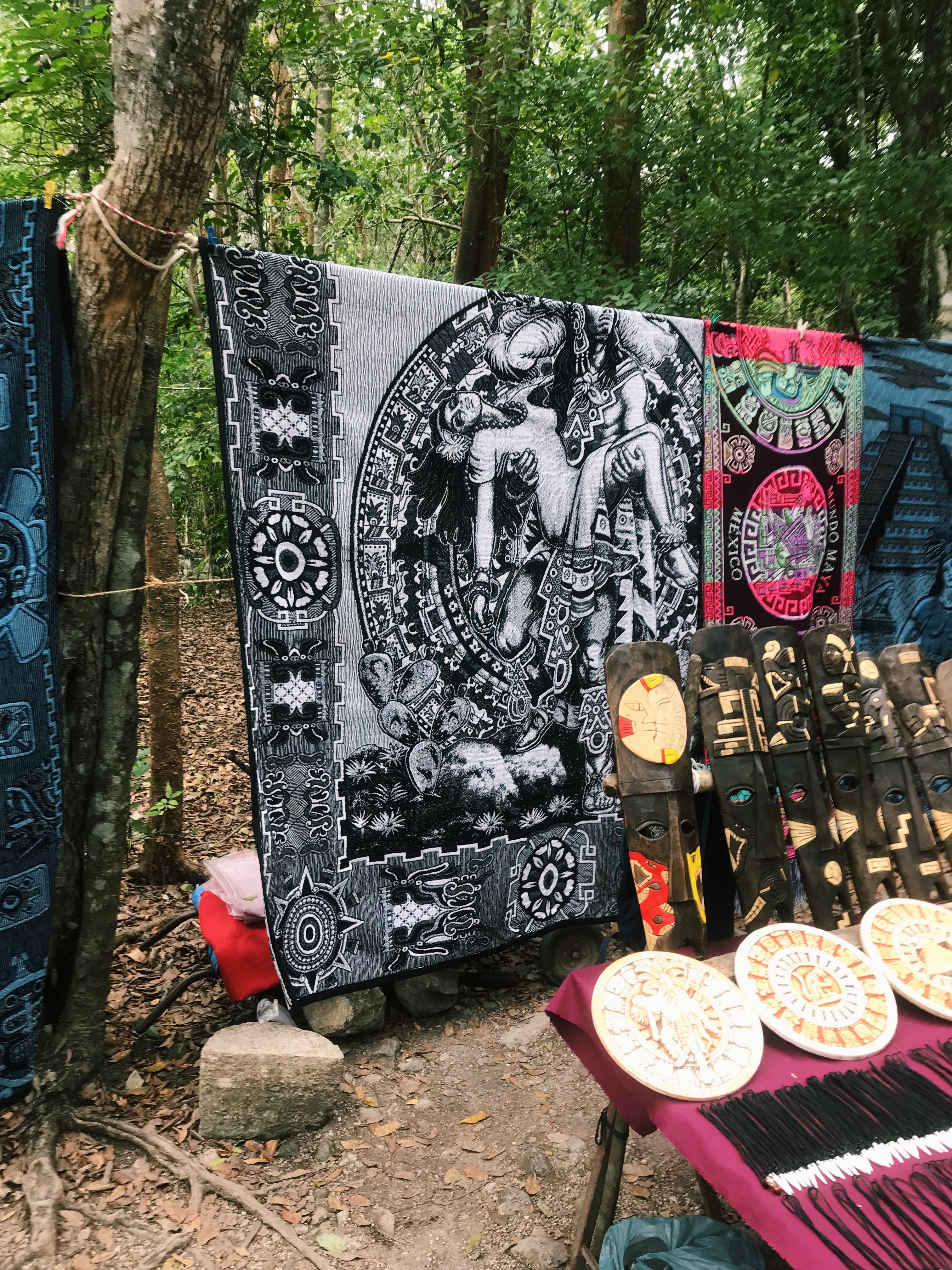
Blankets sold by the vendors -
-
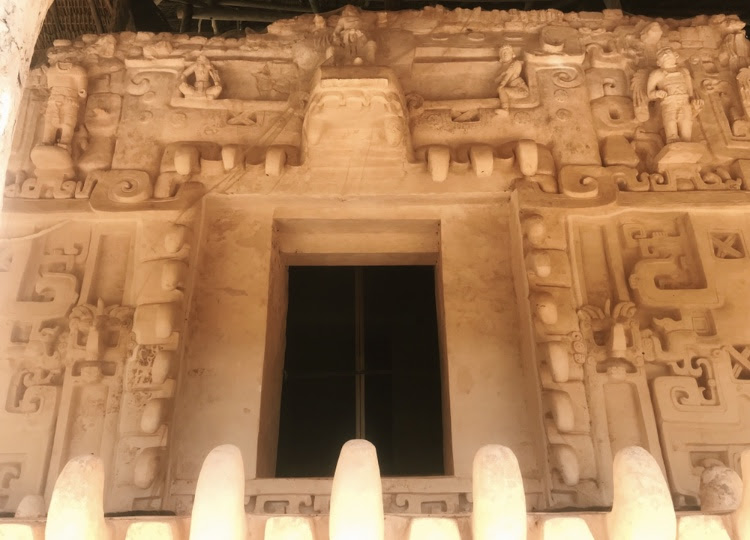
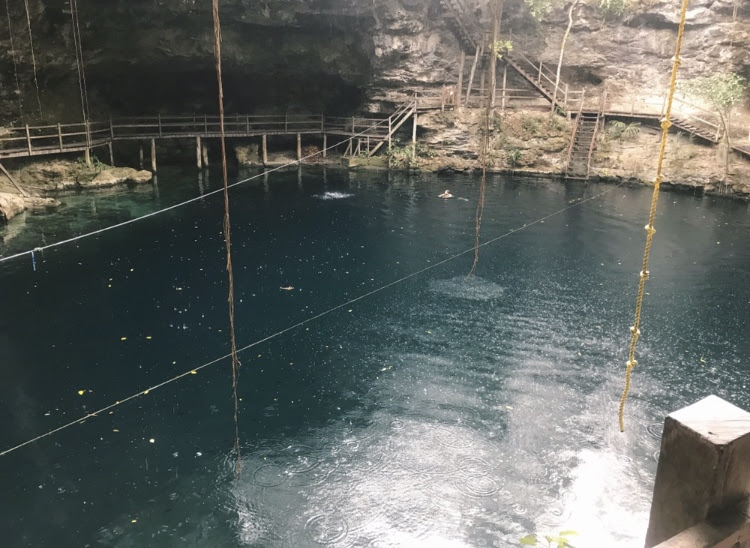
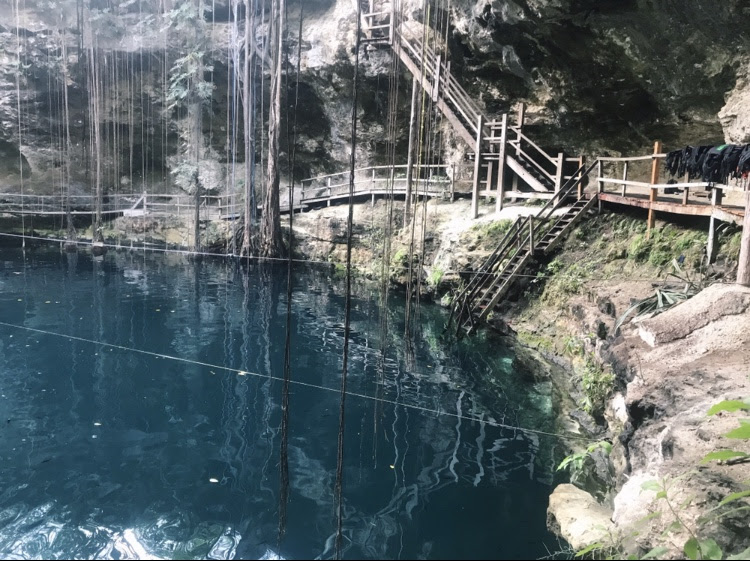
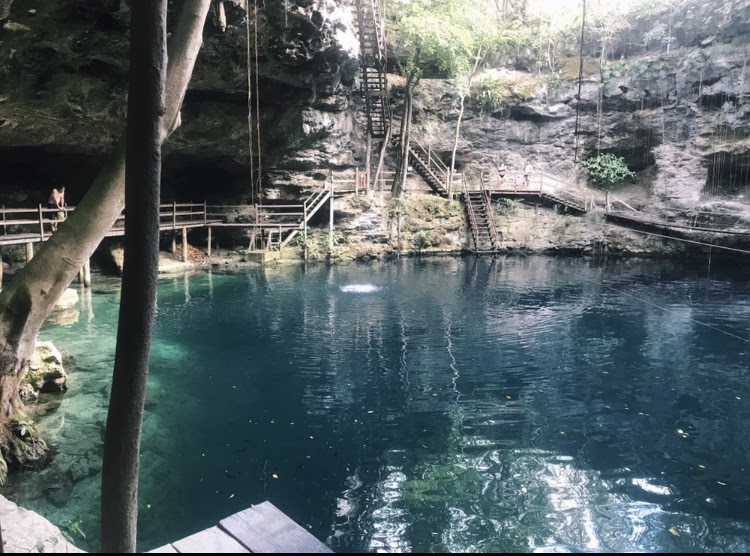
The first structure we saw was Templo de Kukulcán, a temple to the Yucatec Mayan feathered serpent deity. The temple has four sides with 91 steps on each, resulting in 365 stairs total. There are also sculptures of serpents on the northern side of the pyramid. After admiring this structure, we walked to Templo de los Guerreros (Temple of the Warriors). This temple is comprised of hundreds of rounded and square shaped columns that are carved with now faded images of warriors. We also looked at el Observatorio, which is also called el Caracol (the snail) due to a spiralling staircase located inside the tower. The Mayan people used this observatory to view astronomical events like eclipses, equinoxes, and solstices. The last ruin we saw was of the stadium for el juego de pelota. In this game (known to the Mayans as poc ‘ta pok), the players must use their hips or forearms to hit a rubber ball into their corresponding stone ring found high up on a tall stone wall (like the scene from the movie The Road to El Dorado). This was a ritualistic game, and the winner won the privilege of being sacrificed. There is a carving on the sides of the wall of the stadium area that depicts and describes the beheading of a person. In addition to the ruins, we visited two more cenotes, Cenote X’toloc and Cenote Sagrado, which were the sites of many religious sacrifices to the god of rain, Chaac. These were both open cenotes, differing from the closed Cenote X’Canché, and their water was not nearly as clear.
-
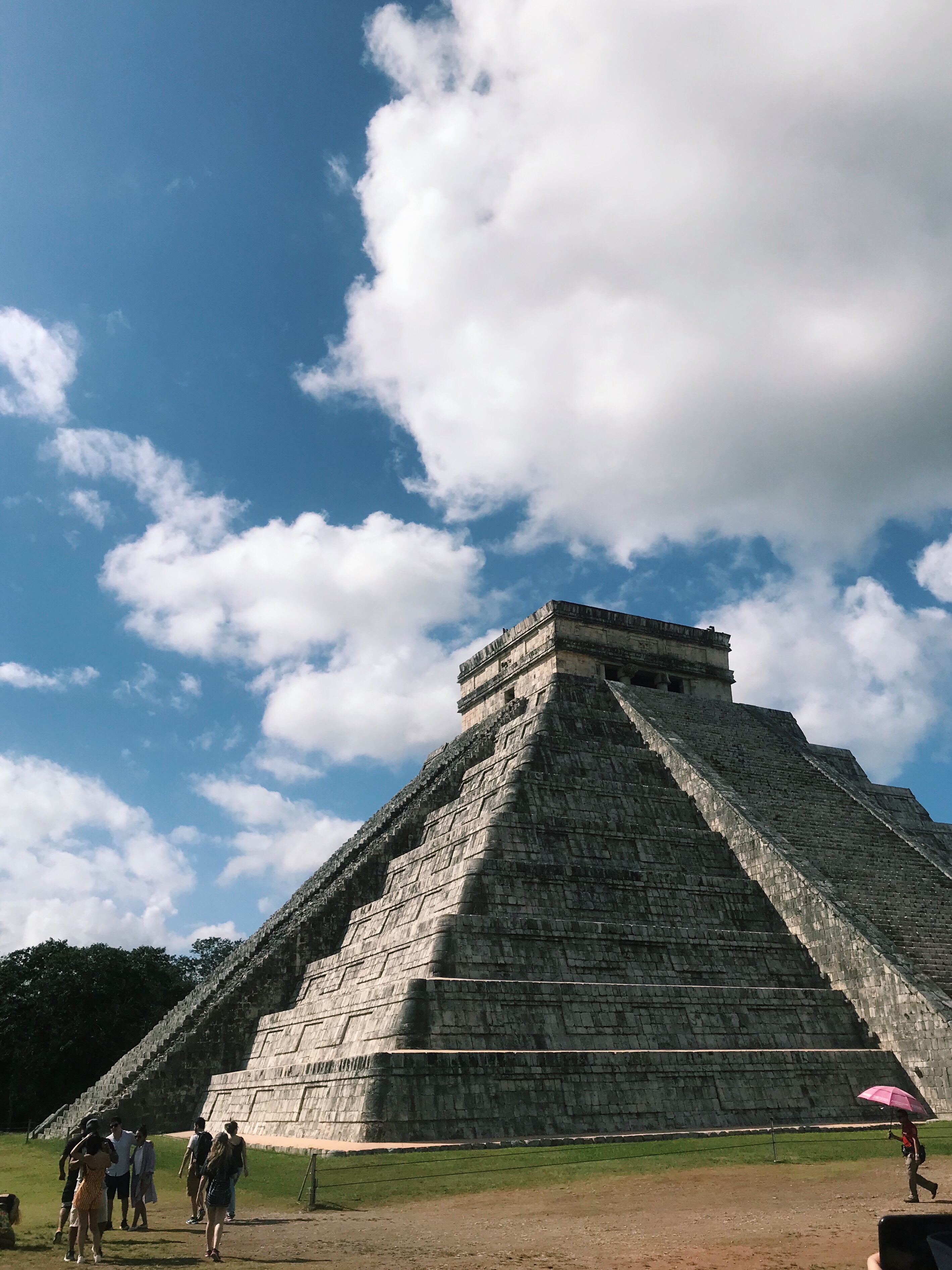
El Templo de Kukulcán -
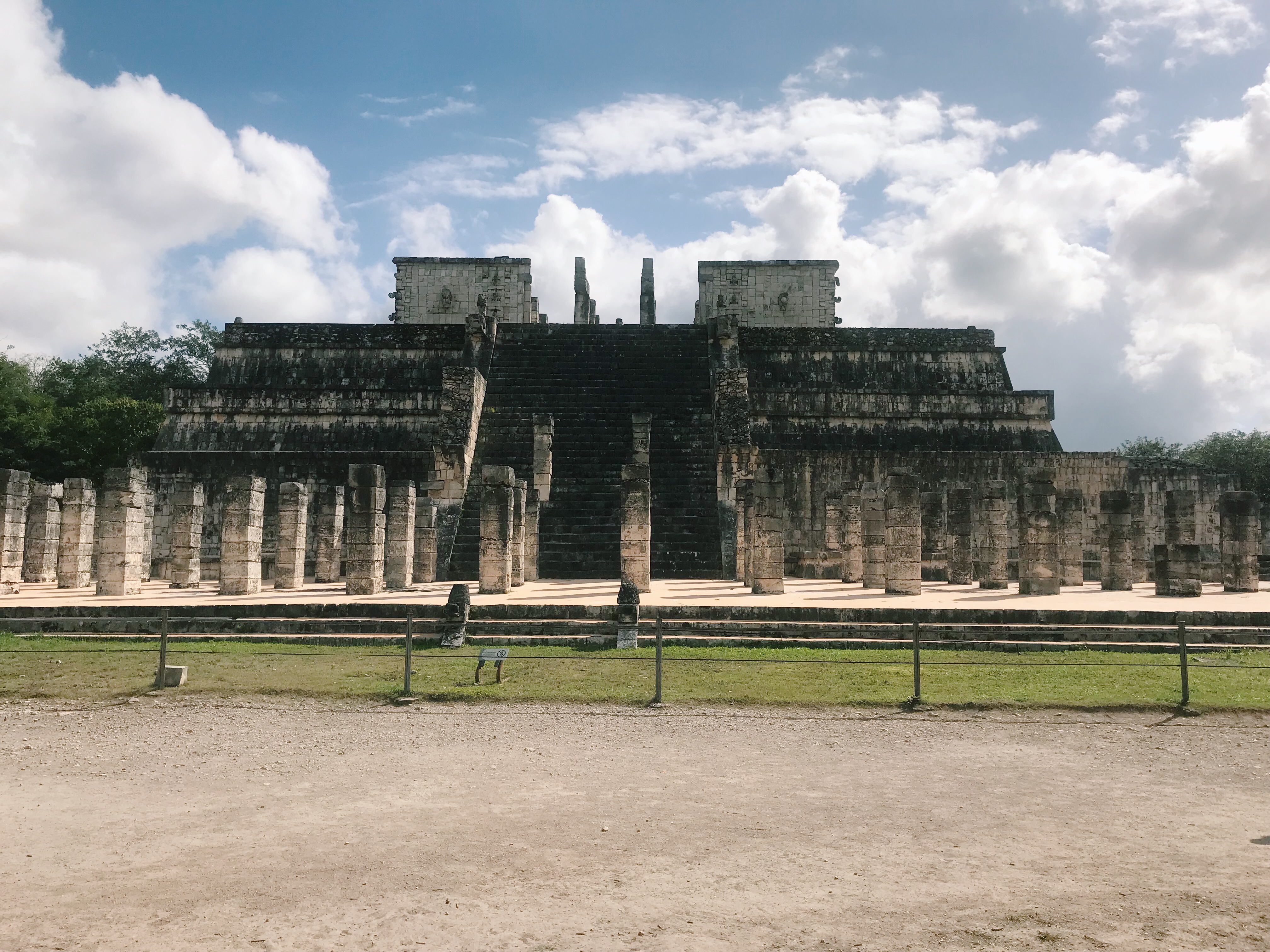
El Templo de los Guerreros -
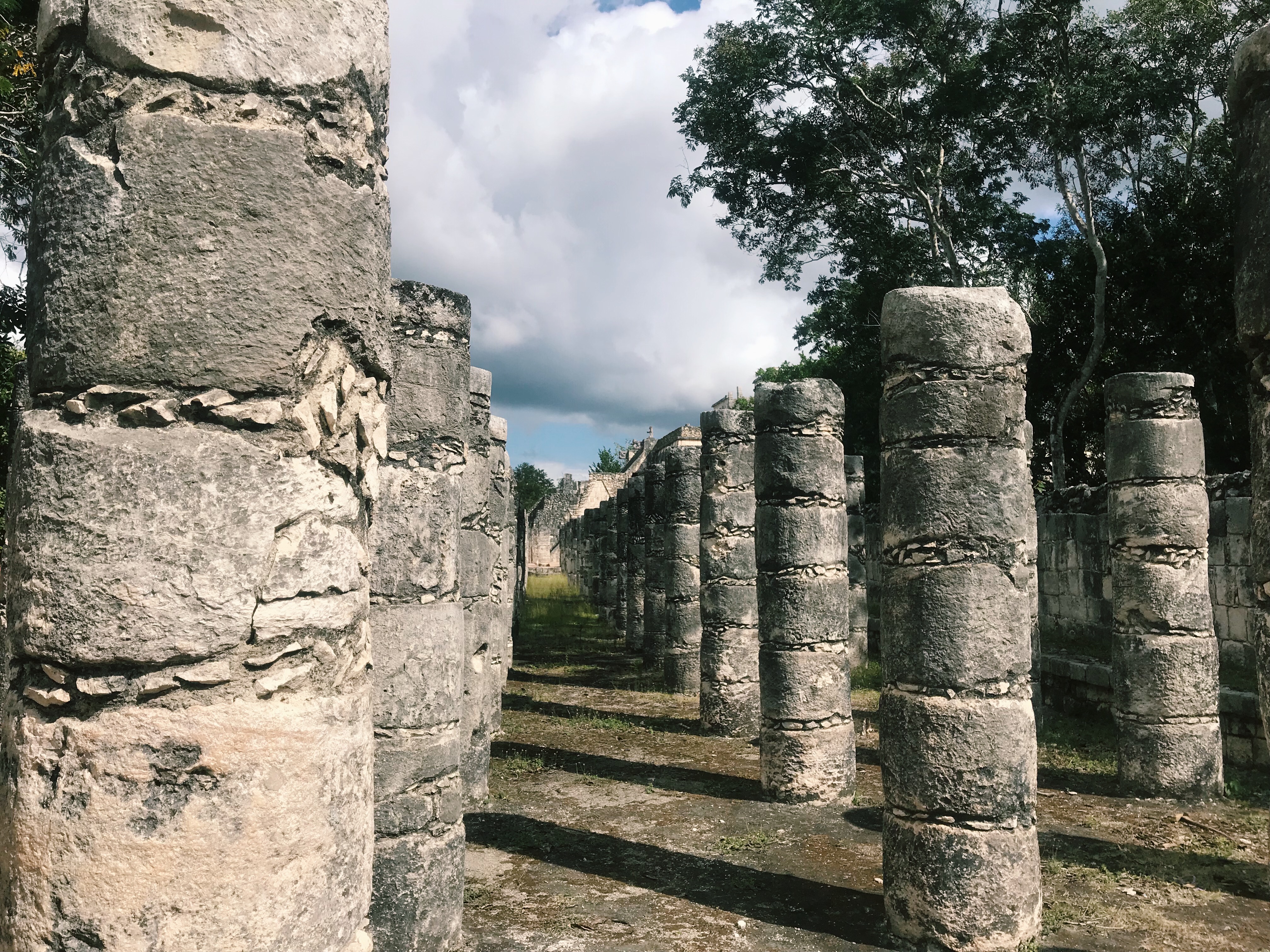
Columns at El Templo de los Guerreros -
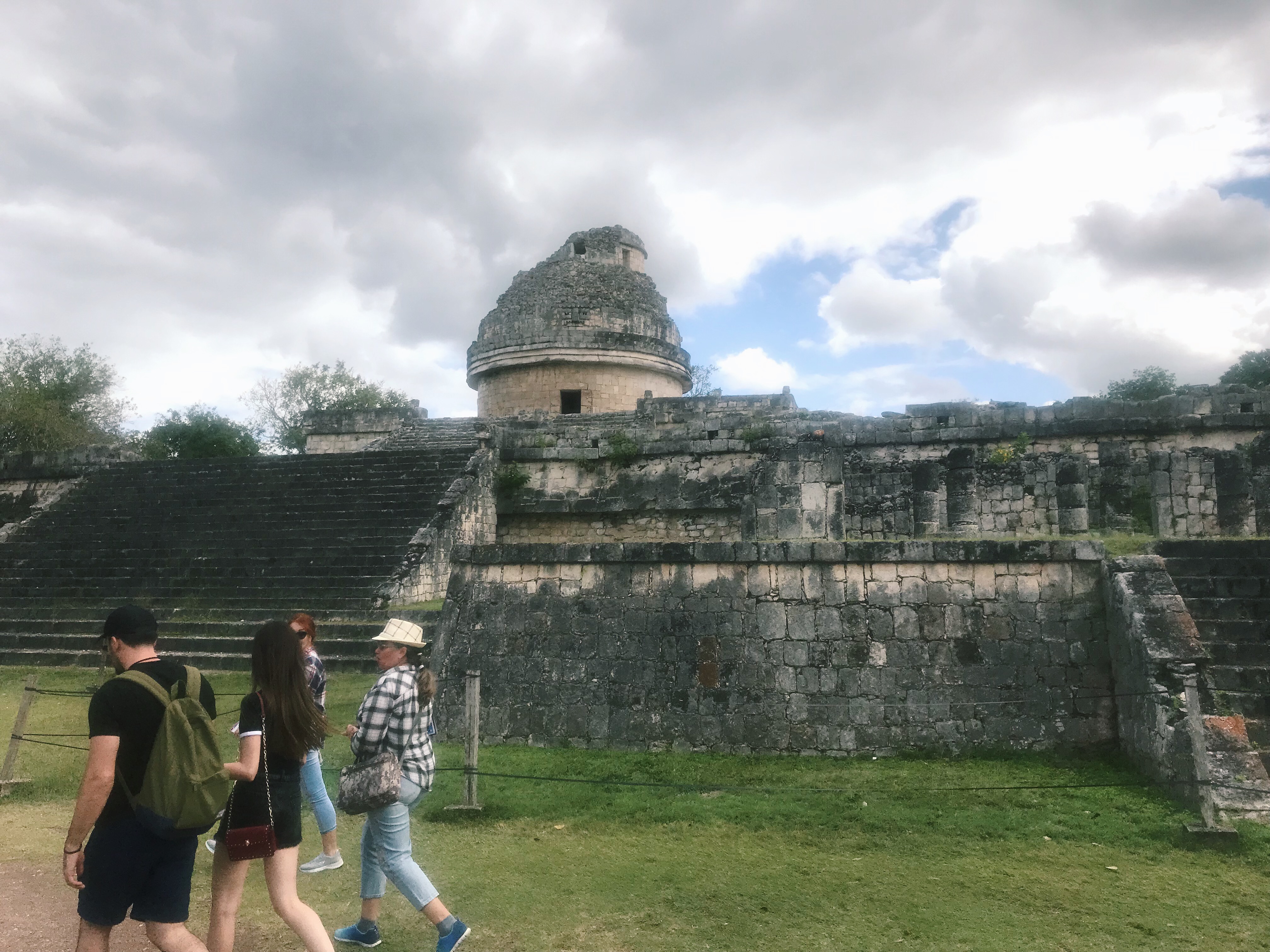
El Observatorio -
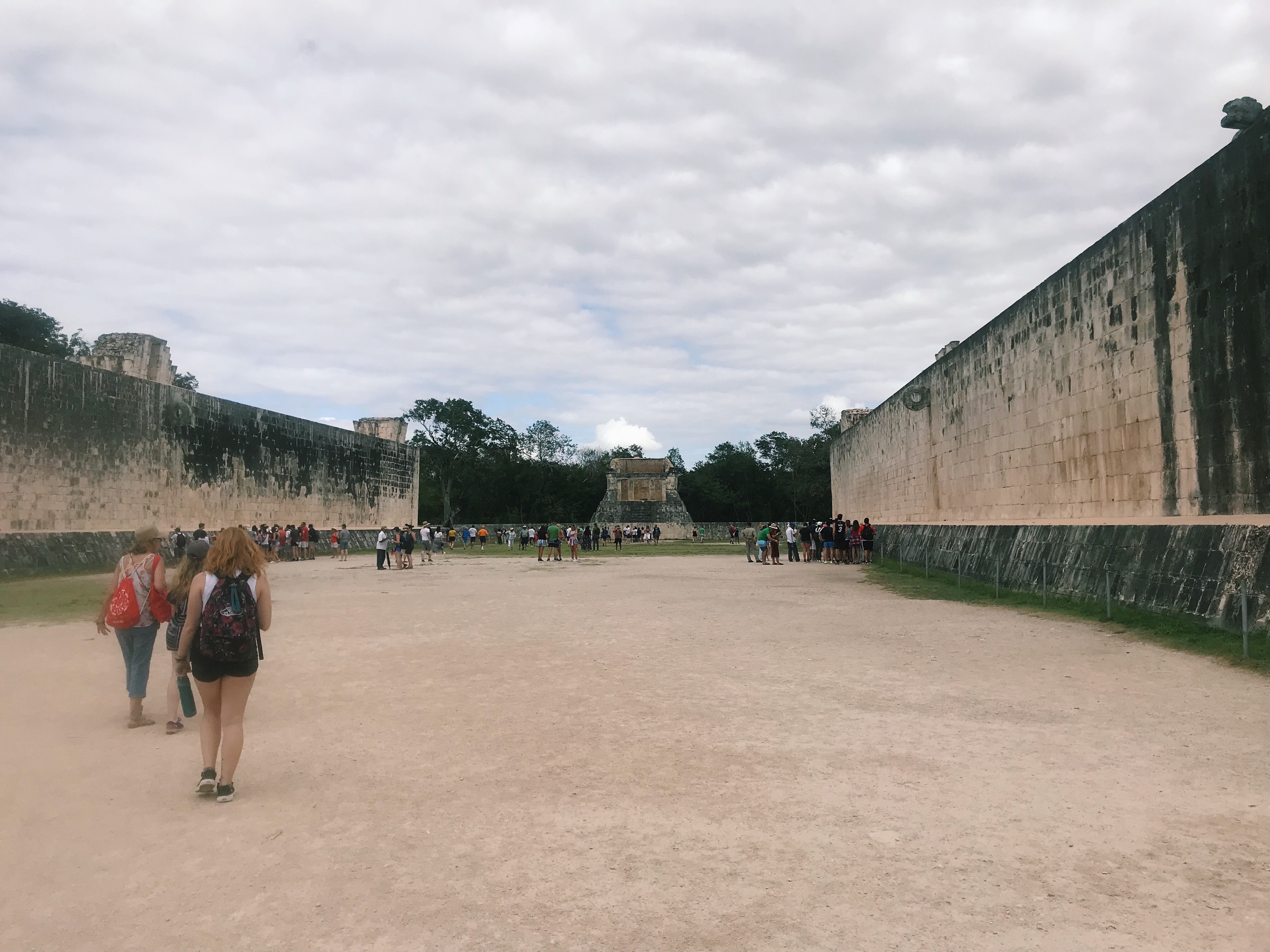
Estadio del juego de pelota -
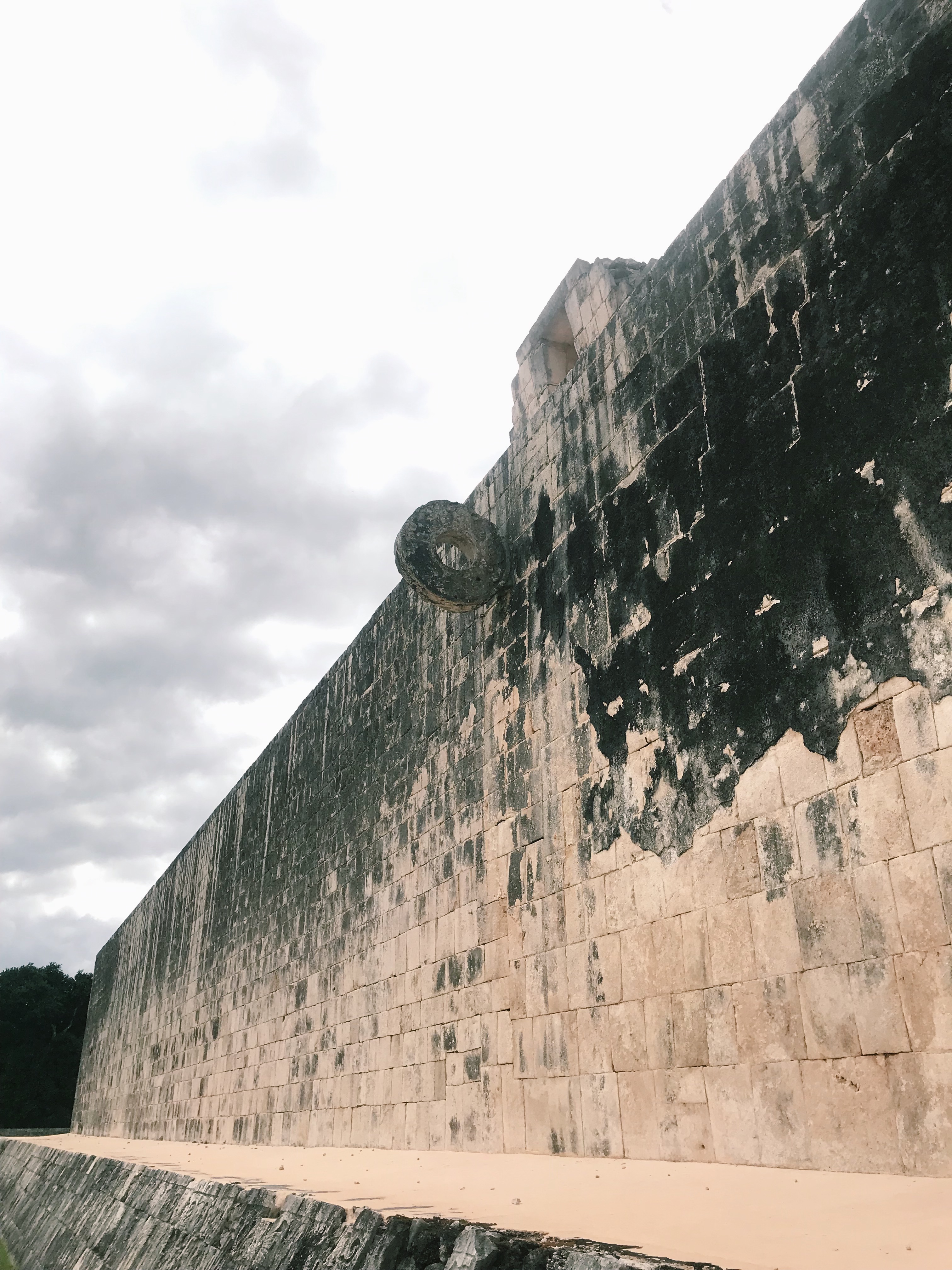
Anillos del juego -
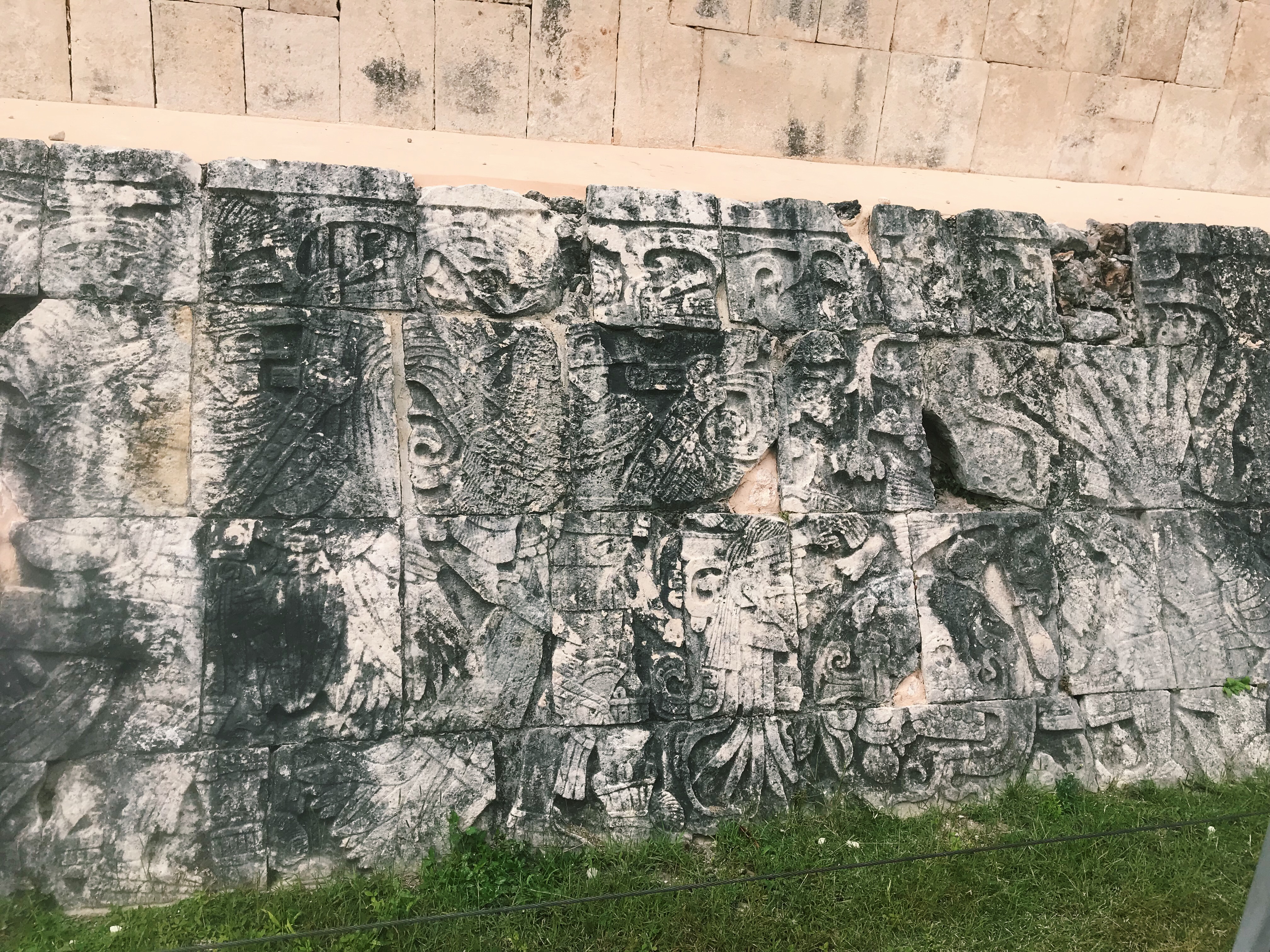
Mayan glyphs depicting a beheading -
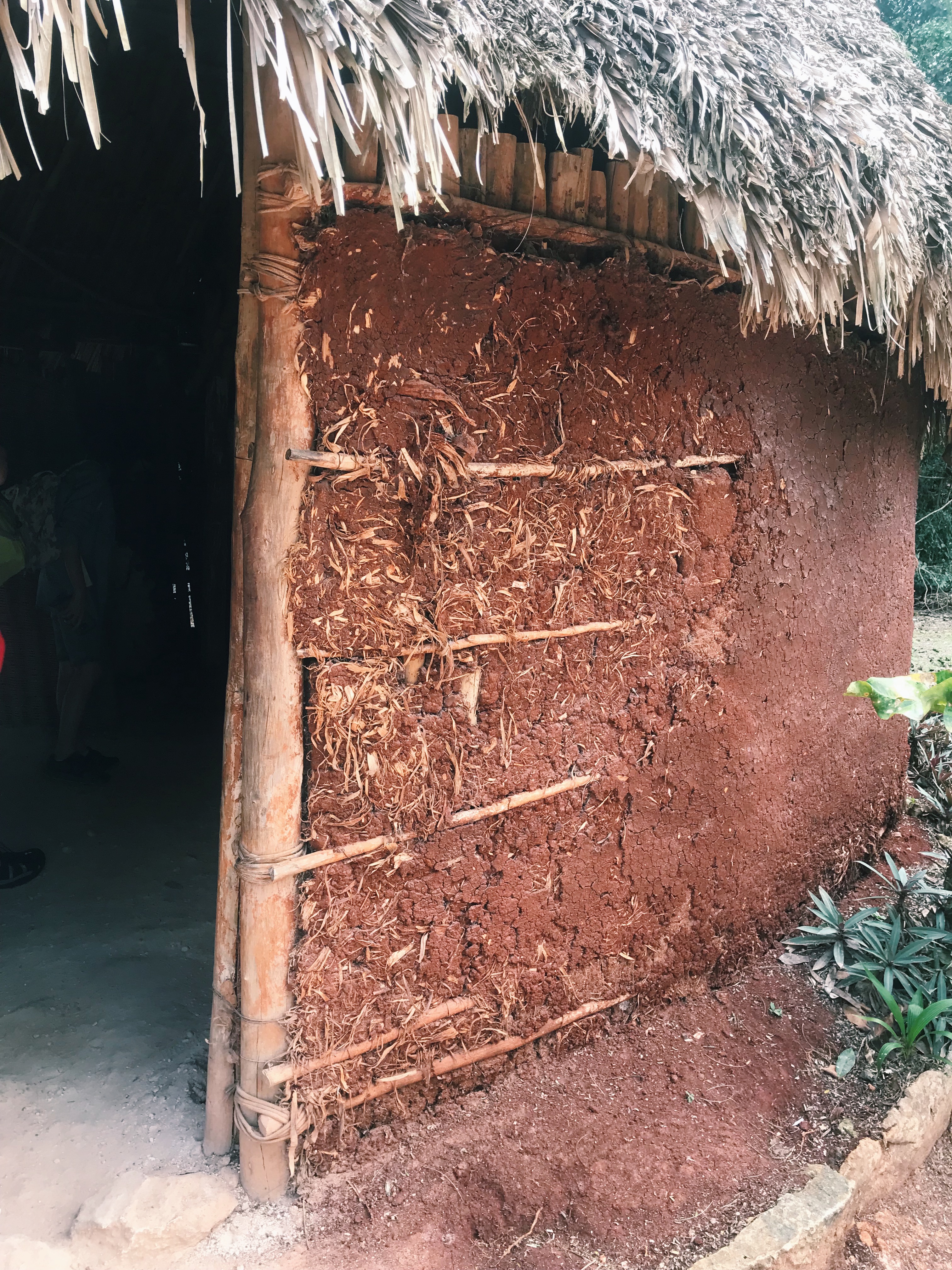
Traditional Mayan house -
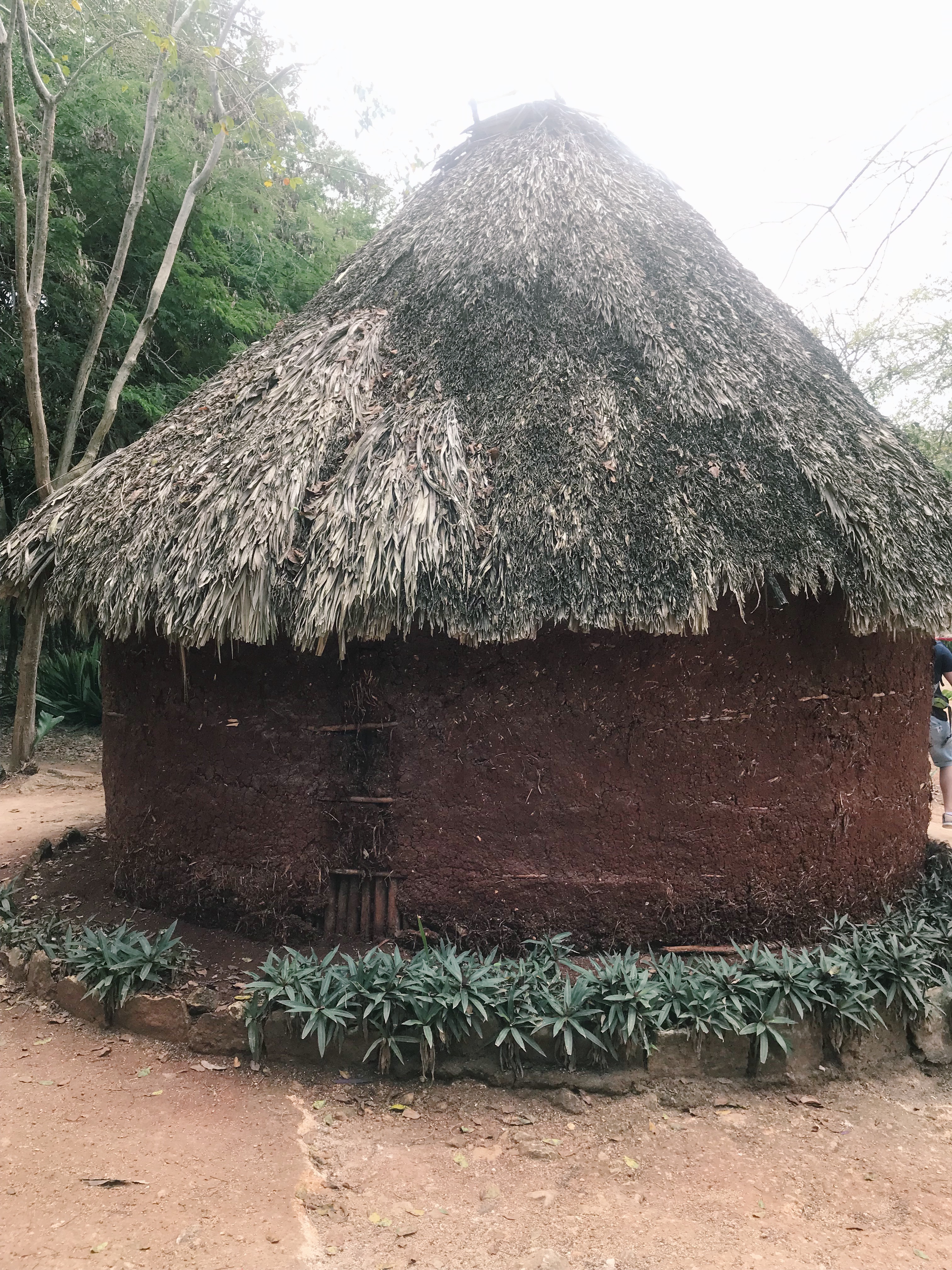
Traditional Mayan house
After leaving the overcrowded tourist trap of Chichén Itzá, we ate a quick lunch of tortas on our way to Yaxunah, a much older site that was built around 700 B.C. This site is part of communal land still being used by Mayans to this day. Here, our group and a group of college student volunteers from la Universidad de Valladolid watched a reenactment of a version of el juego de pelota. Two men dressed in what appeared to be traditional Mayan dress and used their hips to pass a rubber ball back and forth to each other. There were drums being played and conch shells being blown as horns. After the game was over, we climbed a few steps to the ancient acropolis to witness a ritualistic dance and ceremony. We drank a hot corn-based liquid (I believe it was called saka) made with water, sugar, and honey while the men danced to rapid drum beats with sticks of fire. The ritual was an example of what the ancient Mayans performed for Chaac, the god of rain. As in Chichén Itzá many years later, Chaac plays a large role in the lives of the Mayans.
-
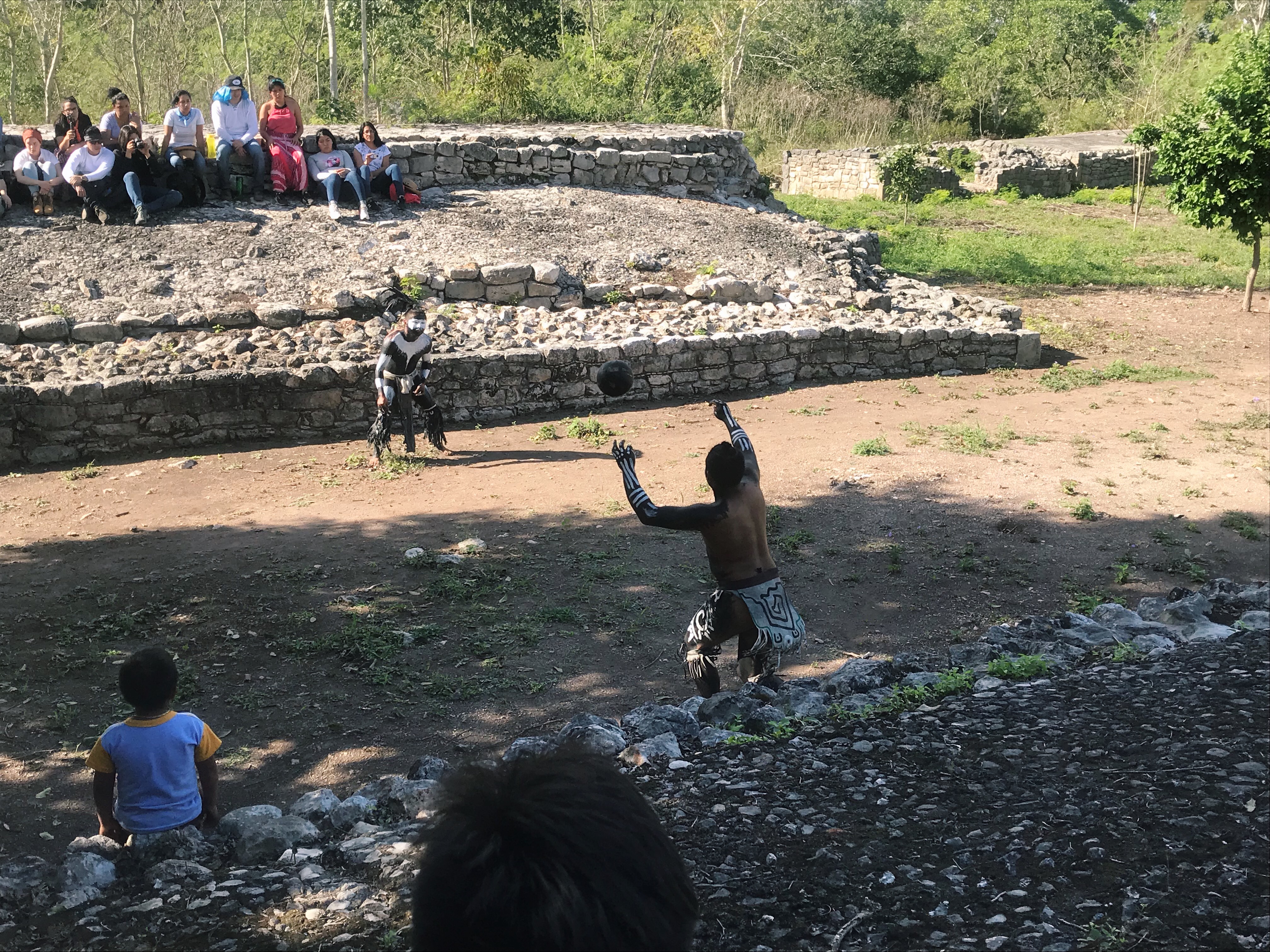
El juego de pelota -
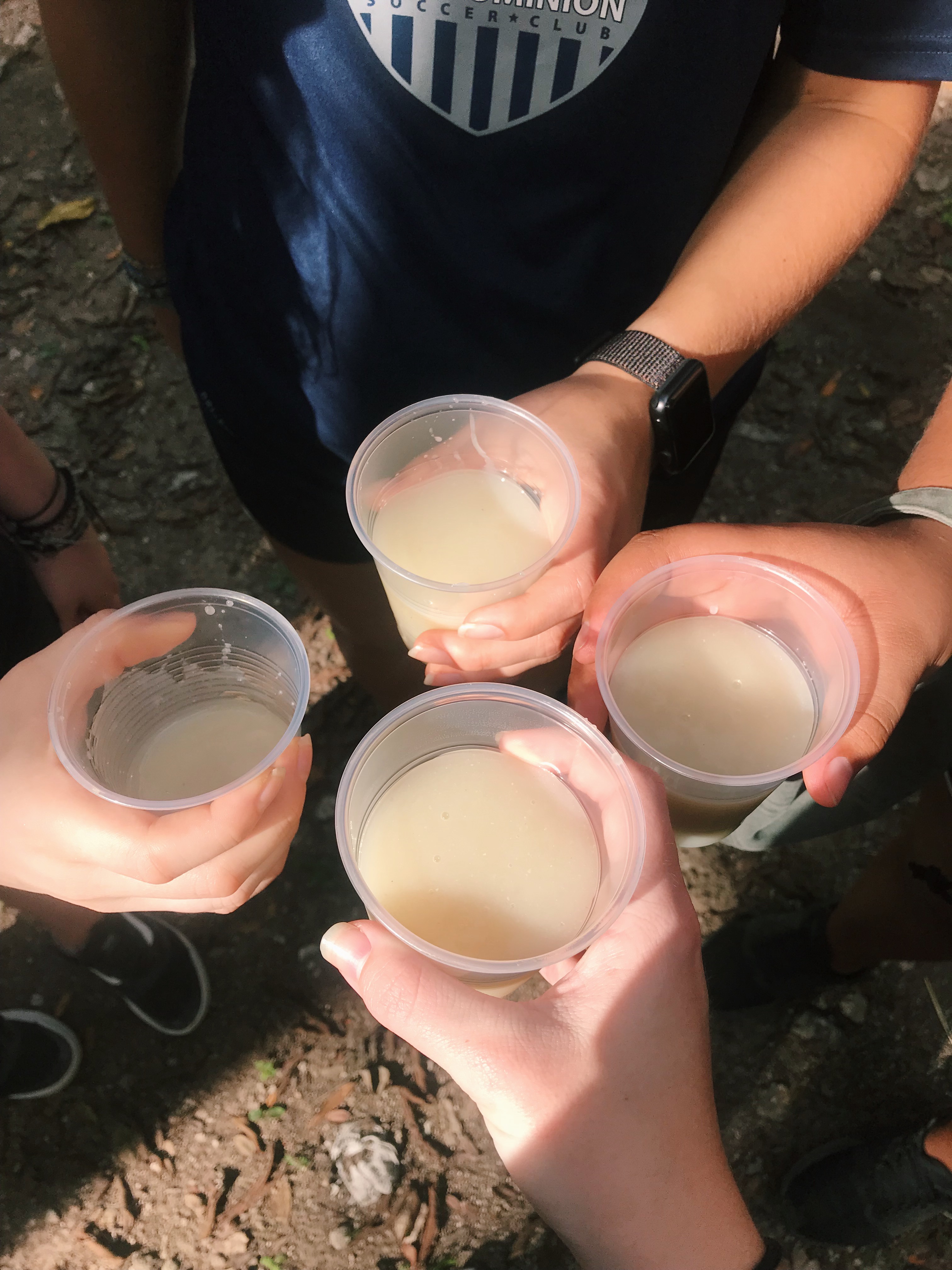
Bebida de maíz -
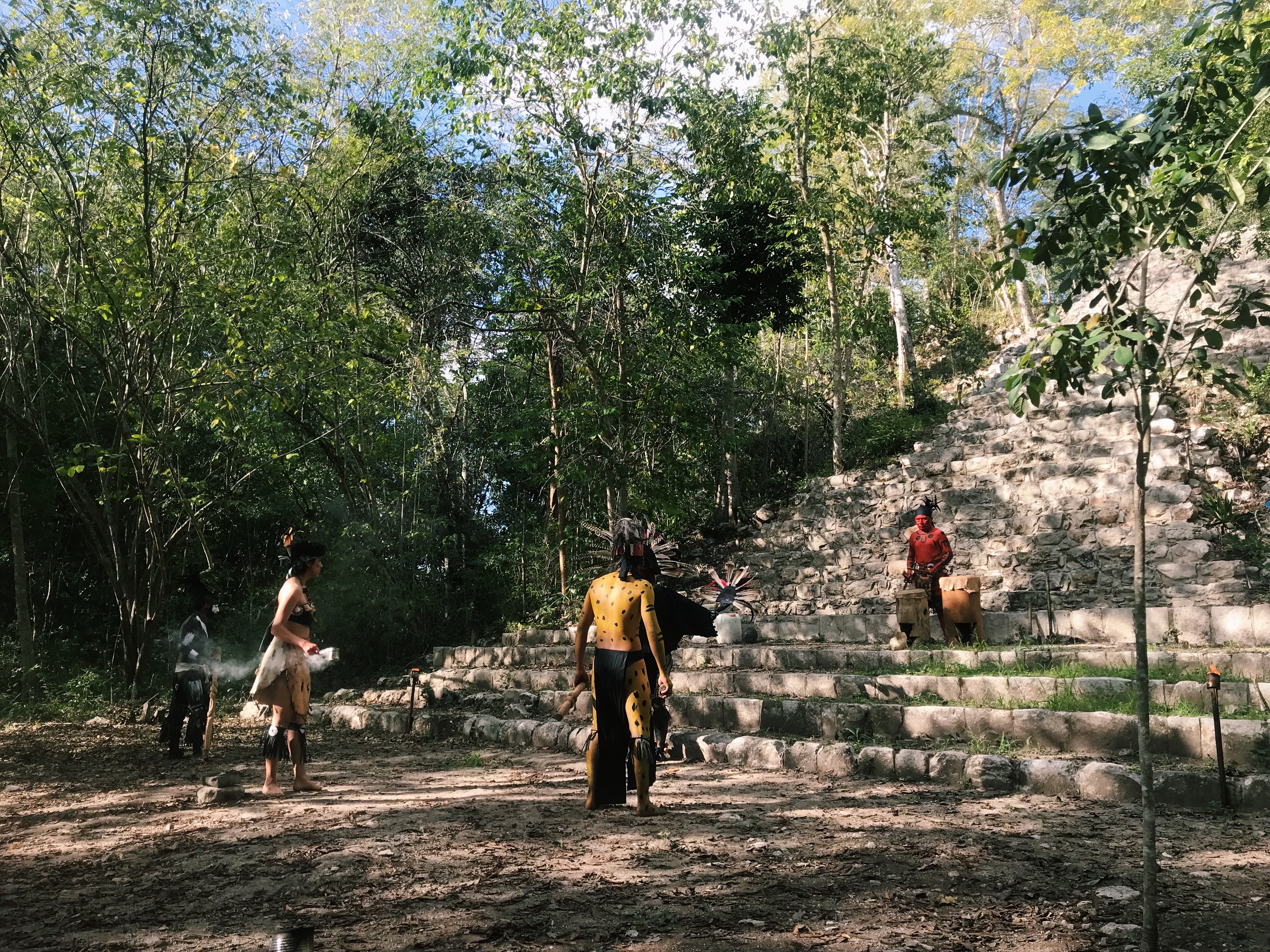
Ceremonia
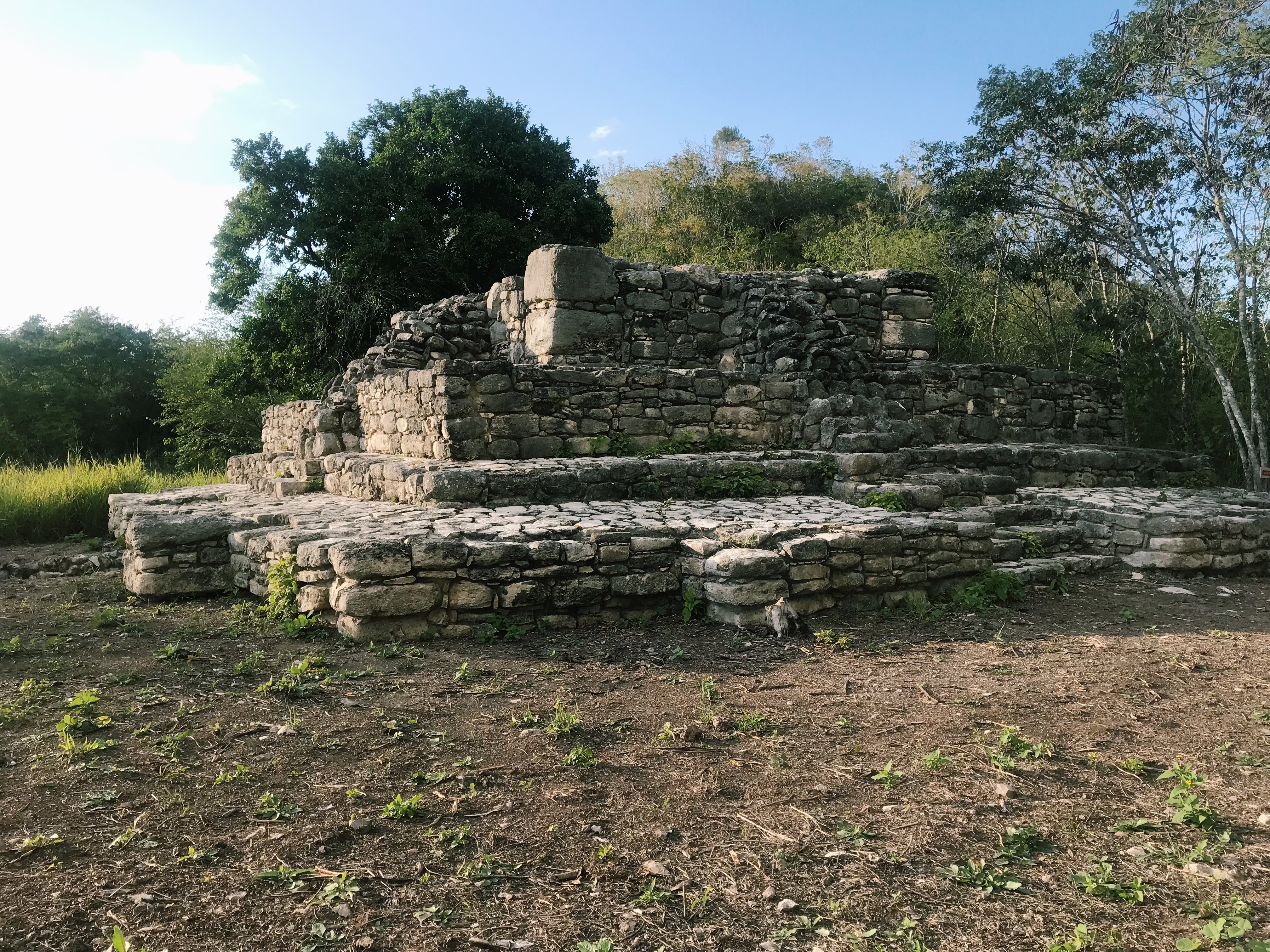
After the ritual was over, we talked with a few of the students from Universidad de Valladolid about the volunteer work they do to promote ecotourism and then explored the other ancient ruins. We were the only people there, no vendor or herds of tourists were anywhere in sight. We learned that the first rain of the season is collected and used in many rituals as a cleanser, and it is believed that washing a baby in this rain can prevent it from developing asthma. When there is a rainbow in the sky, it sends a message to the people that Chaac has given his blessing on the growing season. The present day Mayan people that use this land continue to perform sacred rituals every March 20th, when the seeds are planted, to ensure that they have a successful growing season.
-
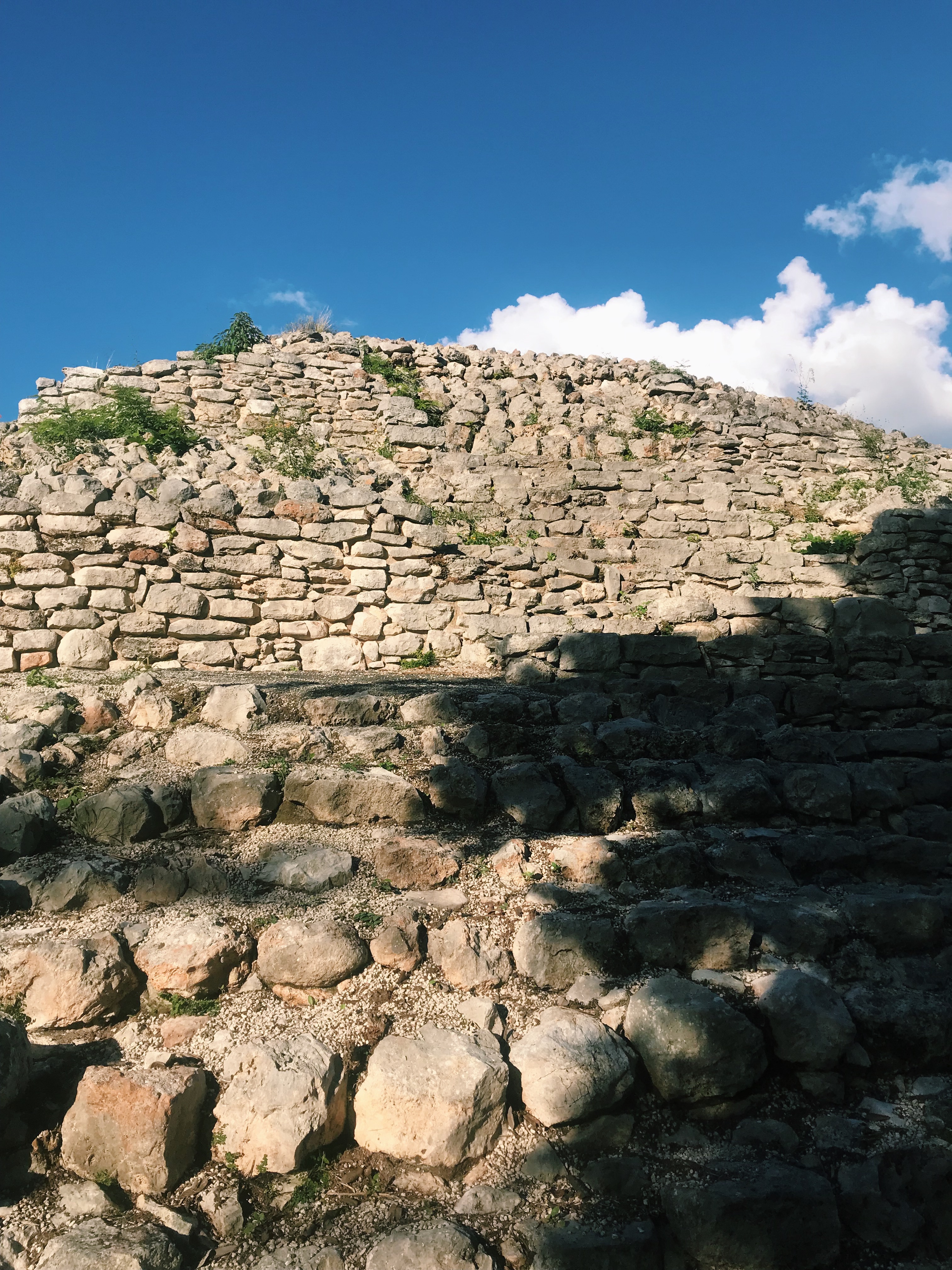
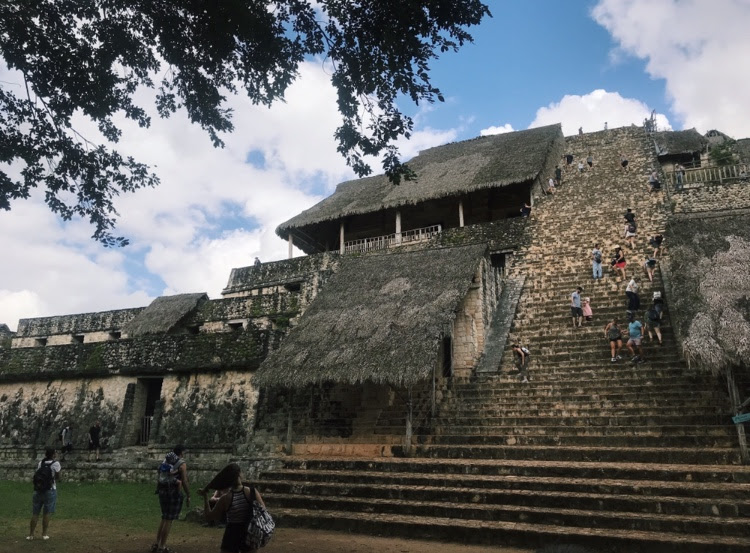
Templo de Chaac -
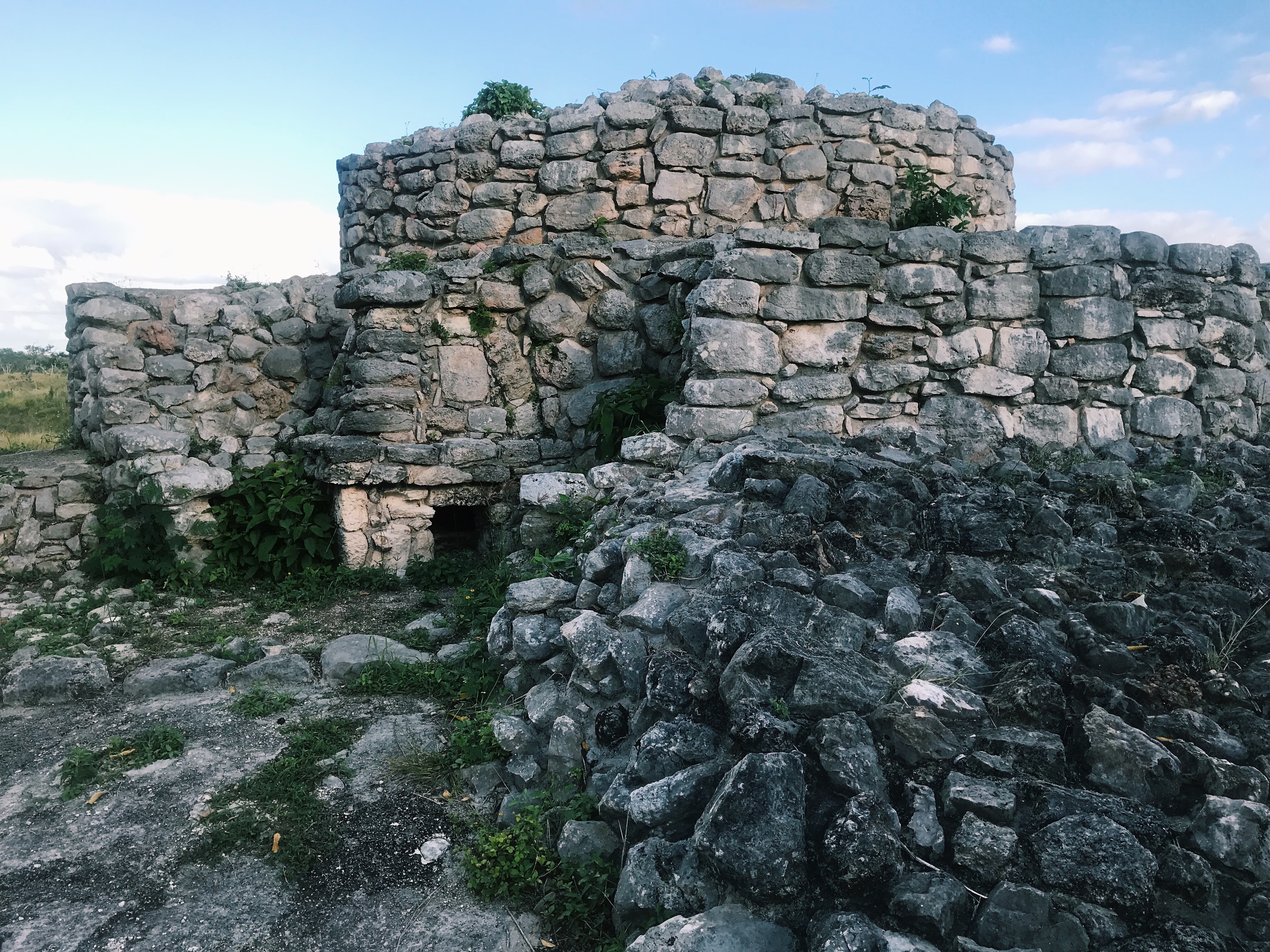
Observatorio -
Mercardo
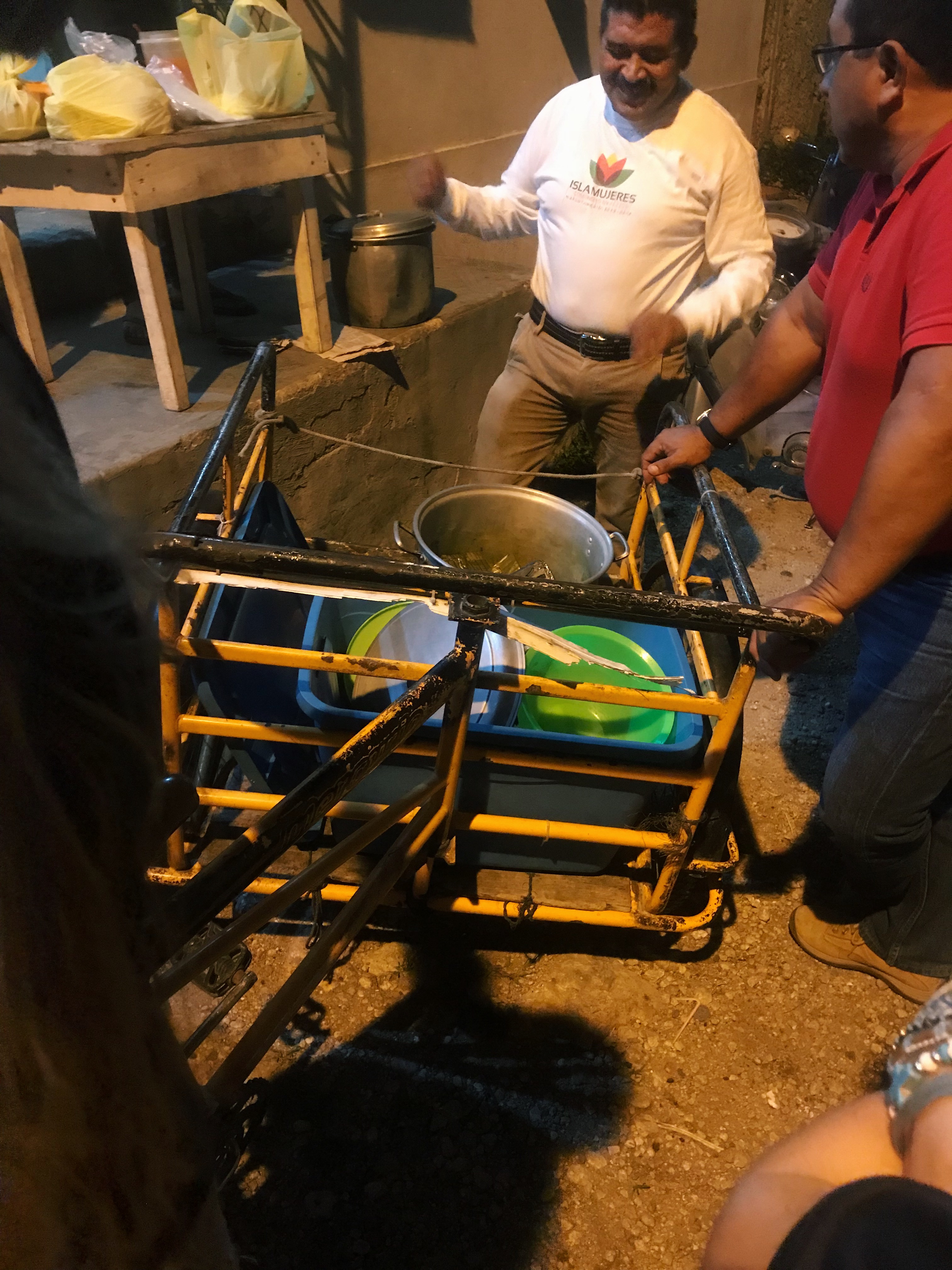
After leaving Yaxunah, we drove back to Valladolid and stopped in a market to buy some fresh fruit and then for dinner we ate tamales that were made by friends of our driver, José.
Today we were able to play the role of both tourist and traveler as we visited two very different archaeological sites. Chichén Itzá was a beautiful city with spectacular ruins, but Yaxunah offered a much more real experience. In Chichén Itzá, most of the information I learned about the ruins came from a brightly colored pamphlet or signs on the ground. However, in Yaxunah, we were able to talk directly to Mayans about their culture and get a personal tour of the uncovered ruins in addition to seeing what a ritualistic ceremony looks like.
In the same way that running through the city this morning allowed me to see Valladolid on a personal scale and not just out the window of the van, going to Yaxunah was the closest to being immersed in the ancient Mayan culture that I could get. These firsthand experiences are the ones that I will remember the most.
Jan. 10, 2019
 Explorando en Yucatán