
Producción de chicle y carne de tepezcuintle
Today we drove about two hours to Quintana Roo to learn how Mayans make chicle (gum). We were led deep into the jungle by a man named Noberto and his father, Alejandro. Their family, including Alejandro’s 94 year old father who only spoke Mayan, has been harvesting and making chicle for over 70 years. To do this, the men would prepare to spend weeks in the selva (forest) by eating foods rich in fat and protein and then going out and harvesting the resin from chicozapote trees. As we entered the selva, we left an offering of tobacco (in the form of cigarettes) to show respect to the gods and ask permission to use the land. Instead of being owned by a single person or government, the Selva Maya de Pino Suárez is a shared land in the community that all of the members are able to use as they need to.
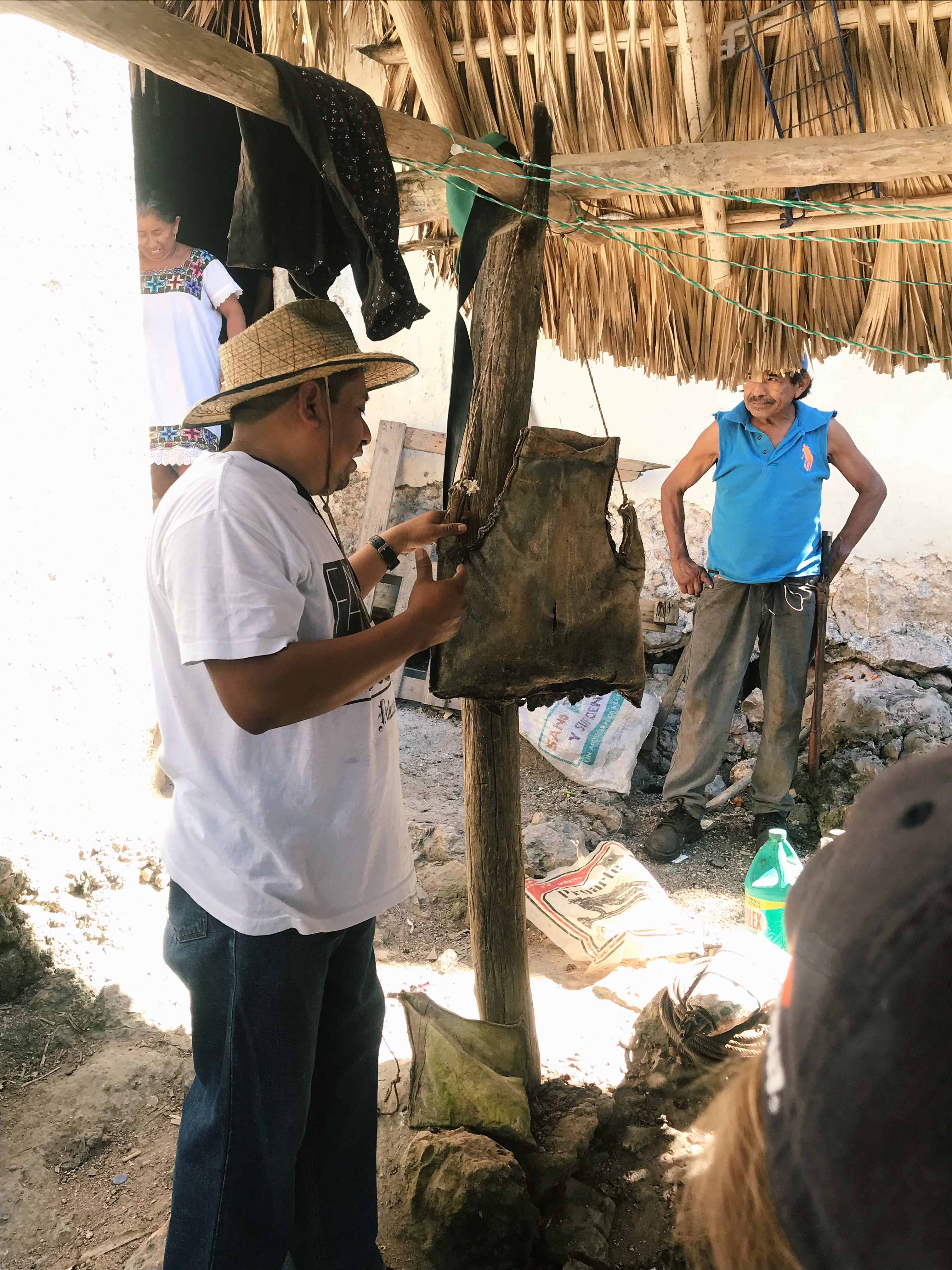
When collecting the resin, Alejandro used a machete to cut into the bark of the chicozapote trees to check and see if there was enough resin to collect. If not, he would move on to the next tree to avoid causing unnecessary damage to the plant. This seems to be a common theme when it comes to the Mayans using the land, they only take what they need and try to cause the least amount of damage as possible. They also wait 5-10 years in between harvesting from the same tree to allow it to heal and grow, which is a very sustainable method of harvesting from the tree. Chicle was used among the ancient Mayans as a way to keep their teeth clean and wasn’t commercialized until the Europeans colonized.
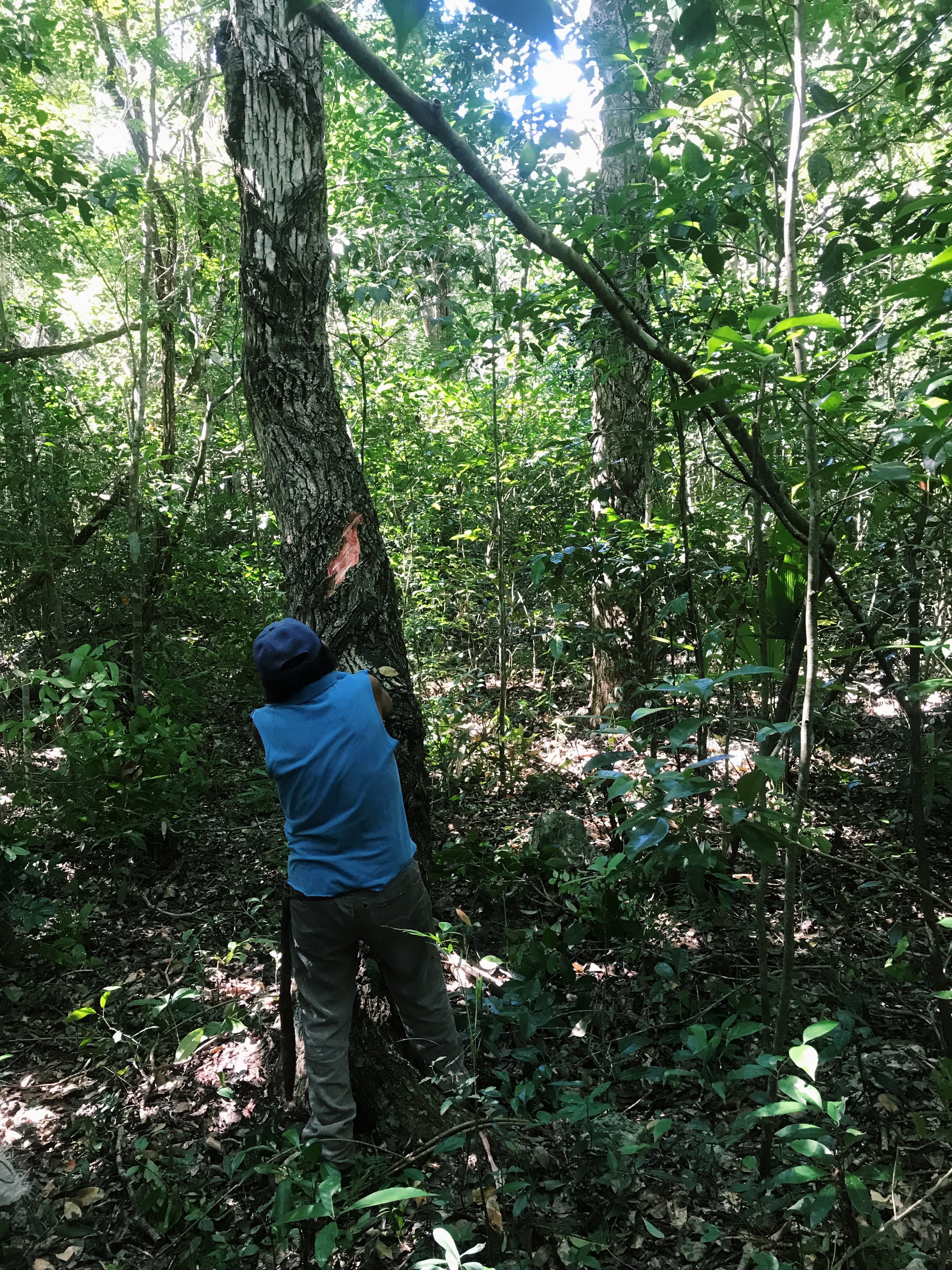
Alejandro checking how much resin is in the tree bark 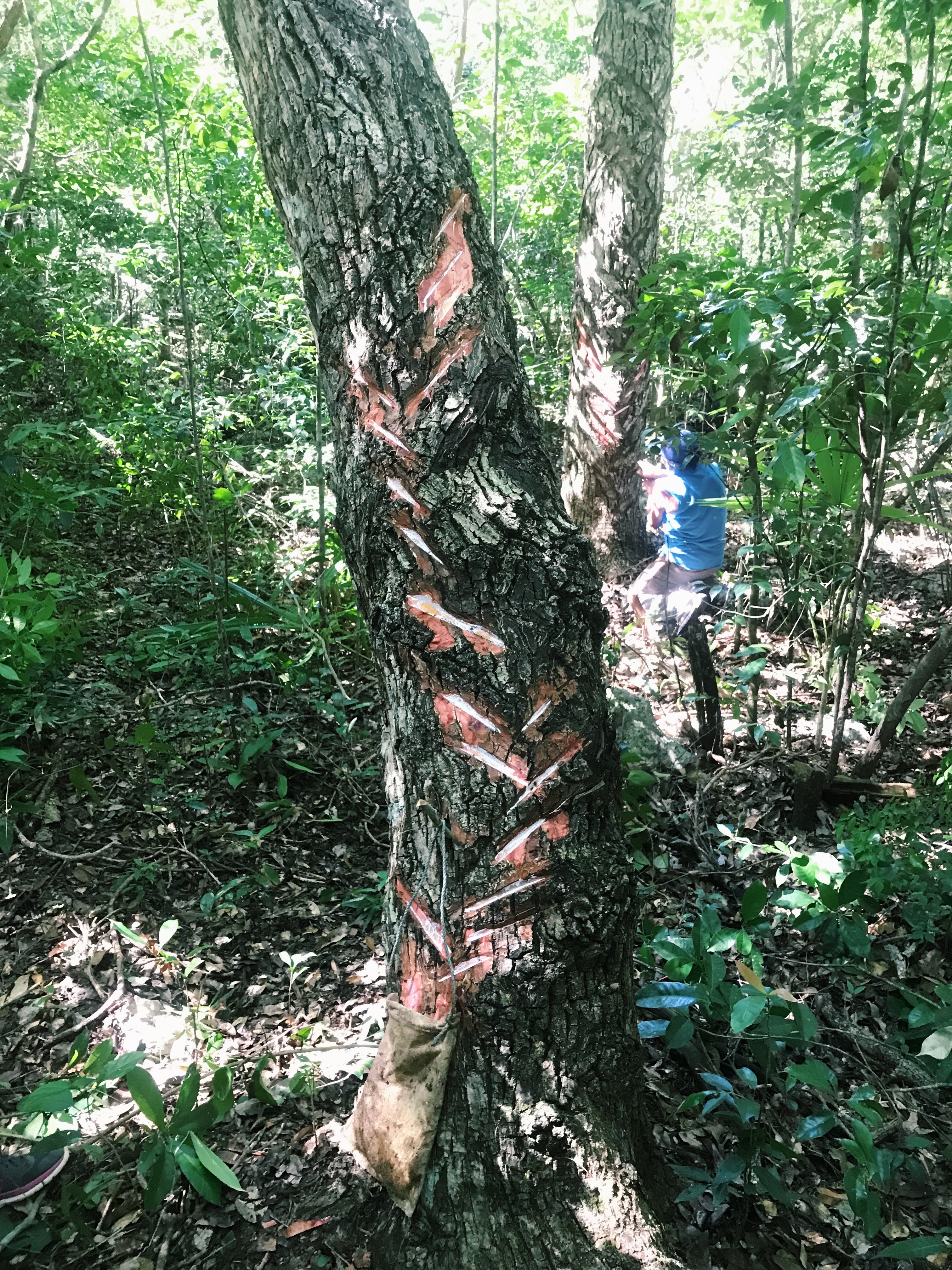
Resin leaking out of the bark 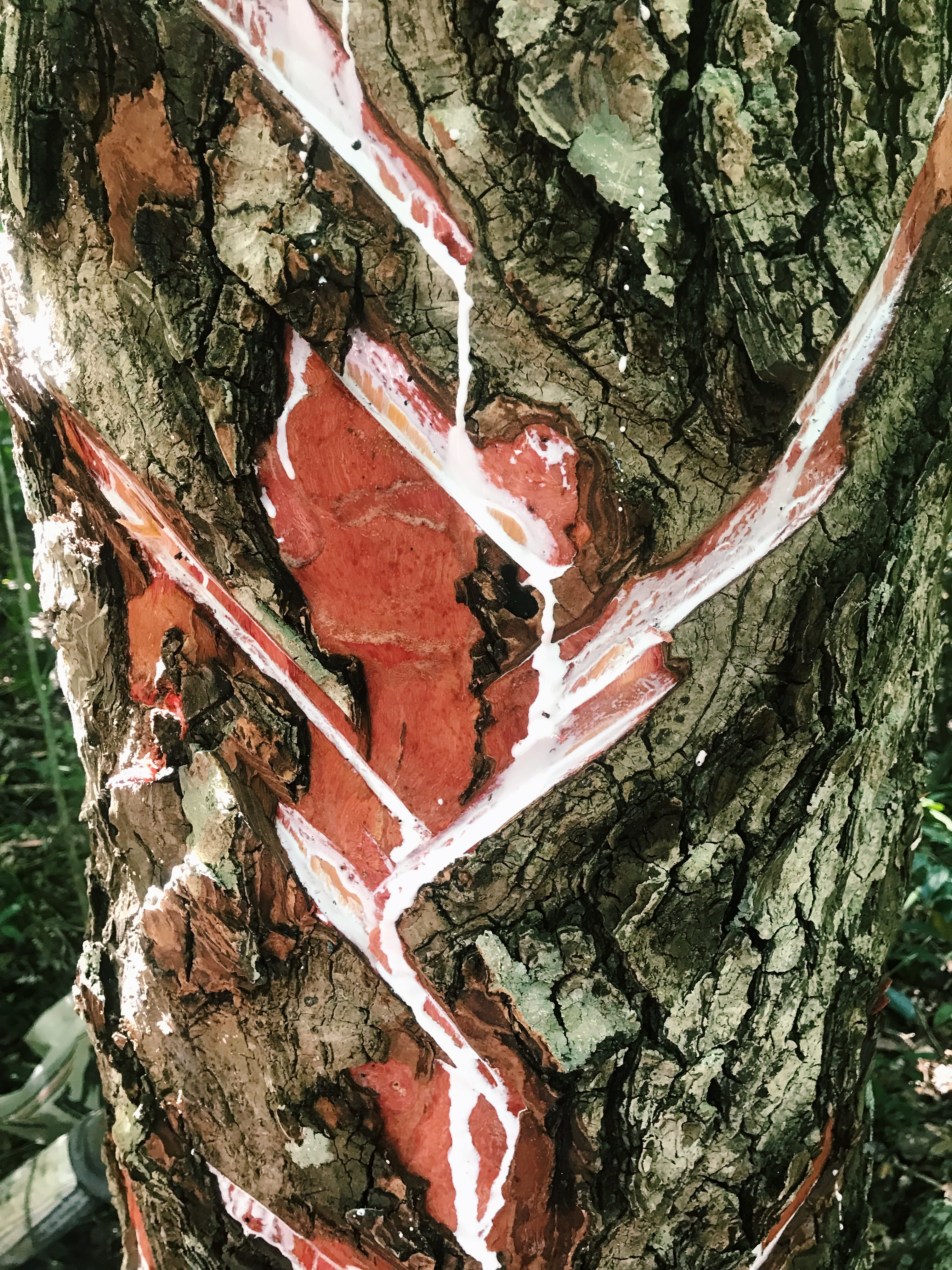
Cutting pattern in the bark
To harvest the resin, Alejandro cut the bark (not deep into the tree core) in diagonal patterns up the tree so that it leaks out in a way that allows it to flow into a goatskin or fiber bag for collecting. Alejandro cut as far up the tree as he could go, using only tree climbing spikes and rope. This is a very dangerous process that Alejandro has mastered over the years, but 15 years ago he fell from a tree and injured his back. He was in the hospital for 4 months and had to undergo surgery so that the doctors could put metal screws in his spine. Once he was healed, Alejandro returned to climbing the trees because that is his life and that is what he knows how to do.
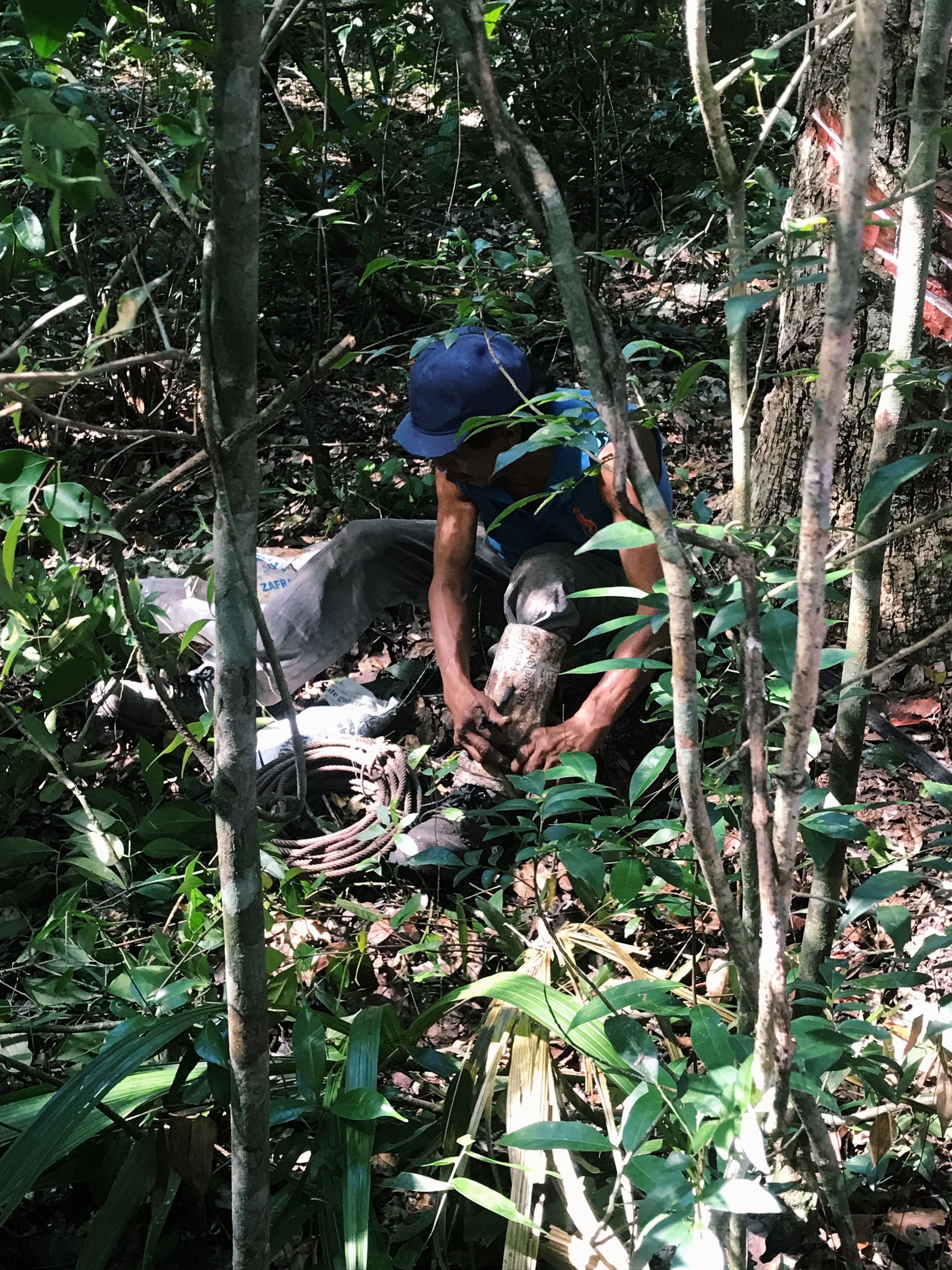
Alejandro getting ready to climb by putting on tree climbing spikes 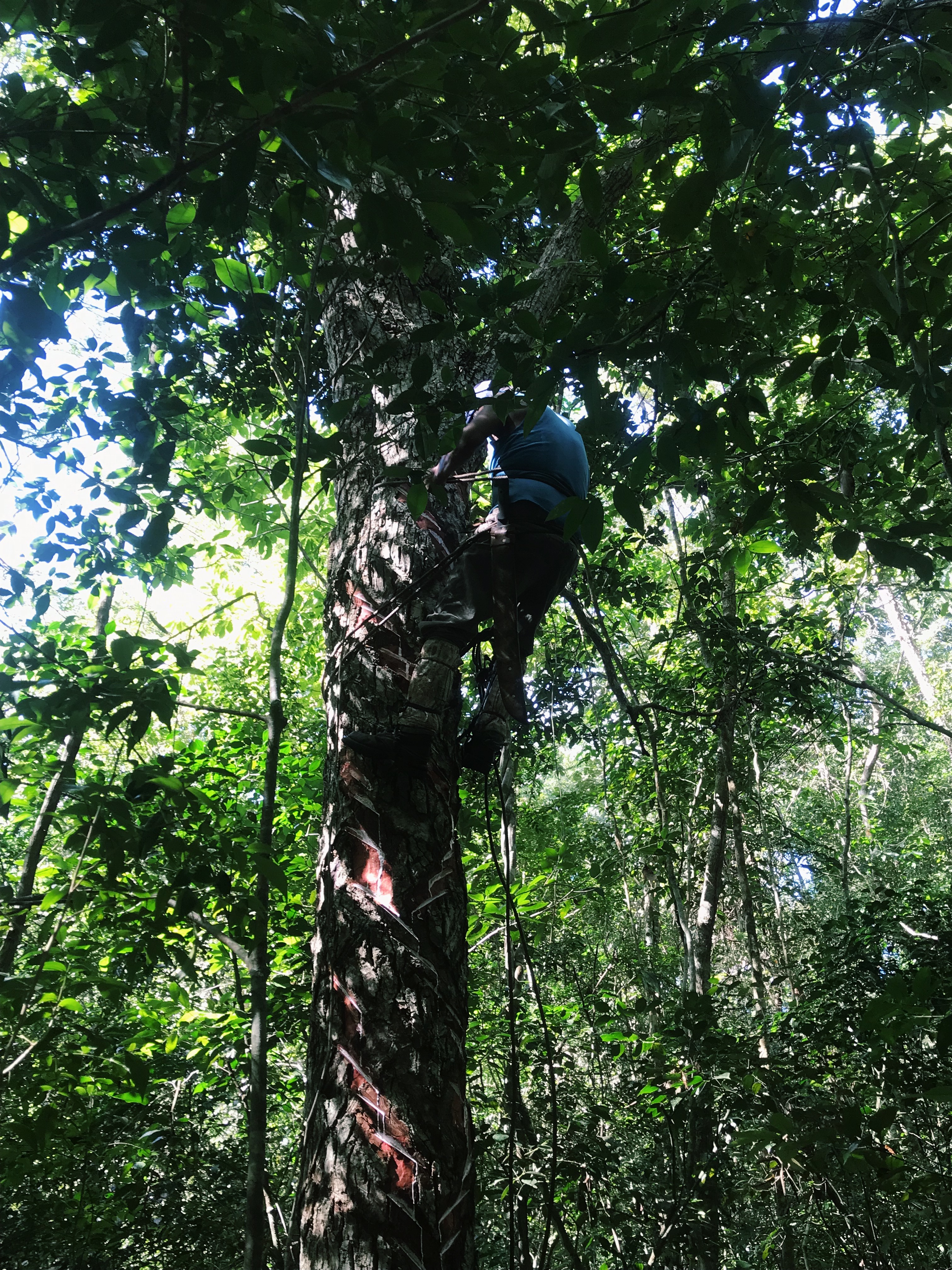
Alejandro climbing the tree to make more cuts in the bark with his machete
Once the resin was harvested, they bottle it in reusable plastic bottles and pour 3-4 bottles into a cauldron over a fire. They rinse the bottles with water to get out as much of the resin as possible and heat/stir it until the water has all evaporated and it has the correct consistency. This process took a very long time, and when it was complete, they poured the chicle into square molds and let it dry. According to Noberto, the chicle can be chewed for months since it does not have any flavor to be lost.
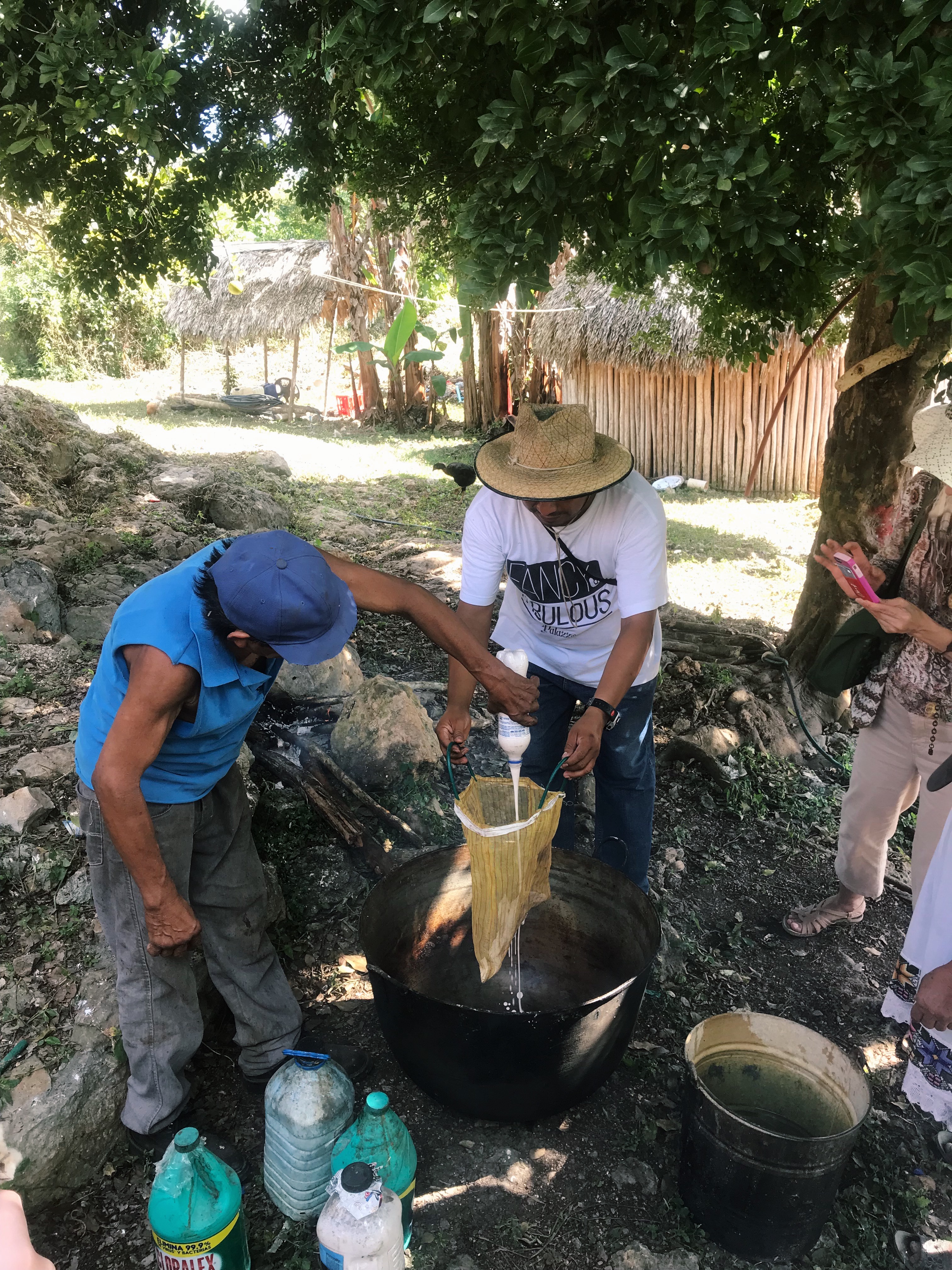
Pouring the resin through strainers 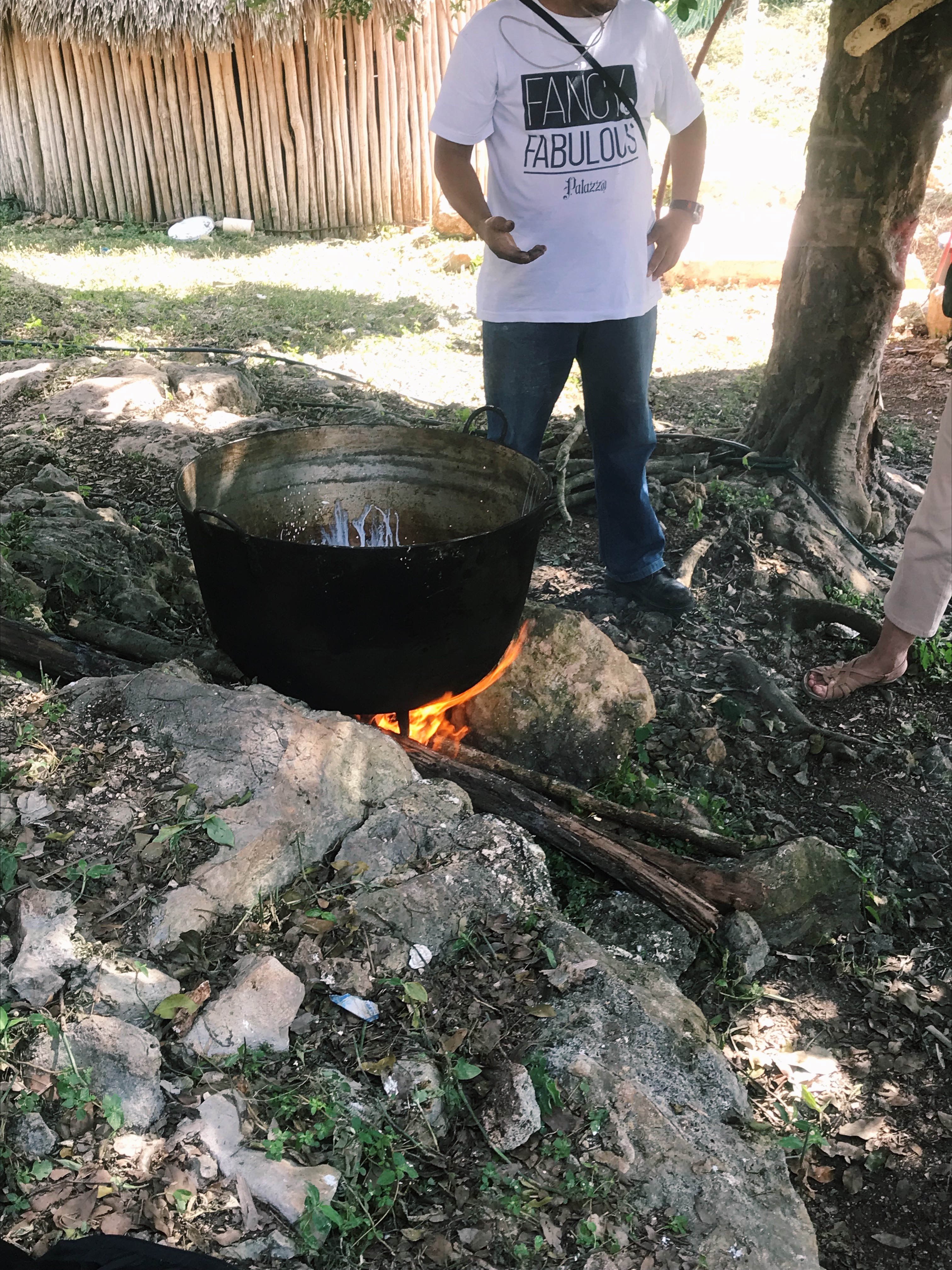
Heating resin over fire 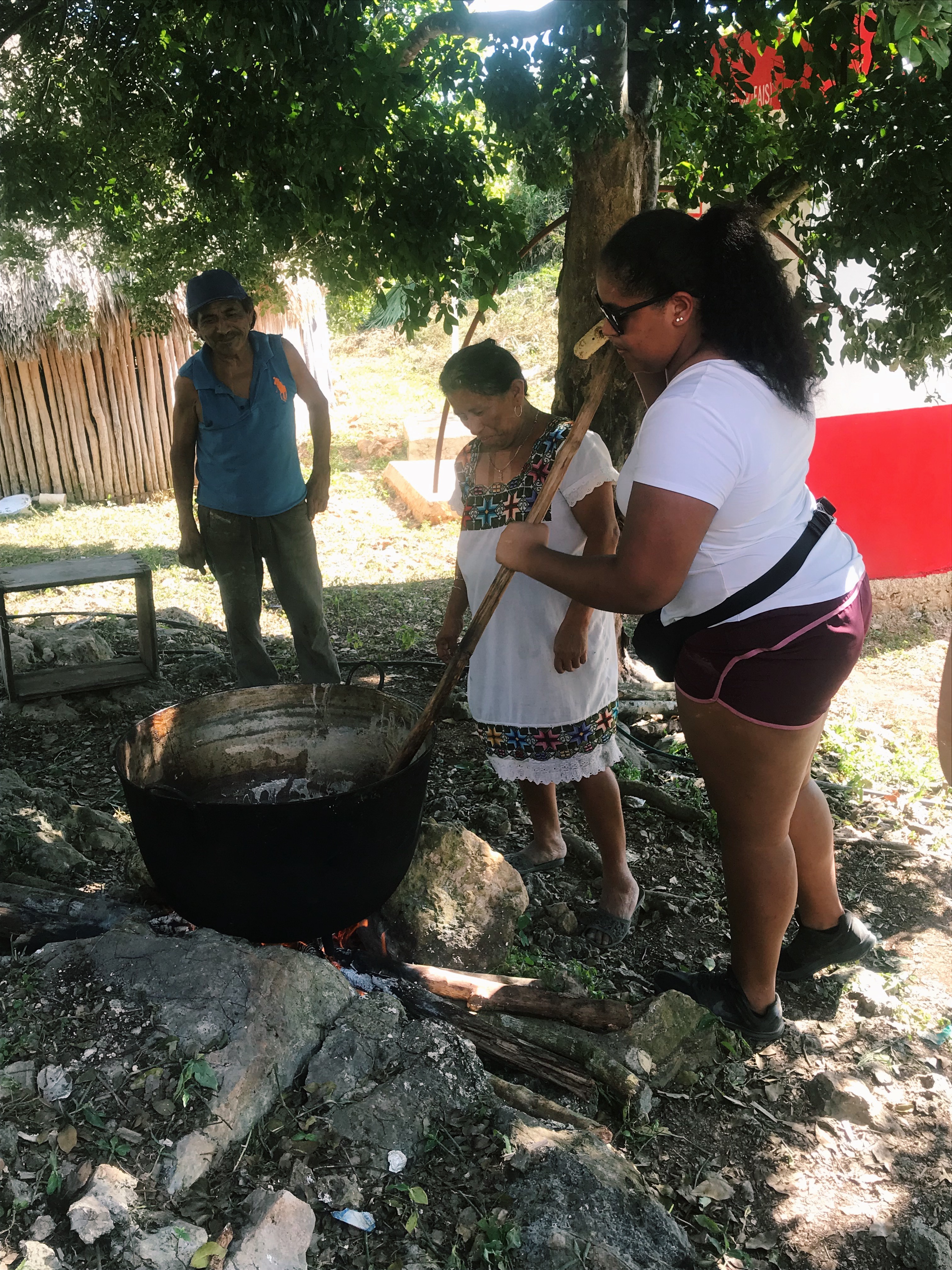
Tati stirring the resin
During the process, we were able to talk to Noberto and learned that instead of working to make chicle as he and his father and grandfather have done, his children prefer to work in the hotels and tourist-y portions of Cancún and some are going to University. It is slightly upsetting to think that this ancient art of harvesting resin to make chicle might be soon lost, but Noberto knows that natural chicle is being replaced by synthetic substitutes and soon there won’t be a need to harvest it anymore.
After watching Noberto and Alejandro prepare the chicle, we went to Noberto’s house for a late lunch. His family was all there and they graciously served us fresh coconut water, melon juice, and lime juice as well as tacos with chaya, huevos, and tepezcuintle (lowland paca) meat. For dessert, we ate dulce de calabaza (candied pumpkin) and drank saka, the same warm corn drink we had at Yaxunah. His family was very welcoming to us and made us feel like we were a part of them. After we finished eating, we spent time talking to the family members before heading back to where the chicle was made to see the finished product. We were able to try some for ourselves, it tasted kind of gross since we are so used to chewing flavored gum, but it was nice to experience.
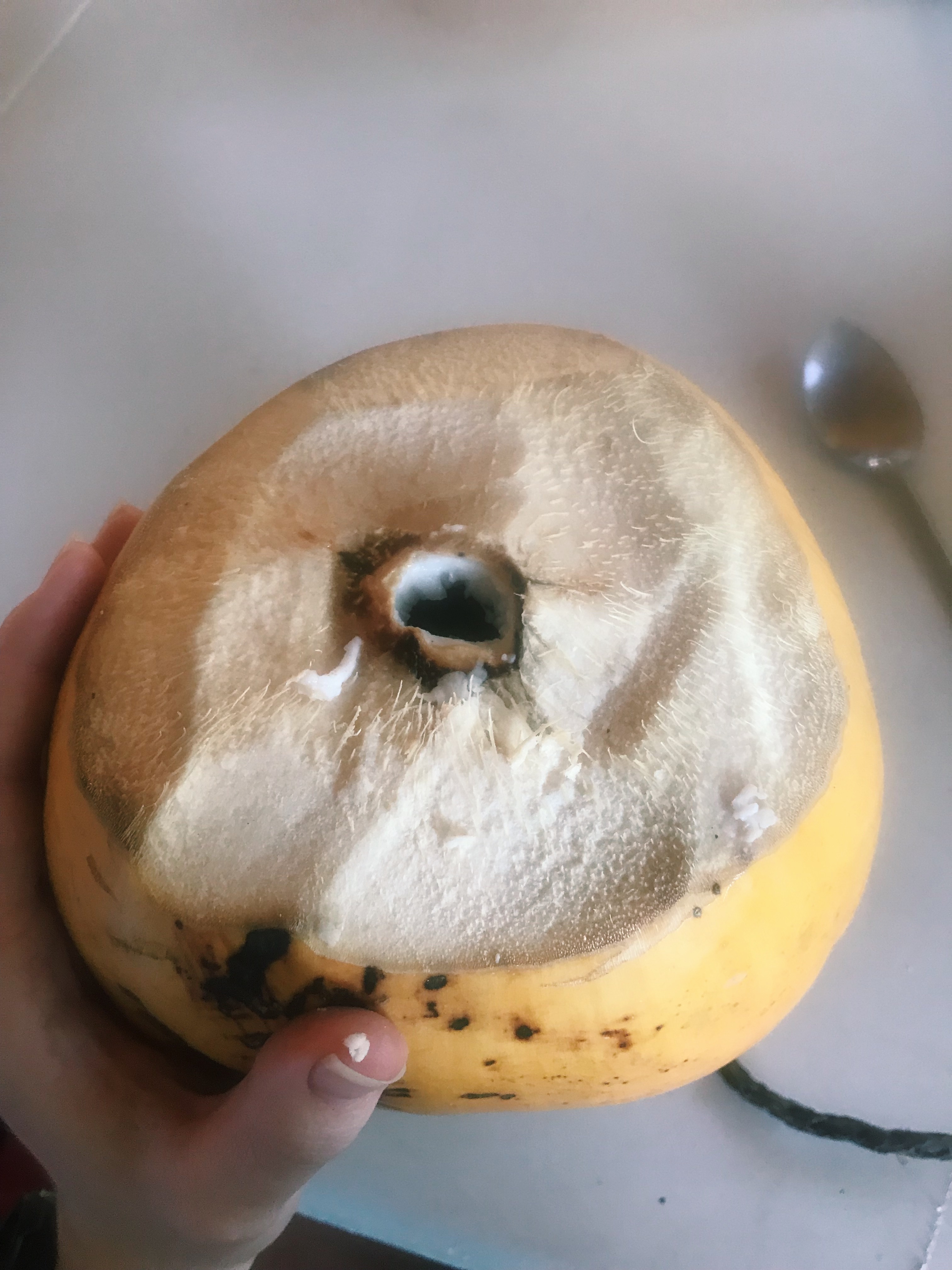
Drinking out of a fresh coconut 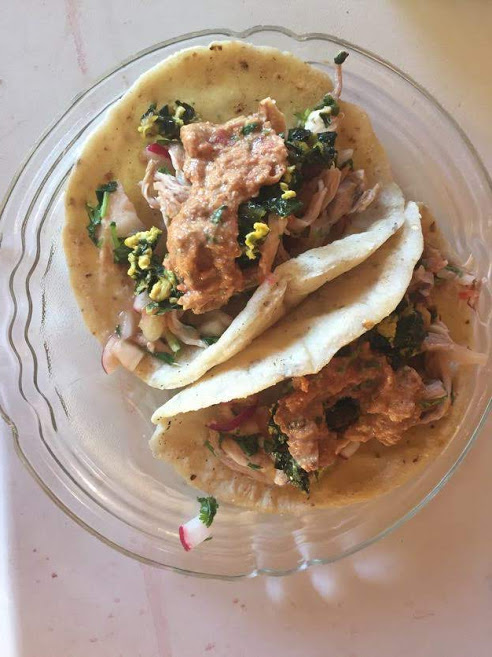
Tacos de
tepezcuintle, chaya, y huevos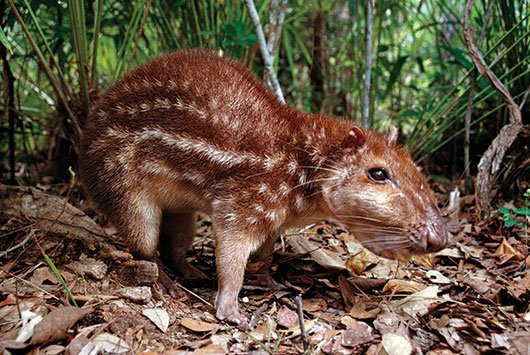
Tepezcuintle (source: google images)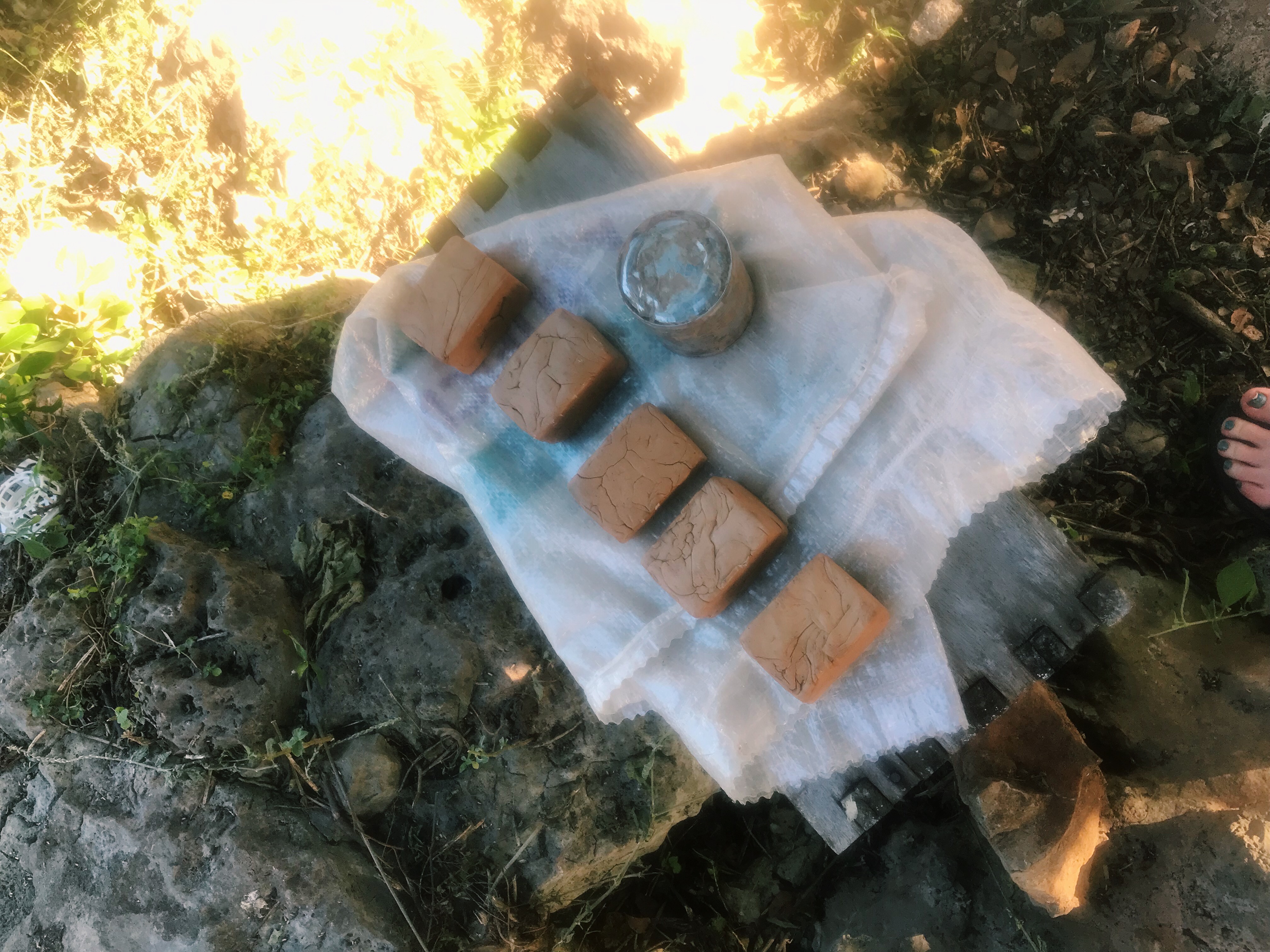
Finished chicle bars
The selva we were walking through today in Quintana Roo was very different than the landscape in Yucatán. This selva had much taller trees, denser plant life, and rockier soil. As with the bees yesterday at Xkopek, I thought it was very interesting to see the respect that the Mayans have for nature. Even though the forested land isn’t protected by any form of government or national park program, the people in the community take care of the land and only use what they need. In most cases where people act independently and use resources as they see fit, a tragedy of the commons can occur where the resource becomes spoiled or depleted. However, because the Mayan people only take what they need and act as a single body through exhibiting the same respect for the land, this isn’t a problem.
It continues to amaze me how the natural world plays such a key role in the lives of both ancient and current people who live here.
Jan. 12, 2019
 Explorando en Yucatán