
Izamal y Mérida
Today we left Valladolid and drove to Mérida. On the way, we stopped in Izamal to eat lunch and walk around the city.
Izamal is known as the Yellow City because all of the buildings are painted yellow and the City of Three Cultures, as the three prominent cultures in the city are Mayan, Spanish, and Modern. The city was painted yellow in an effort to express the locals’ pride of their convent and history when Pope Juan Pablo II visited the city in 1993. The convent at Izamal, Convento de San Antonio, was built by the Spaniards when they invaded and destroyed the major Mayan temple in Izamal. They used some of the blocks from this temple to build the convent.
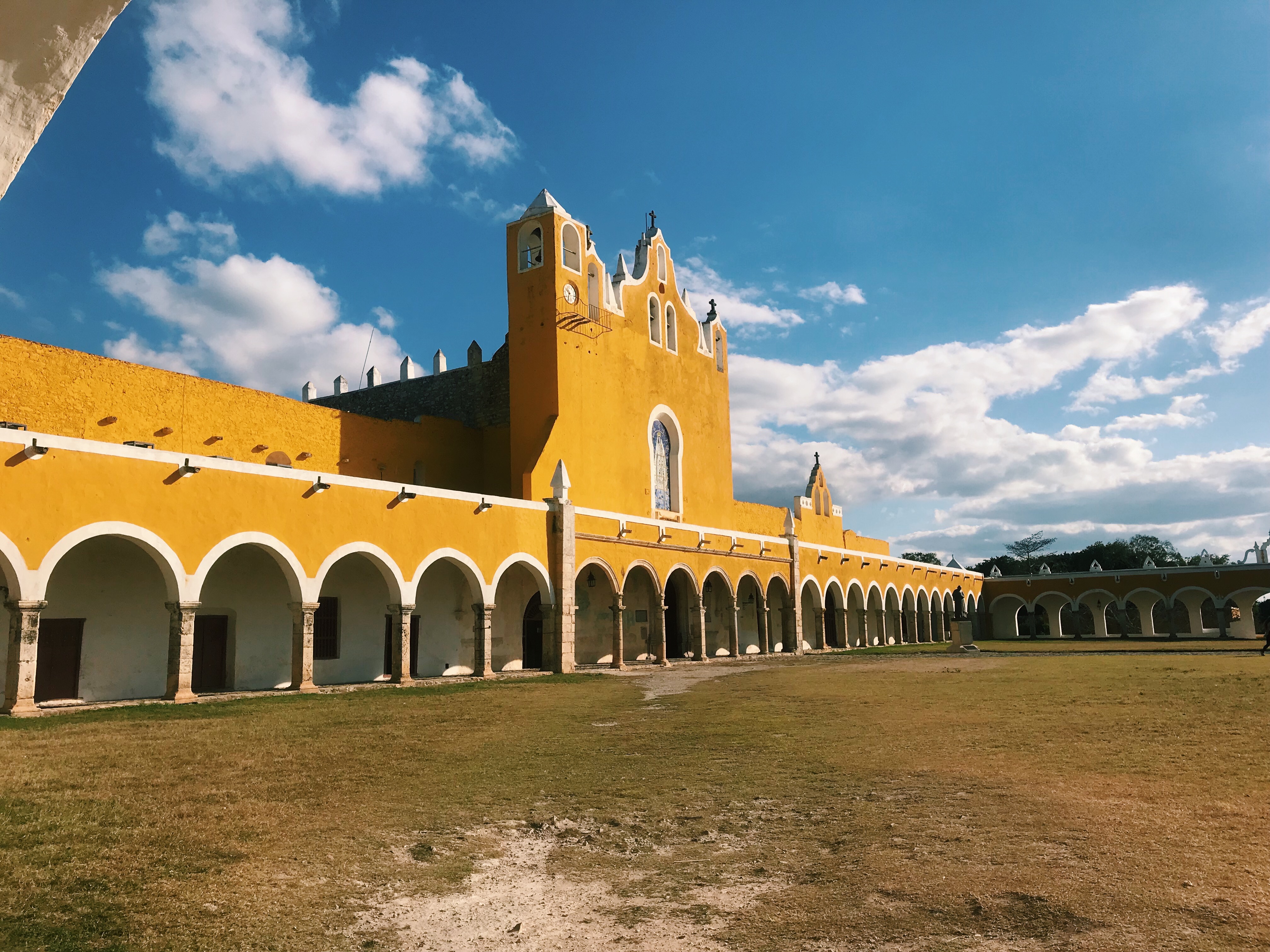
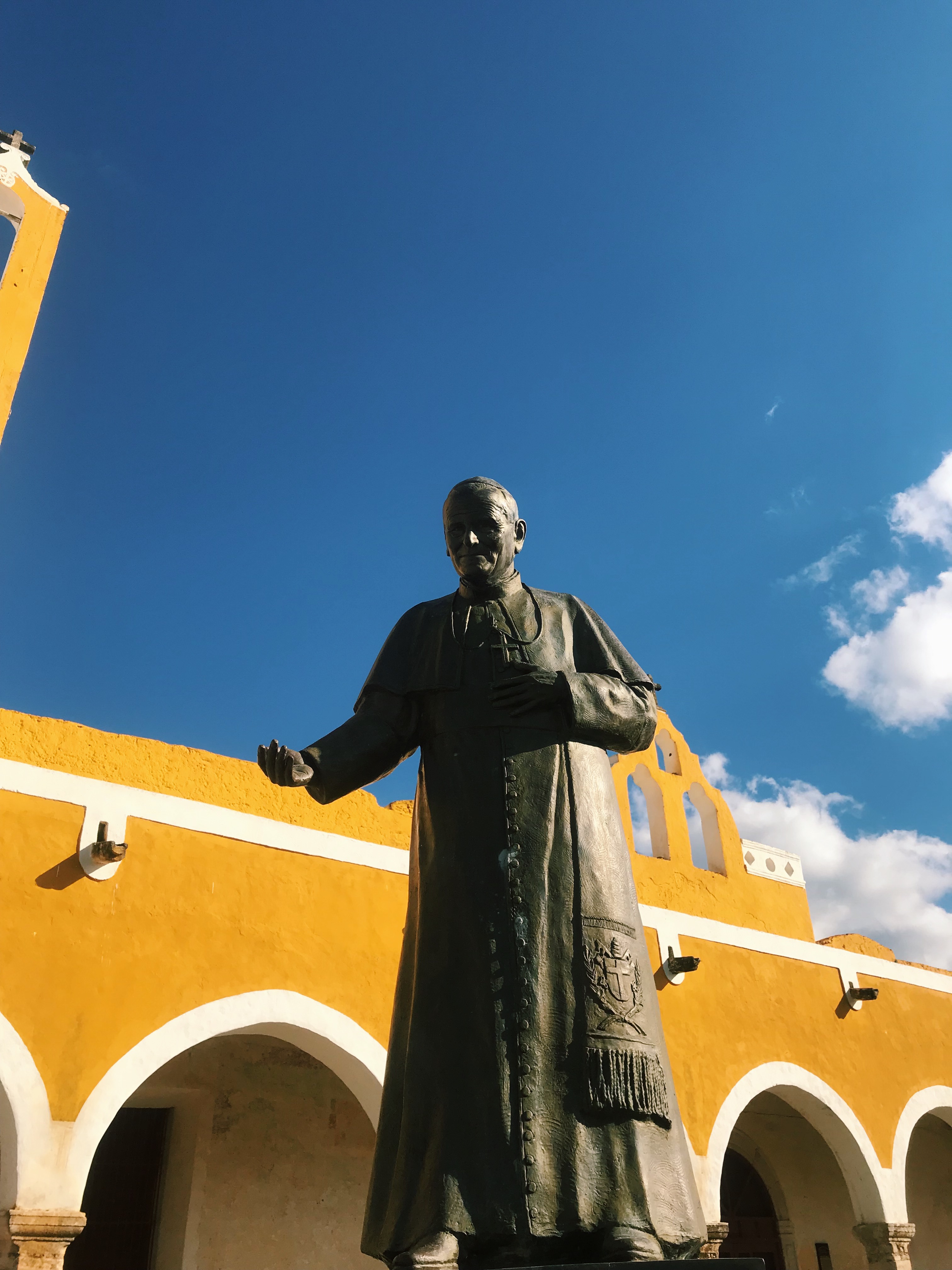
The convent and the Catholic religion play a huge role in the lives of people living in Izamal as well as other indigenous people. Our Lady of Izamal is a patron saint that represents the bridge between the Catholic religion and native people who were reluctant to join. Our Lady of Izamal gave the native people a sense of pride and belonging within the Catholic religion, which they later fully accepted.
-
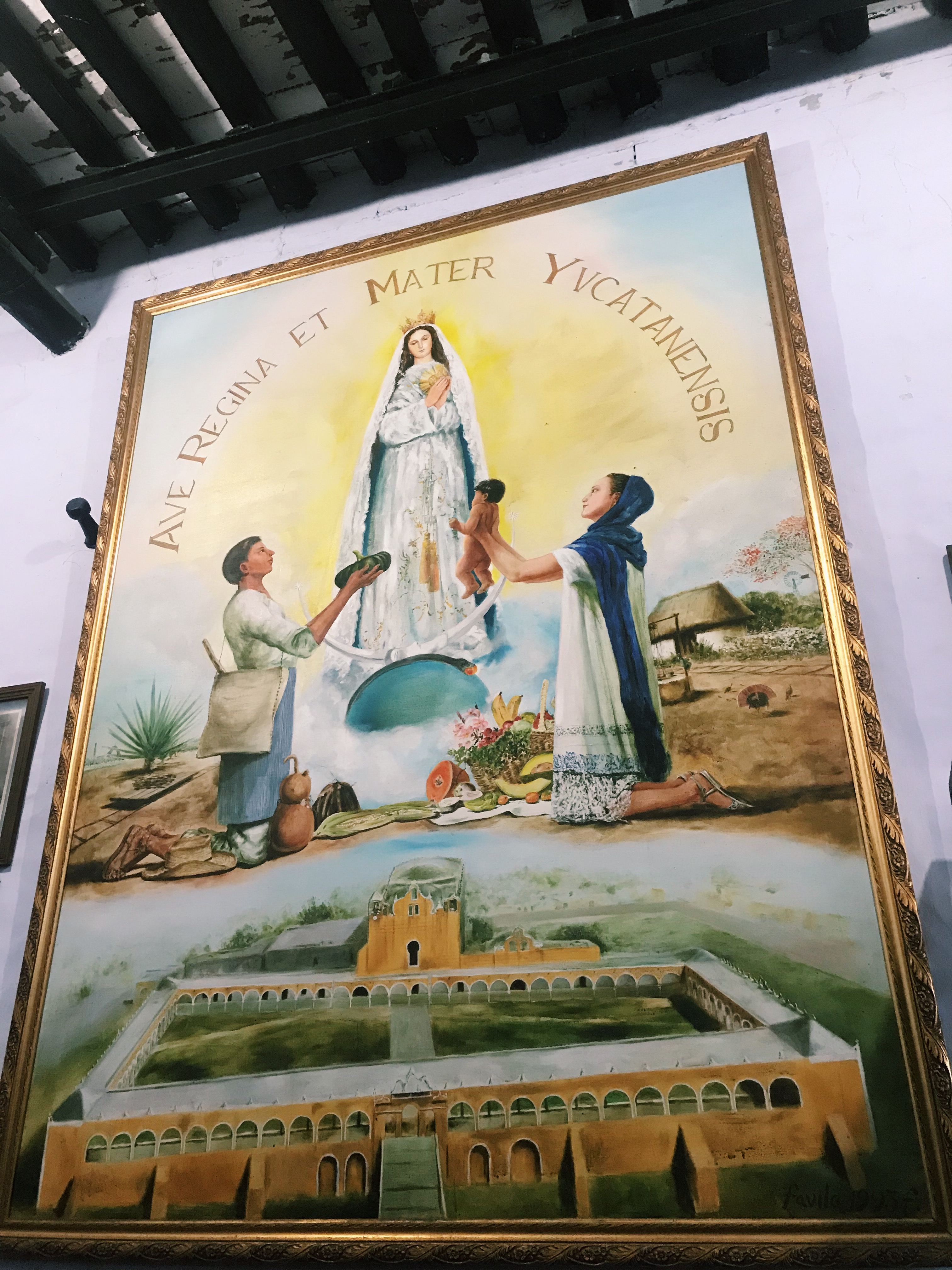
Painting in convent museum depicting Our Lady Izamal -
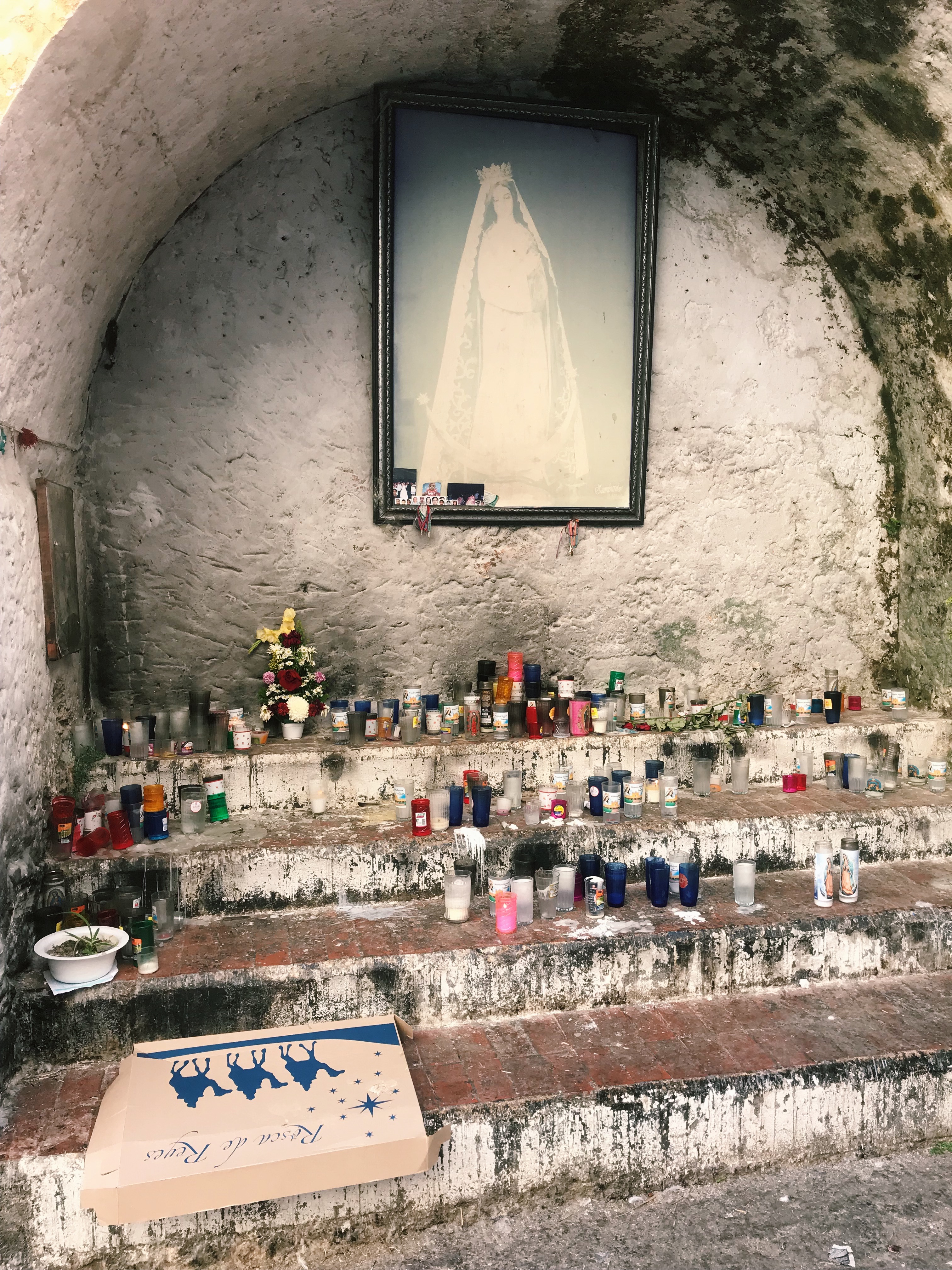
Area in convent where people can leave small offerings like candles for the patron saint
While we were in Izamal, we walked through a henequén art store as well as a factory that are owned by a man who studies interior design and currently sells products to hotels. Henequén is a type of fiber harvested from the Agave fourcroydes plant. The fibers are wound into a twine-like material and then used to make picture frames, lamp shades, tapestries, room dividers, hammocks, tortilla baskets, and many other products. Before plastics were invented, the henequén was woven into bags and ropes. To add color to the products, workers either dip or paint the henequén with natural dyes derived from various minerals or tree barks. As the world population (hopefully) moves away from using so much plastic, henequén products would make a great sustainable and biodegradable replacement.
-
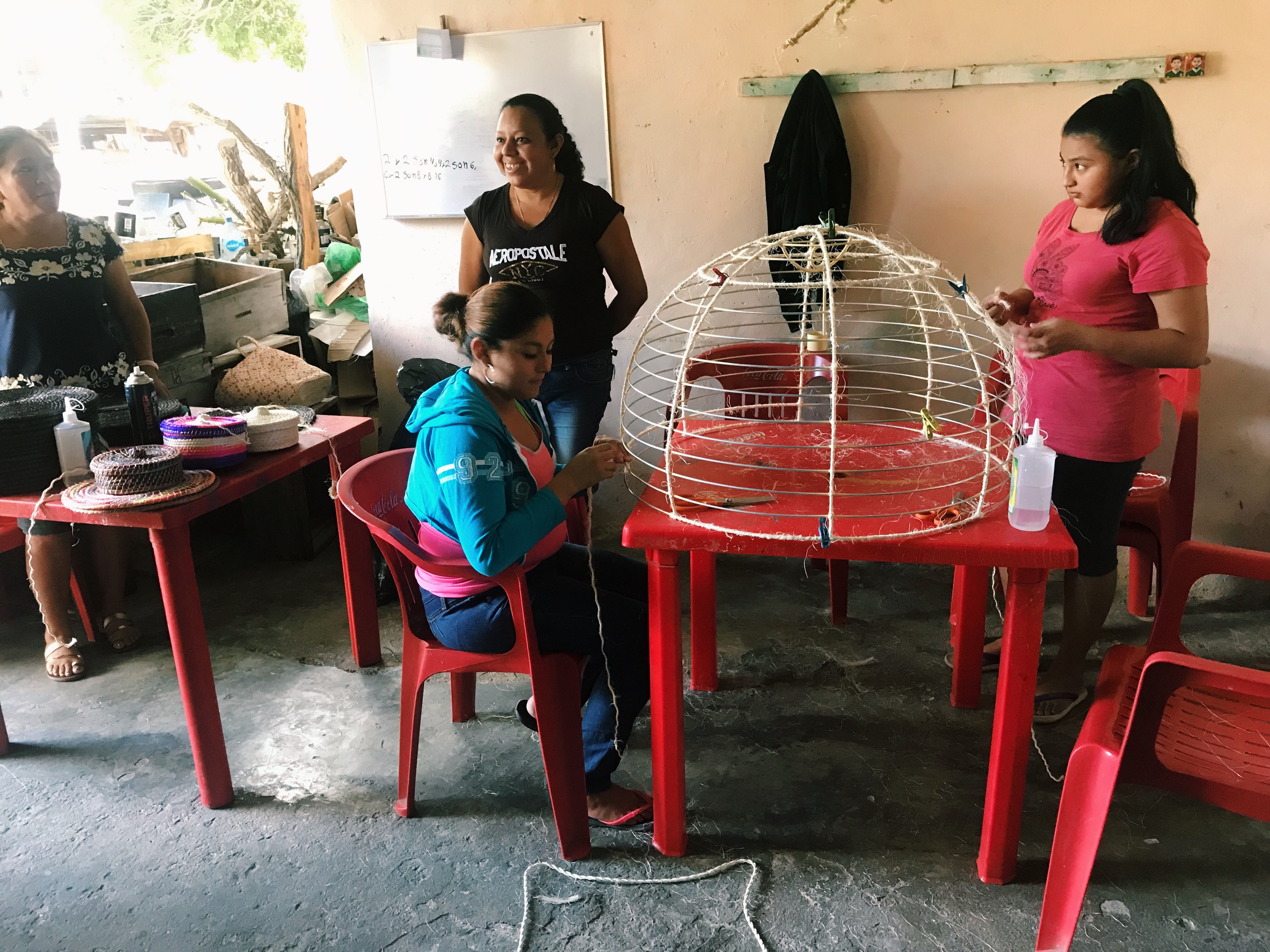
Workers making a lampshade -
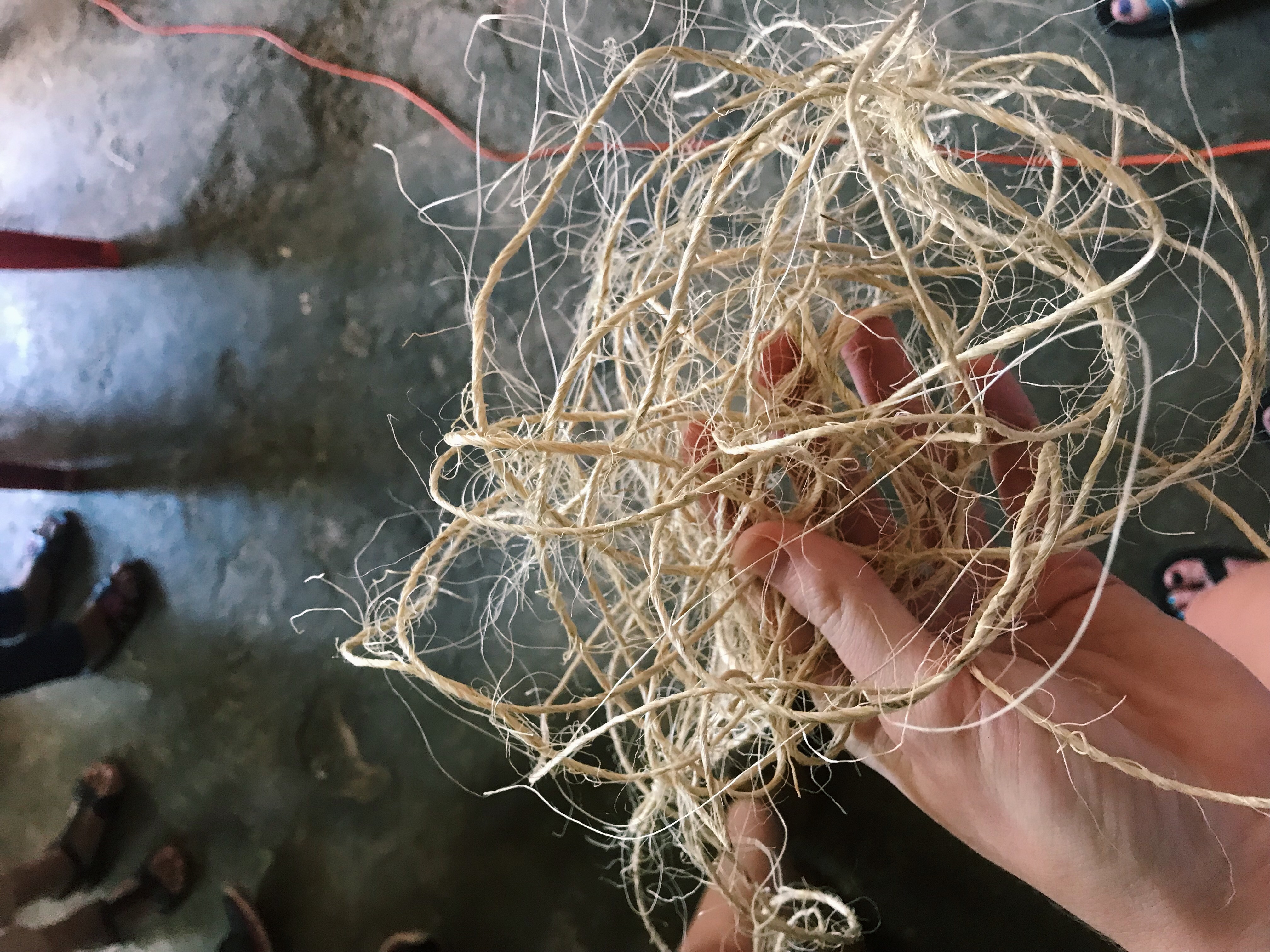
Loose bundle of fibers -
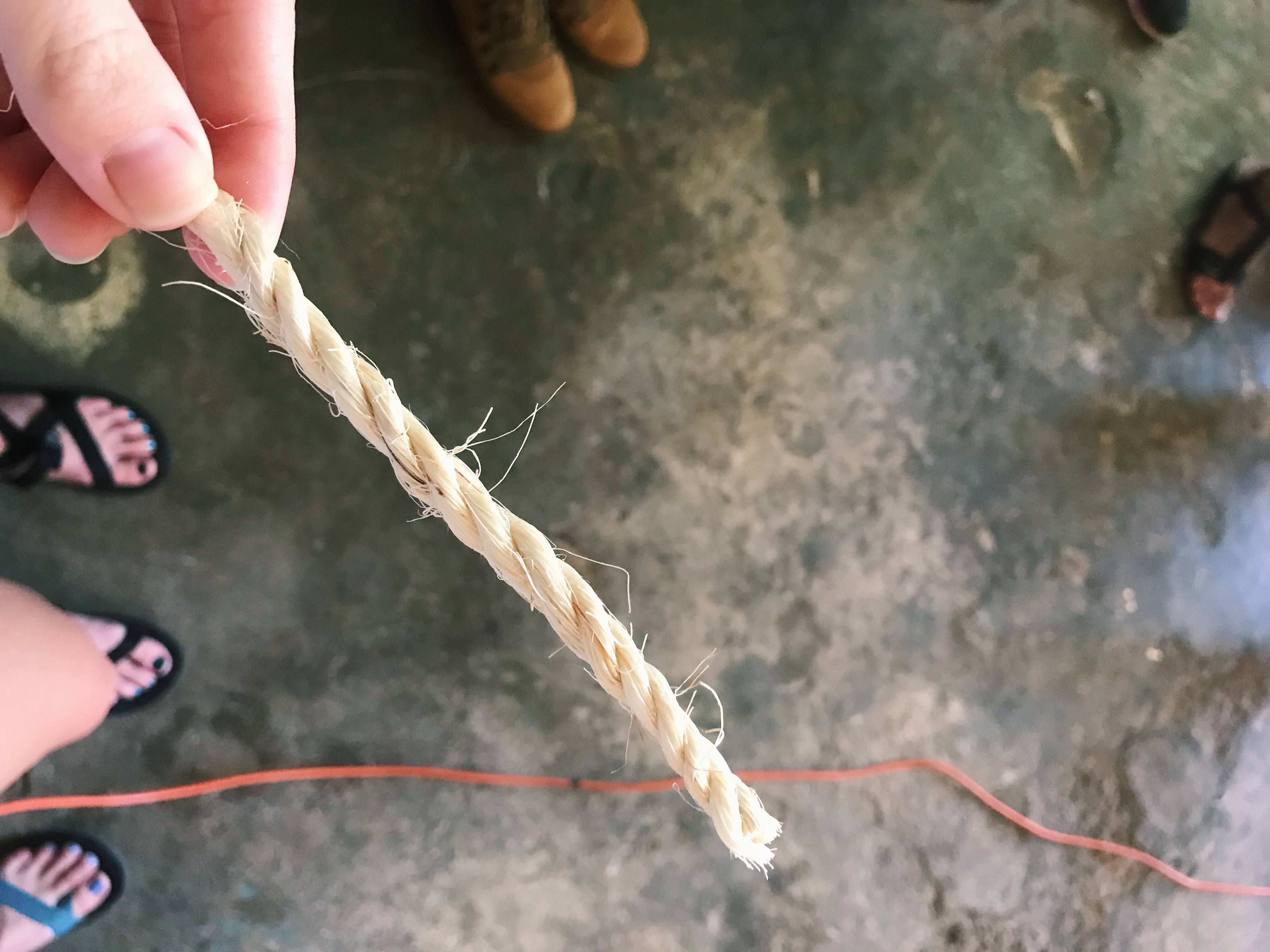
Fibers braided together -
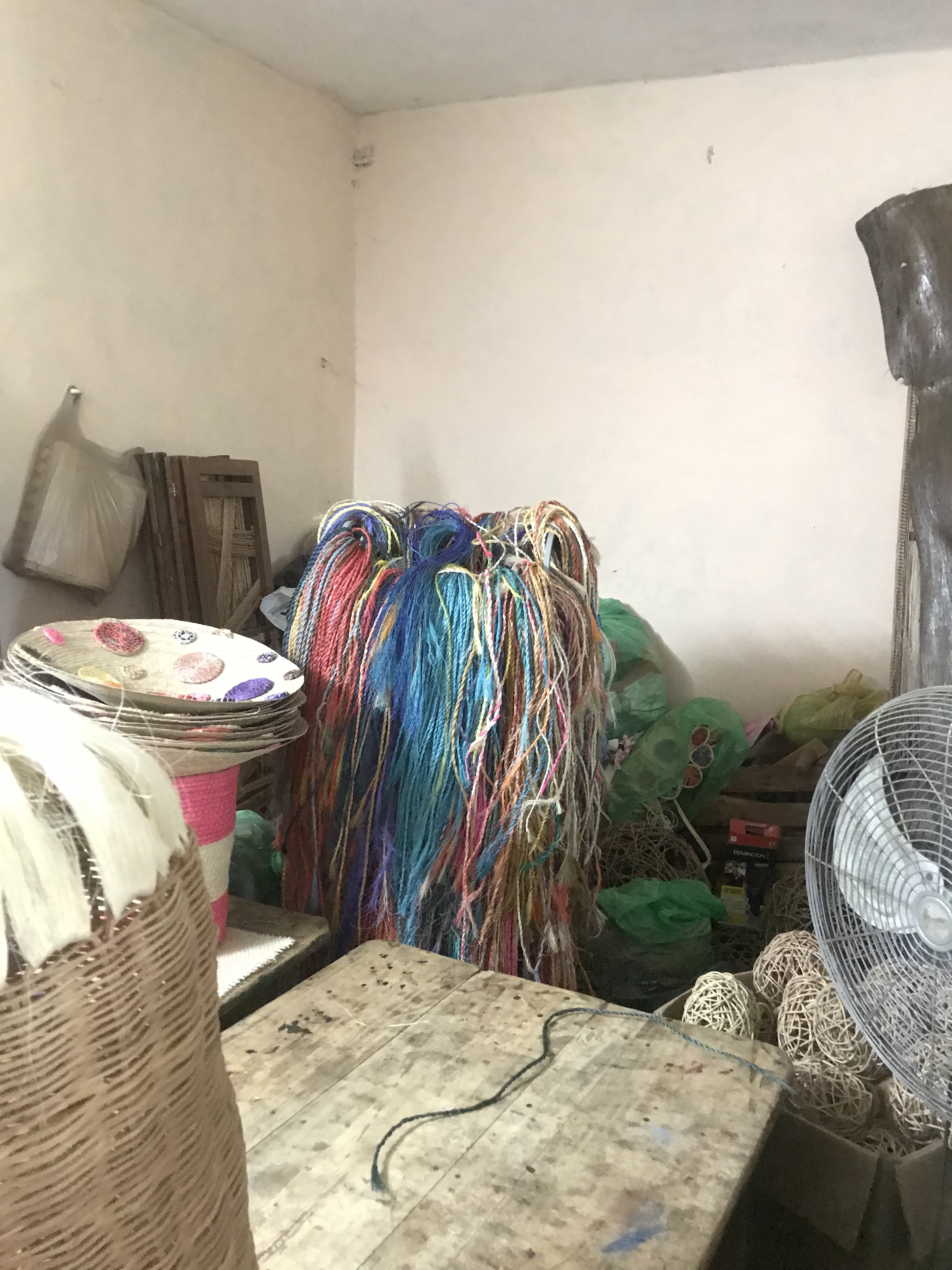
Various colors -
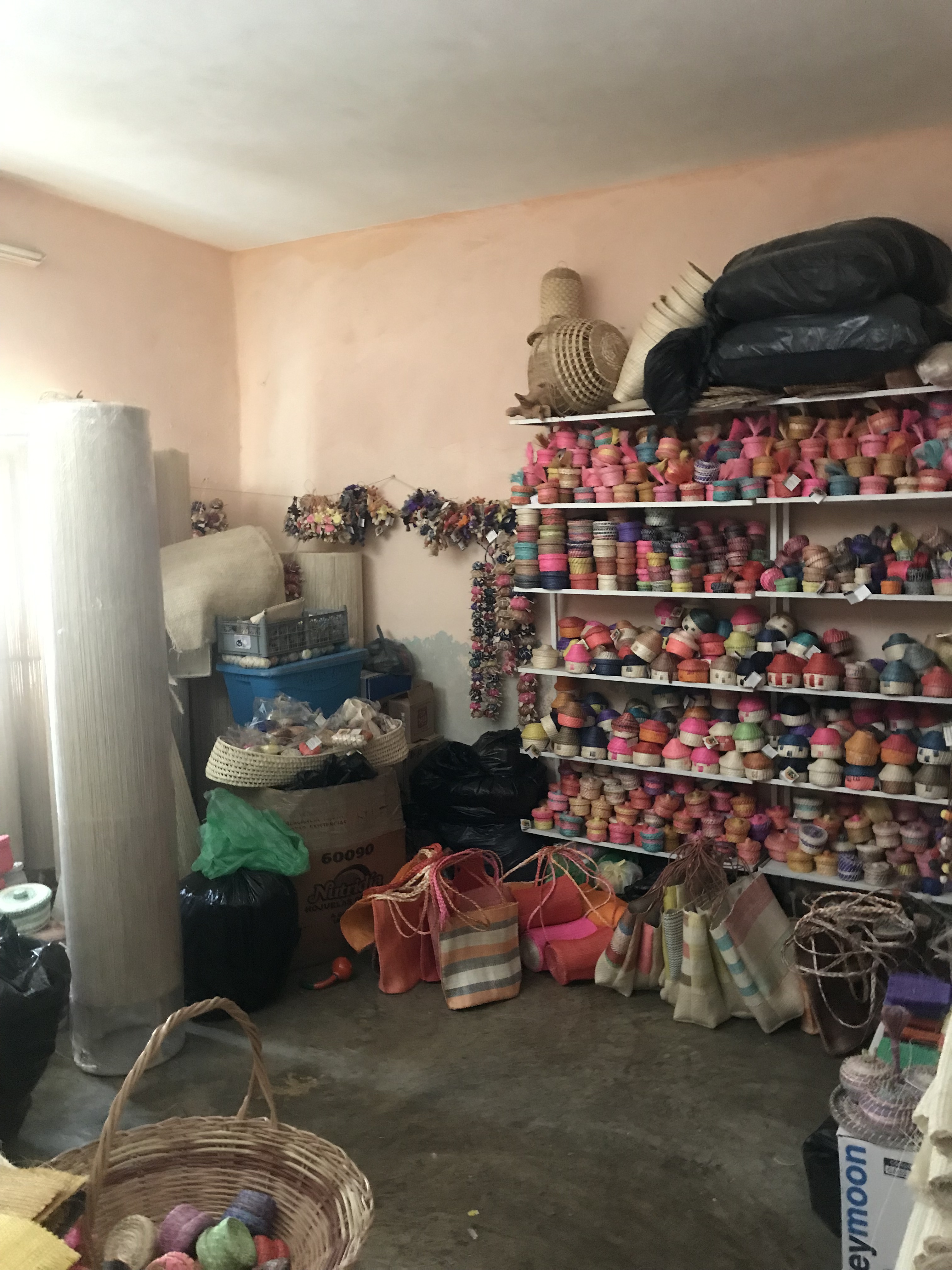
Inside the factory -
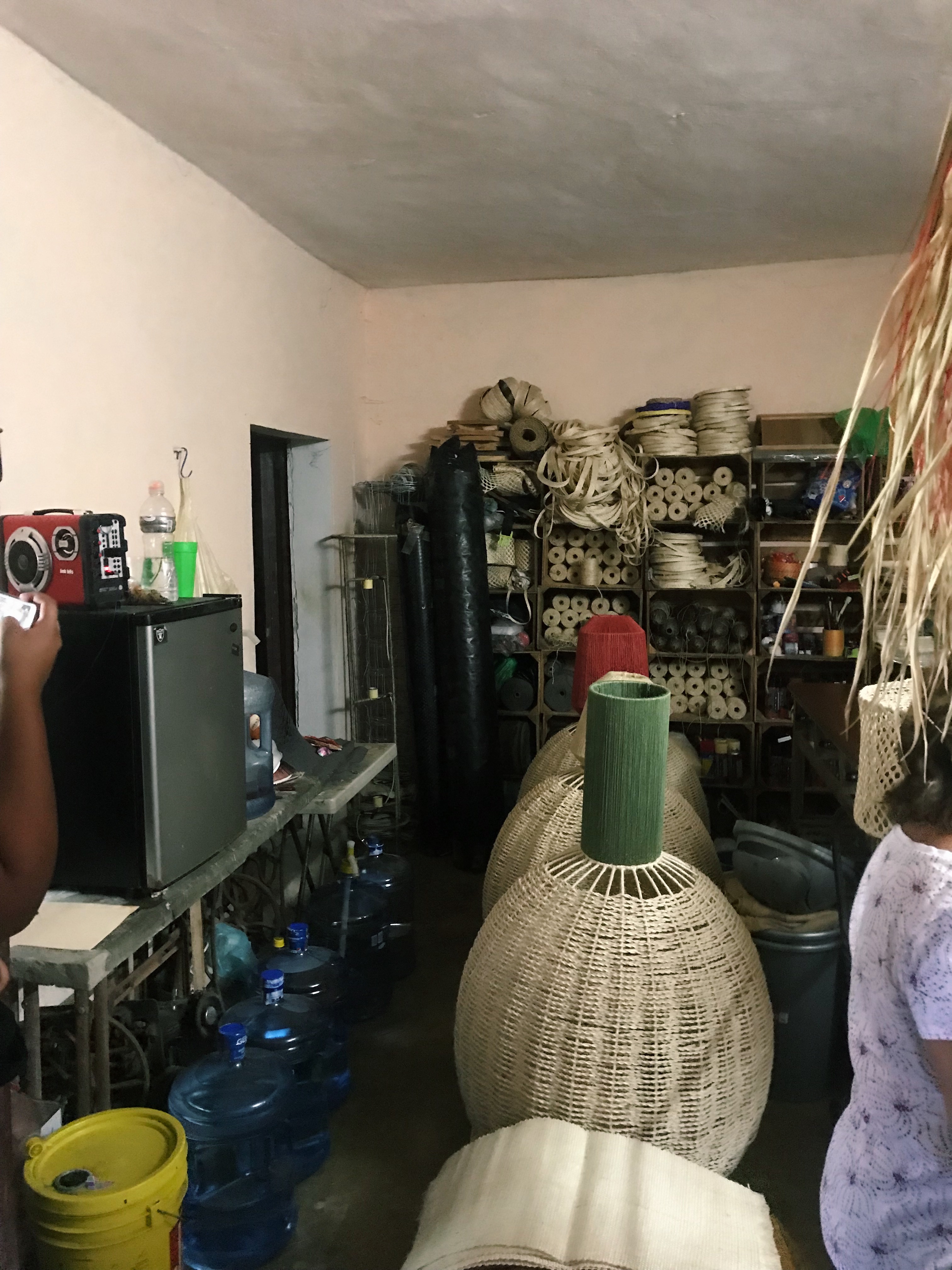
Inside the factory -
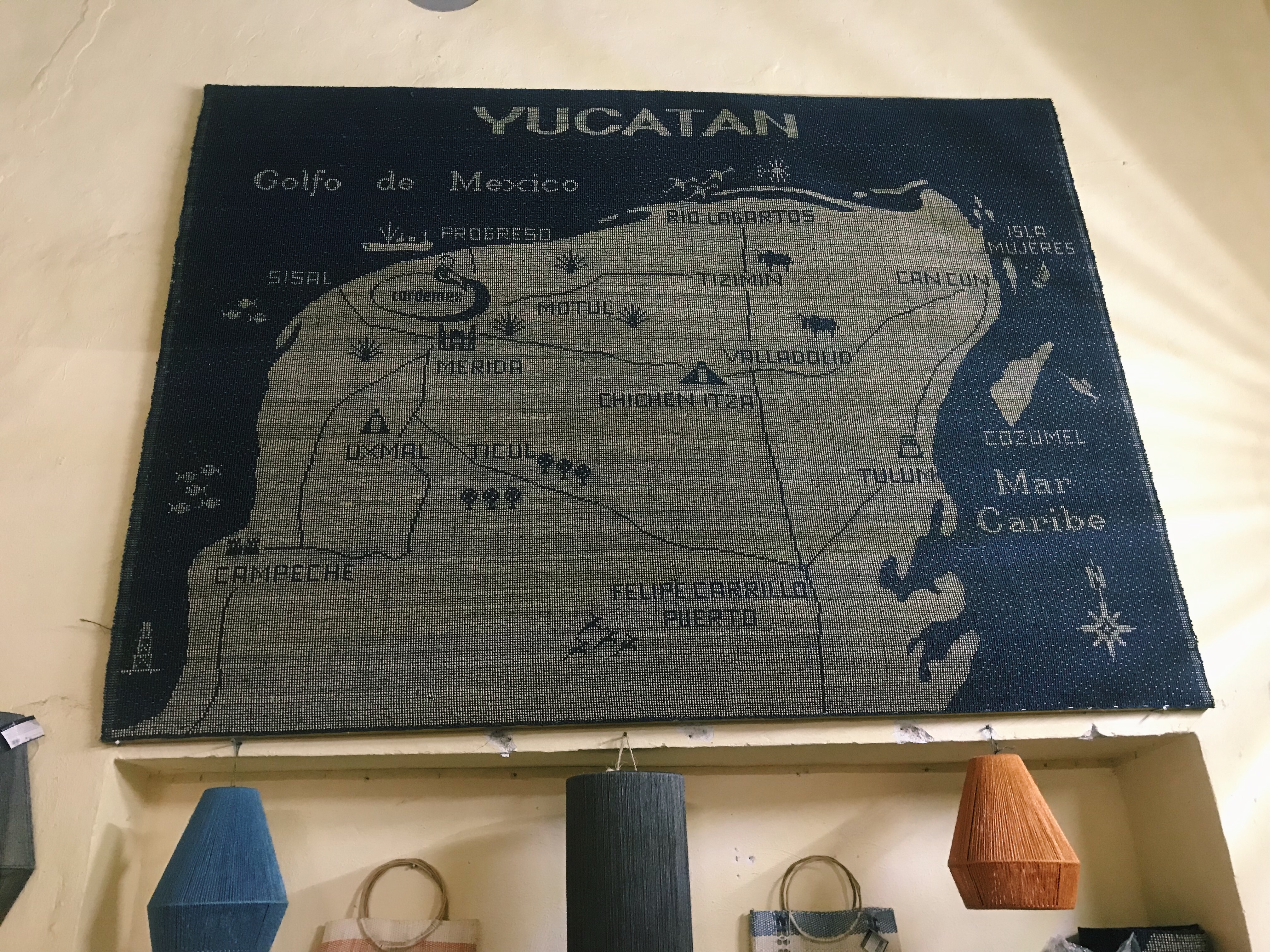
Map woven from henequén -
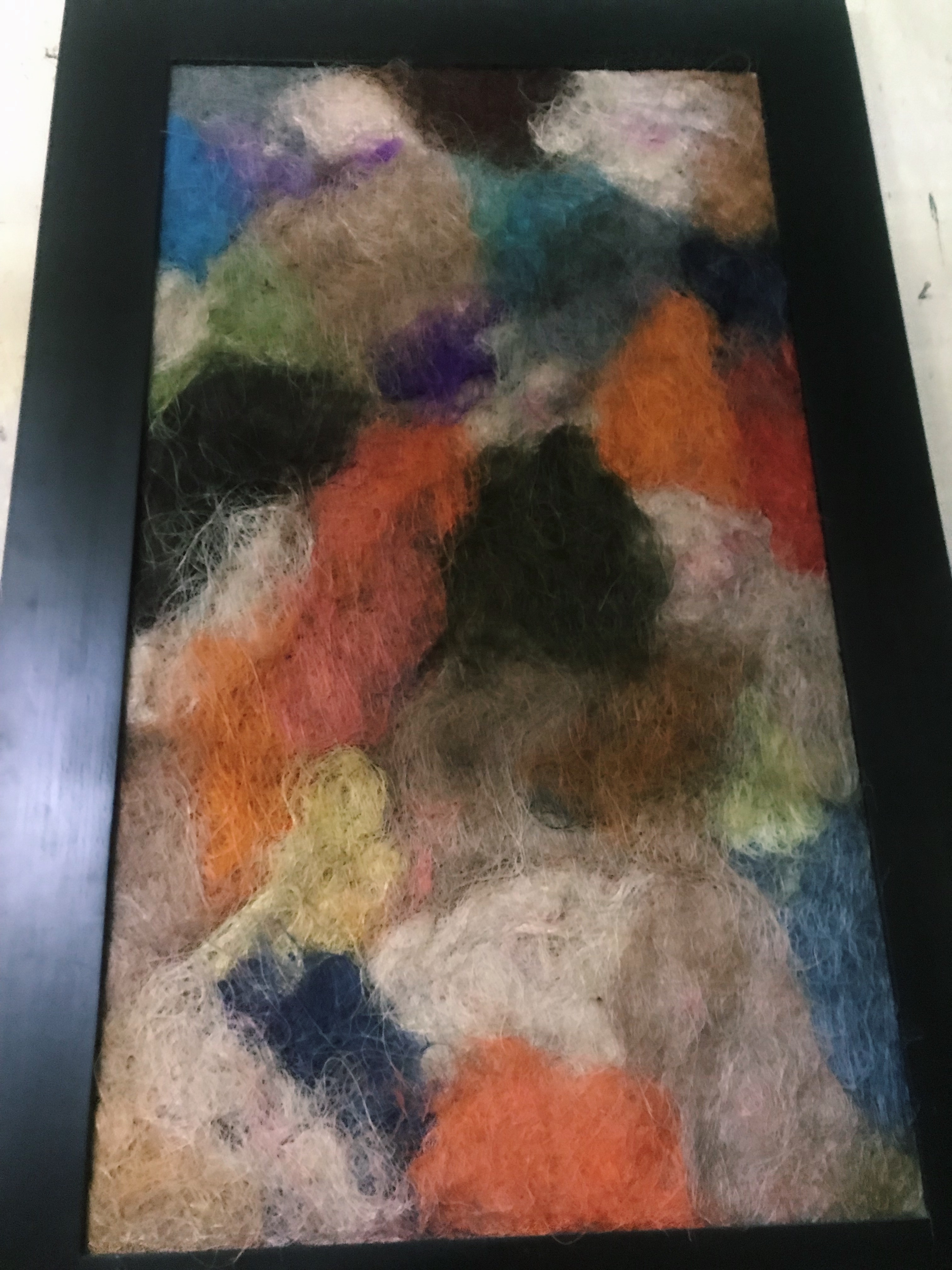
Art made from dyed henequén -
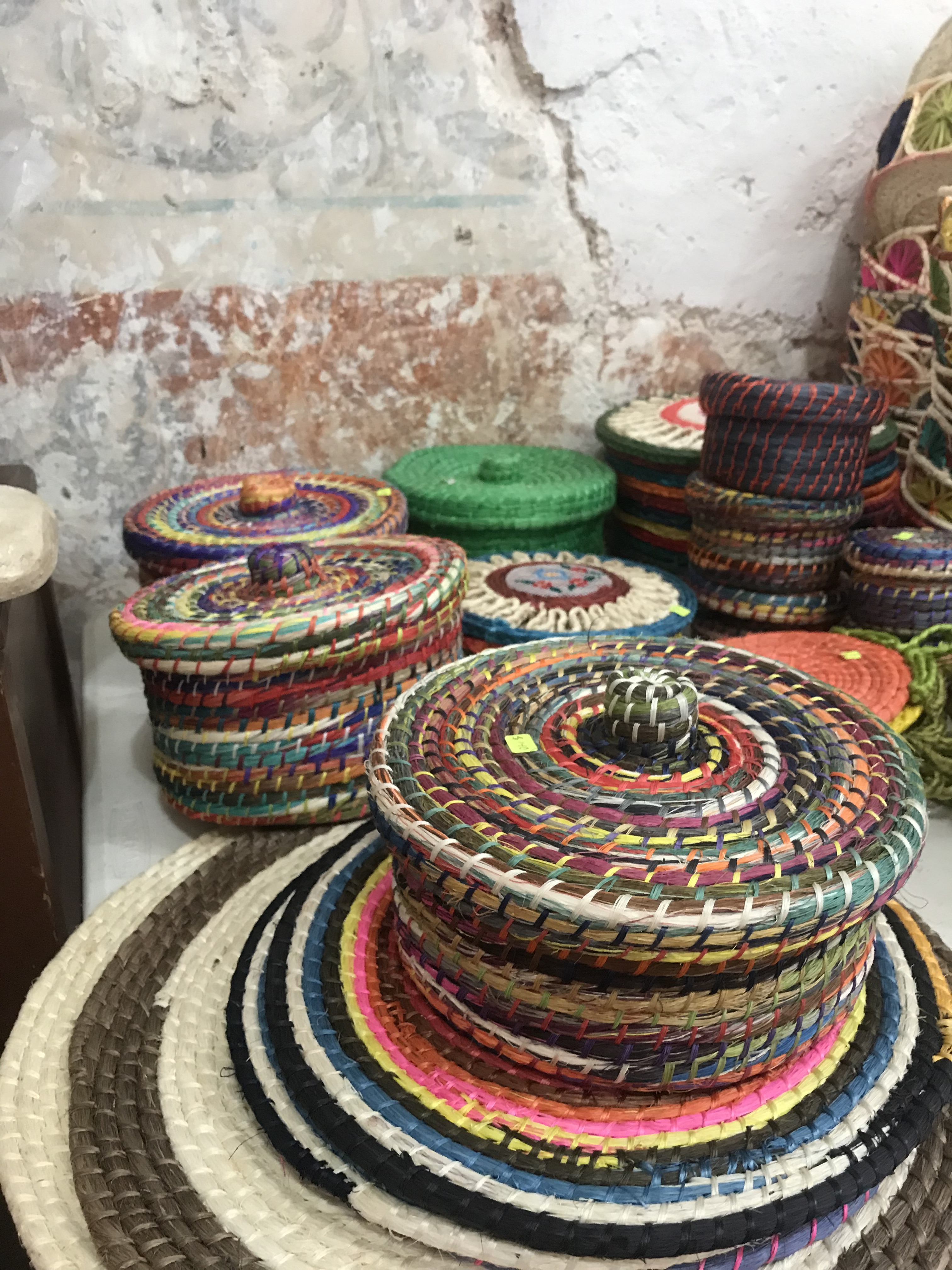
Tortilla warmers
After viewing the henequén store and factory, we walked through town to climb the Kinich Kakmó Pyramid. This pyramid was a temple dedicated to a solar deity and is the largest size wise in ancient Yucatan Mayan civilization (200 meters long, 180 meters wide, 34 meters tall). It was constructed from 400-600 A.D. and was still populated when the Spaniards invaded.
-
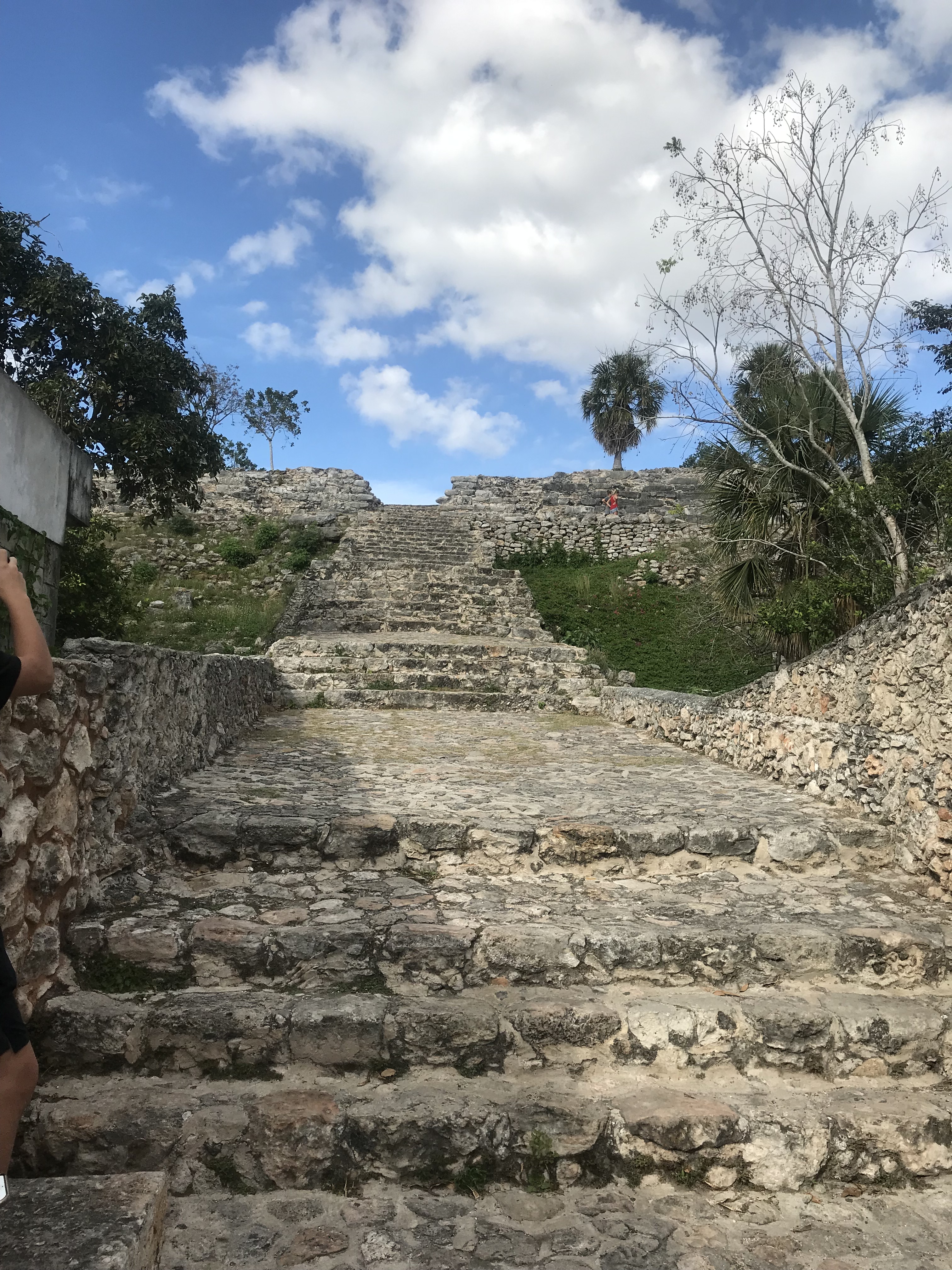
View of the temple from the bottom -
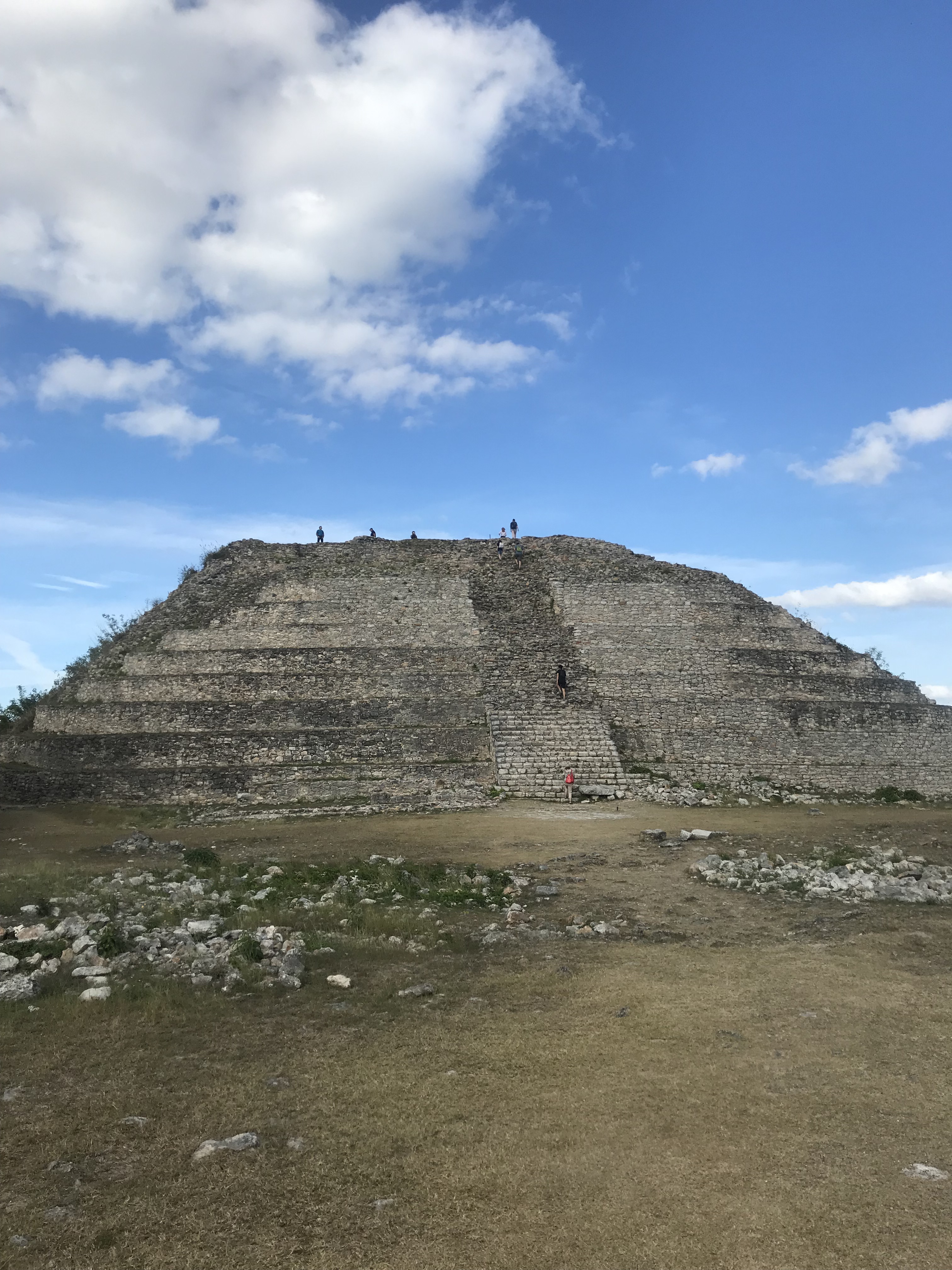
View of the temple from halfway up
When we finally reached Mérida, I was surprised to see how different it is from Valladolid. Compared to the smaller town of Valladolid, Mérida has a big city feel to it with cars and buses everywhere, people crowding on all the sidewalks, and shops lining all the streets with vendors trying to sell things. Even though we haven’t seen much of it, I much prefer Valladolid with its more easygoing ambiance. I hope that once we begin exploring and seeing more throughout the next few days, I will come to love Mérida as much as I have come to love Valladolid.
Jan. 16, 2019
 Explorando en Yucatán