
Abejas y bares
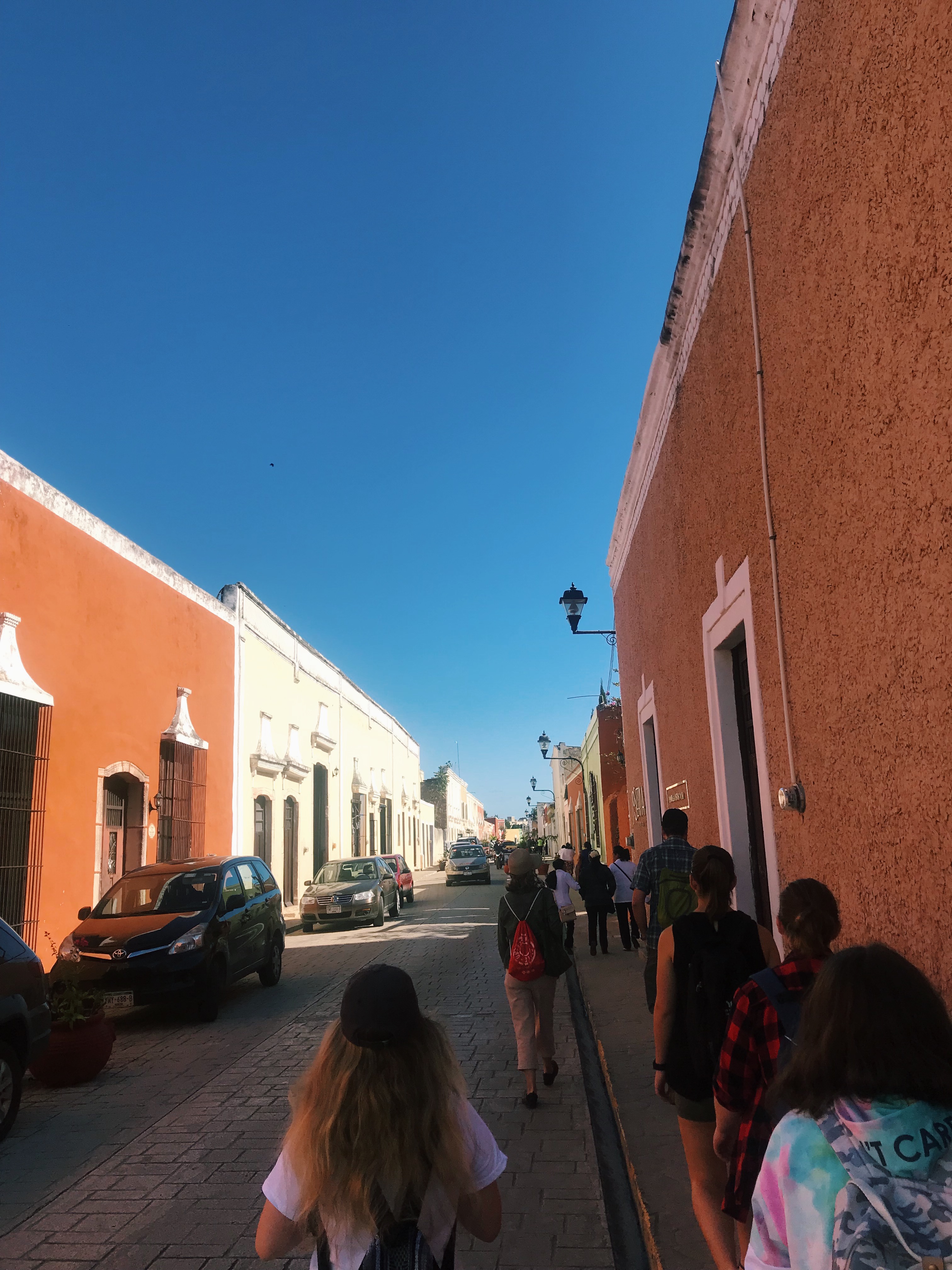
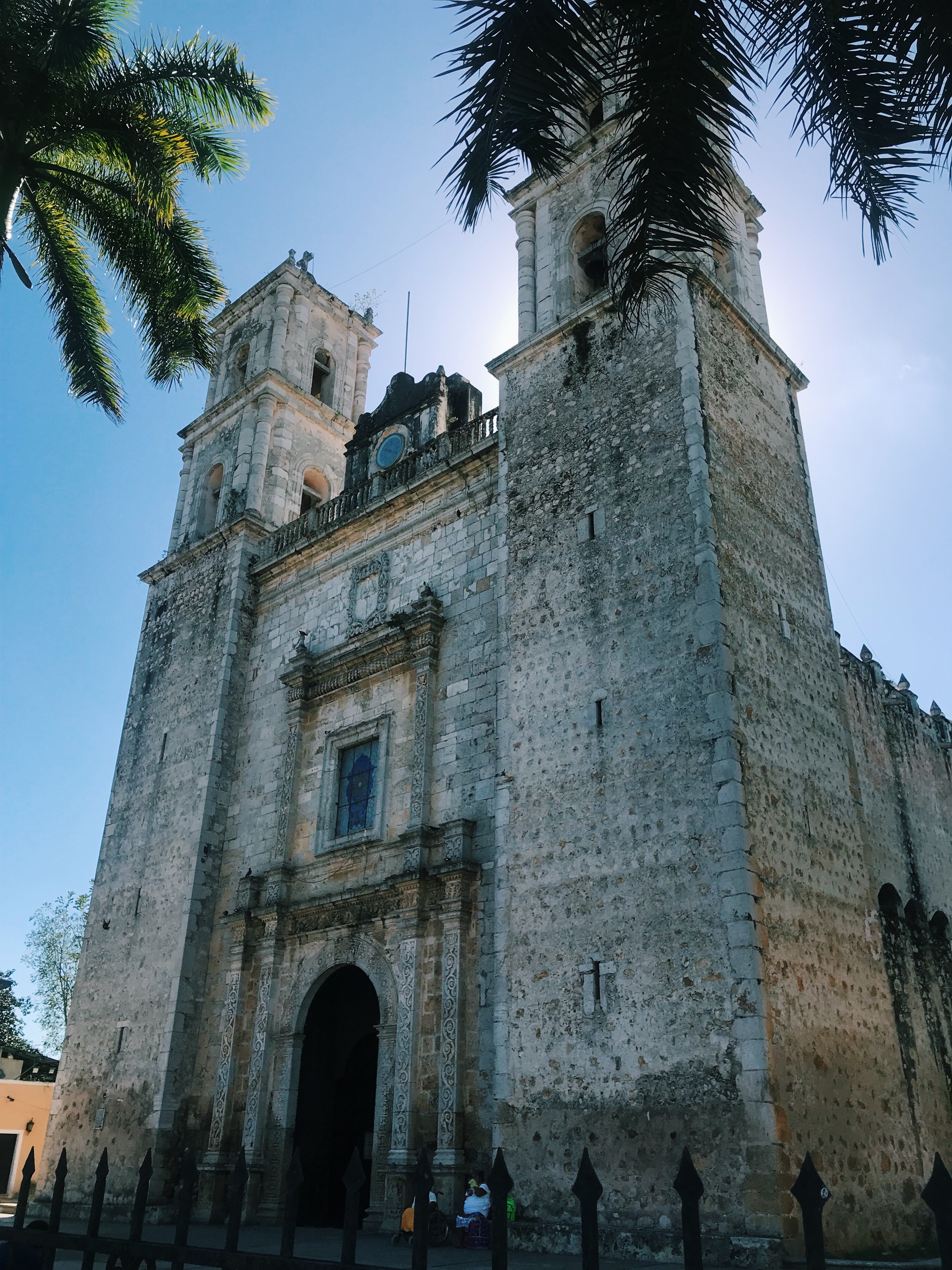
This morning we walked about one and a half miles through the town of Valladolid to Xkopek Beekeeping Park. During the walk, we passed the plaza and saw beautiful buildings like the church.
Once we got to Xkopek, we prepared tamales from masa (dough) made from maíz y chaya, a spinach-like leaf. We molded the masa into rectangular shapes, wrapped them in banana leaves, and then placed them into a steamer to cook. After our tour of the park, the tamales were finished cooking and we added a tomato based sauce and boiled egg to the top. During the tour, we picked limes from a tree that were then used to make a lime juice and honey that we drank out of fruit shells called jícara. The experience of making the tamales by hand and seeing the work that goes into the preparation made them taste so much better and gave me a greater appreciation for people who constantly take the time to prepare fresh meals every day. So far during this trip, I have also noticed that the meals we have been eating are a lot healthier than anything I would have eaten back home. The people prepare food directly from nature and there are very little processed foods or overly sweet/salty foods. When I return to Virginia Beach, I am going to try and eat more deliberately and prepare food myself rather than snacking all day long or eating out at cheap fast food restaurants.
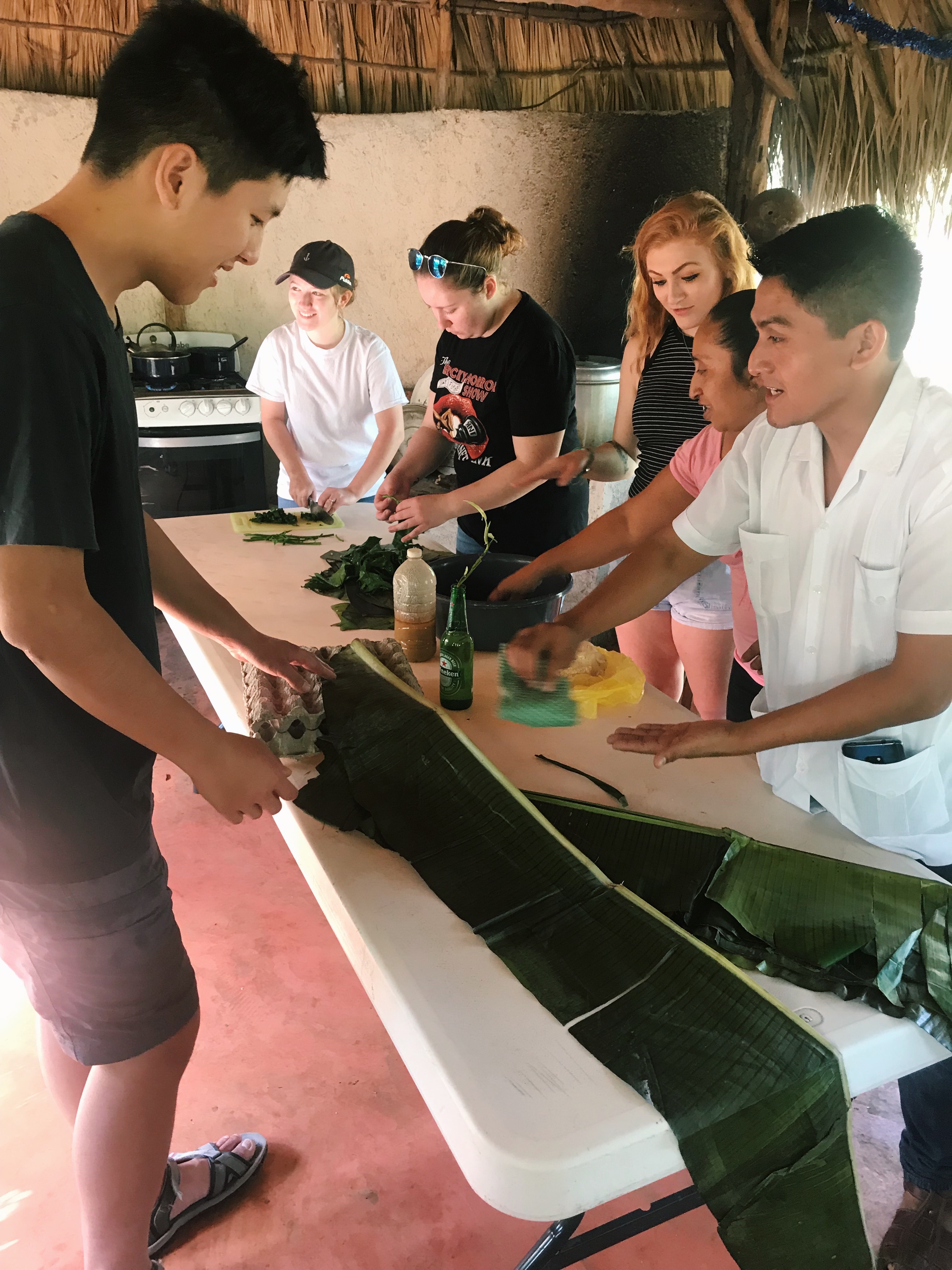
Washing the banana leaves, mixing the masa, and chopping chaya leaves 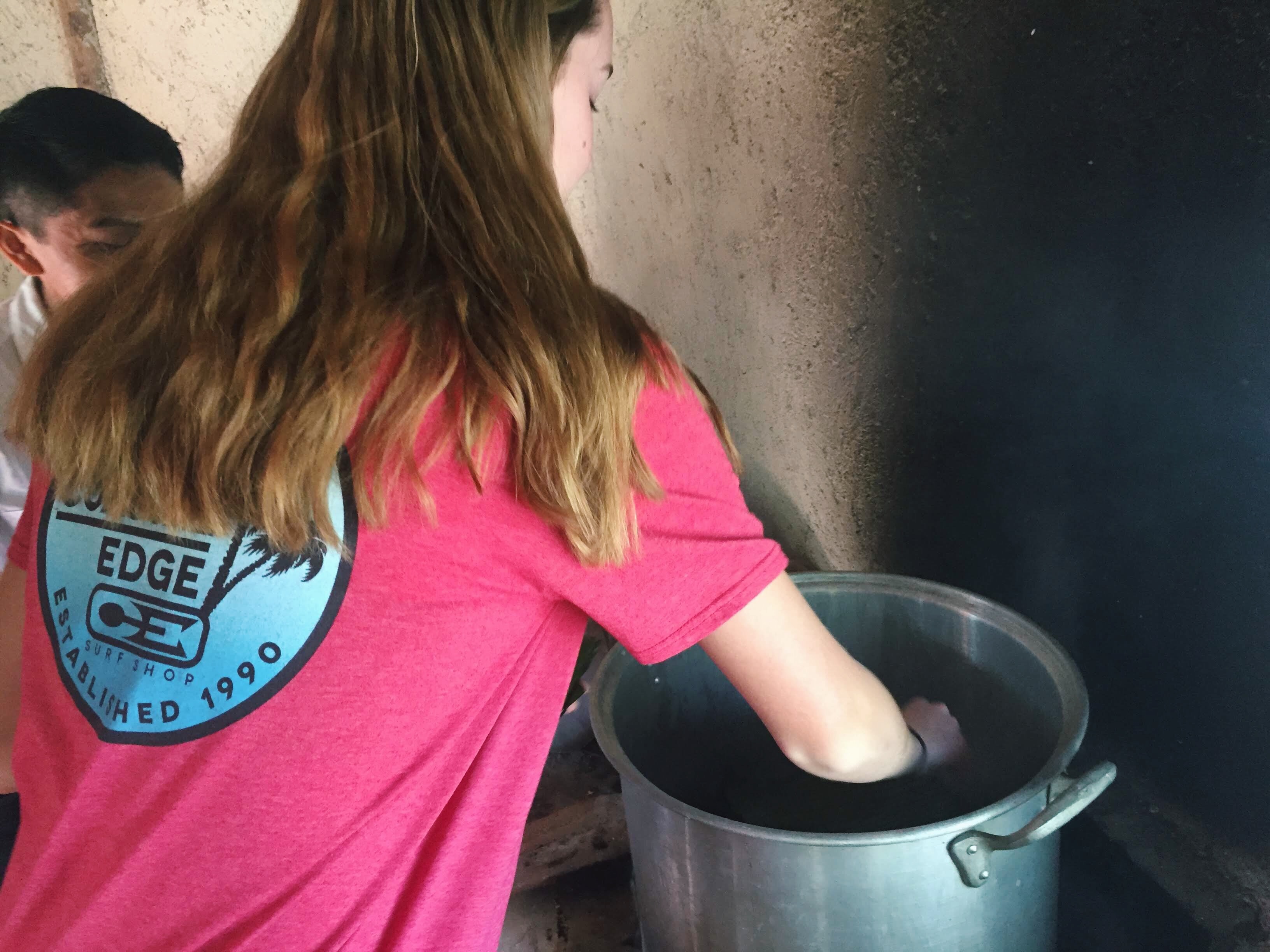
Placing tamale in steamer to cook 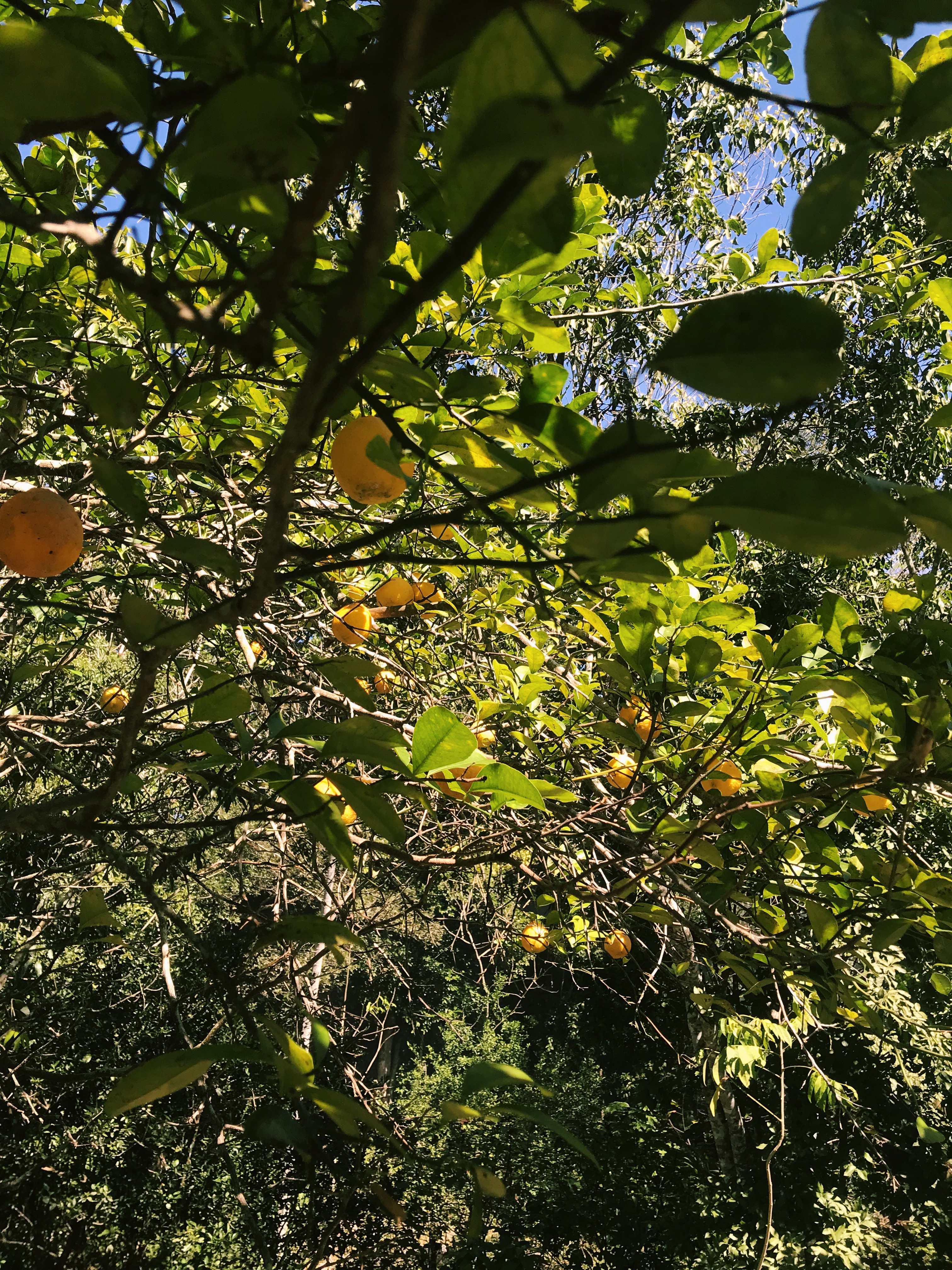
Fruit tree 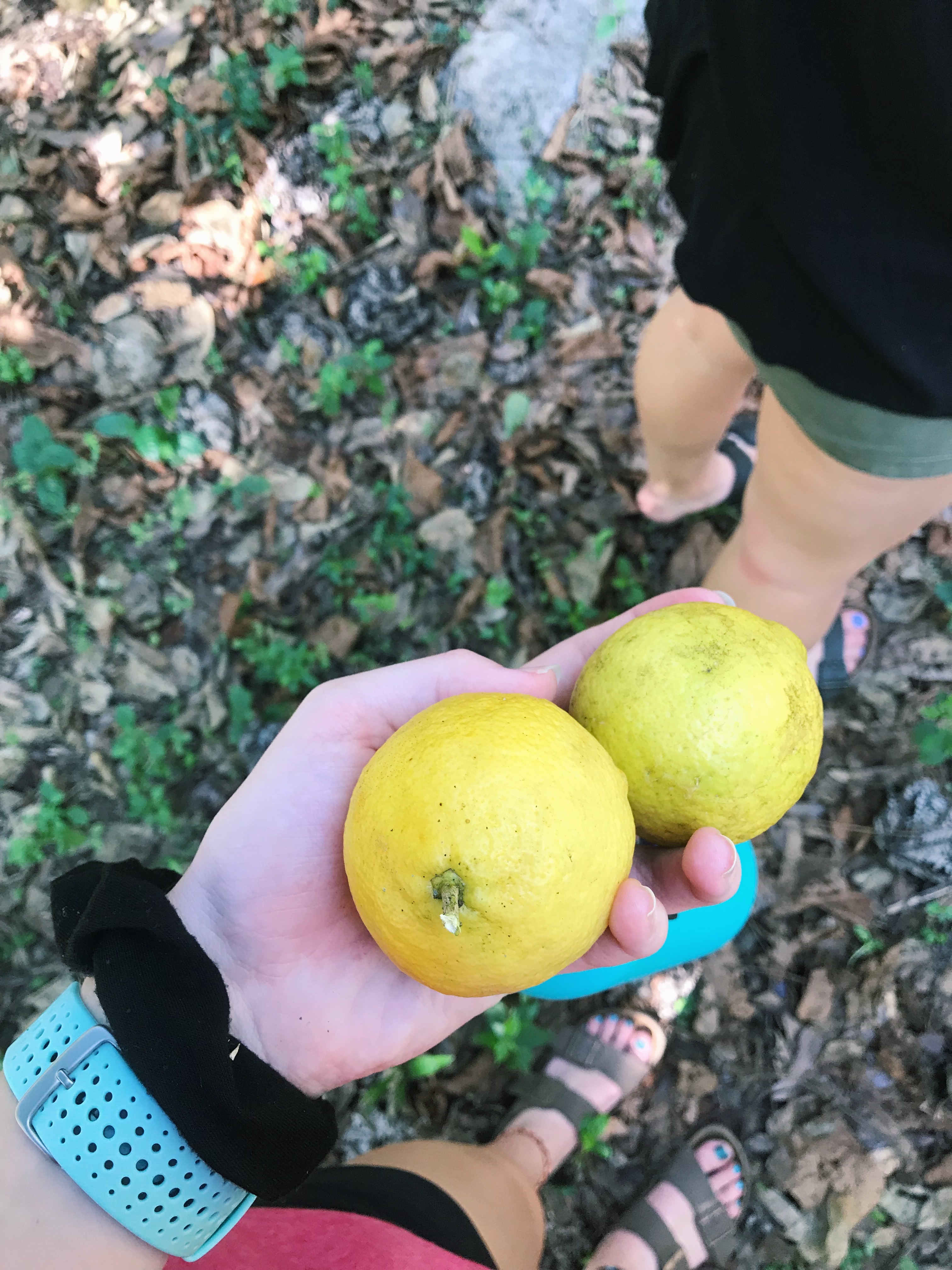
Harvested fruits 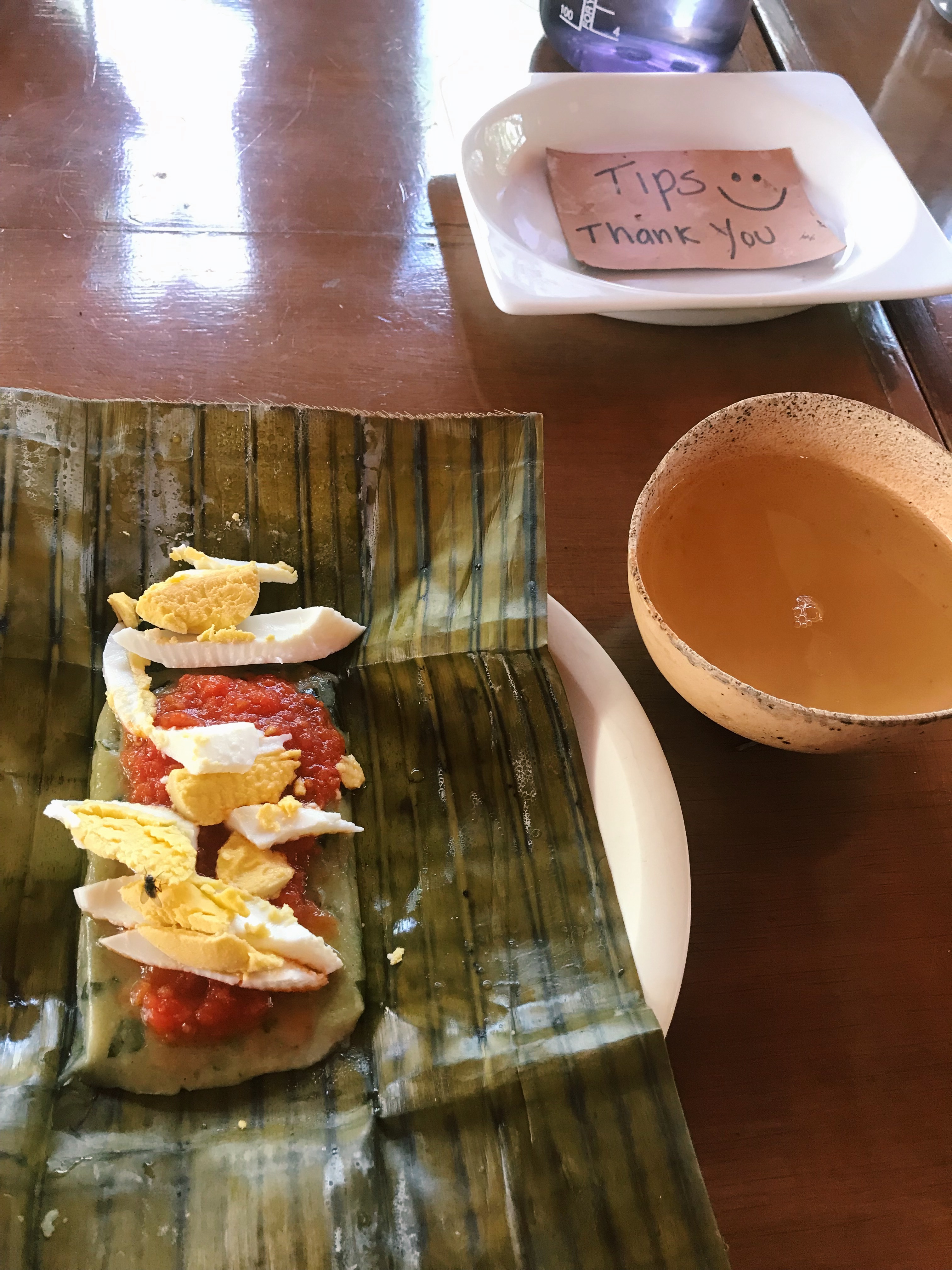
Finished tamales and lime/honey juice
The first stop we made on our tour of Xkopek was down to a dry cenote that was full of plant life. The beginning part of the Mayan word Xkopek, “xkop”, translates to dry cenote (the second part of the word, “ek”, is a specific type of wasp only found in the park). Dry cenotes are formed when the cenote opens up and becomes filled with organic matter to the point that it eventually covers the water with a layer of dirt. Dry cenotes are able to support a wide range of plants due to the extremely fertile soil and nearby water, located only 6 or 7 meters below the ground. Because of this, trees are able to grow taller as they are not growing so far down to search for water with their roots. In the dry cenote we explored, there was a wide variety of plant life including sweet orange trees, sour orange trees, wild papaya plants, mango trees, achiote (Mayan name ku’xu) which is used for natural dyes, and cieba (yaxché). Cieba is a sacred Mayan tree that represents the 13 levels of heaven through the branches, earth through the trunk, and the 9 layers of the underworld through the roots. The trunk of the cieba tree is hollow, and it is thought that the tree shows the passage of people up into heaven. The Mayan people have an extreme respect for nature which is something I admire, and I wish that more people shared this thought instead of seeing nature only for its instrumental value.
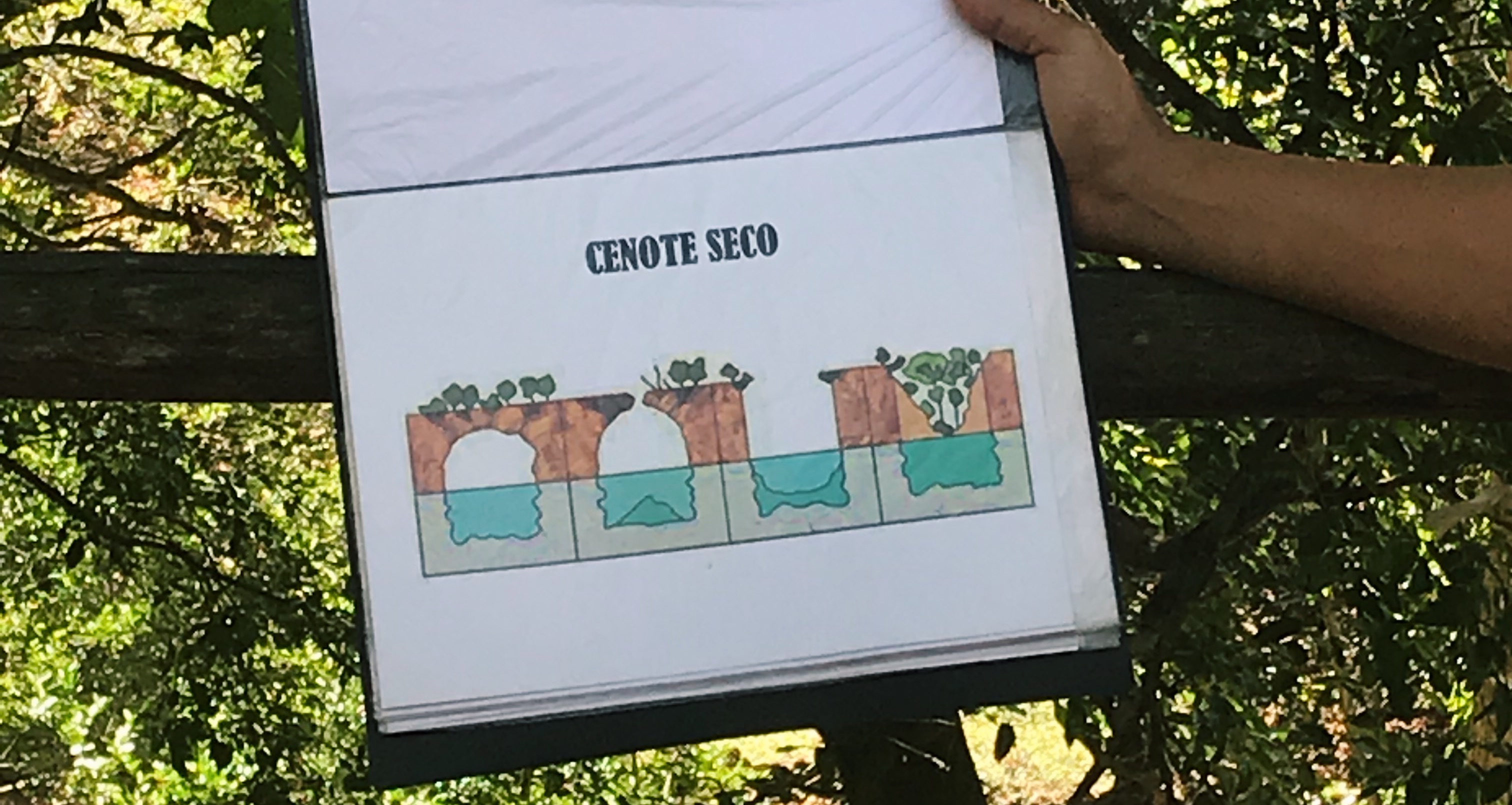
Different stages of a cenote 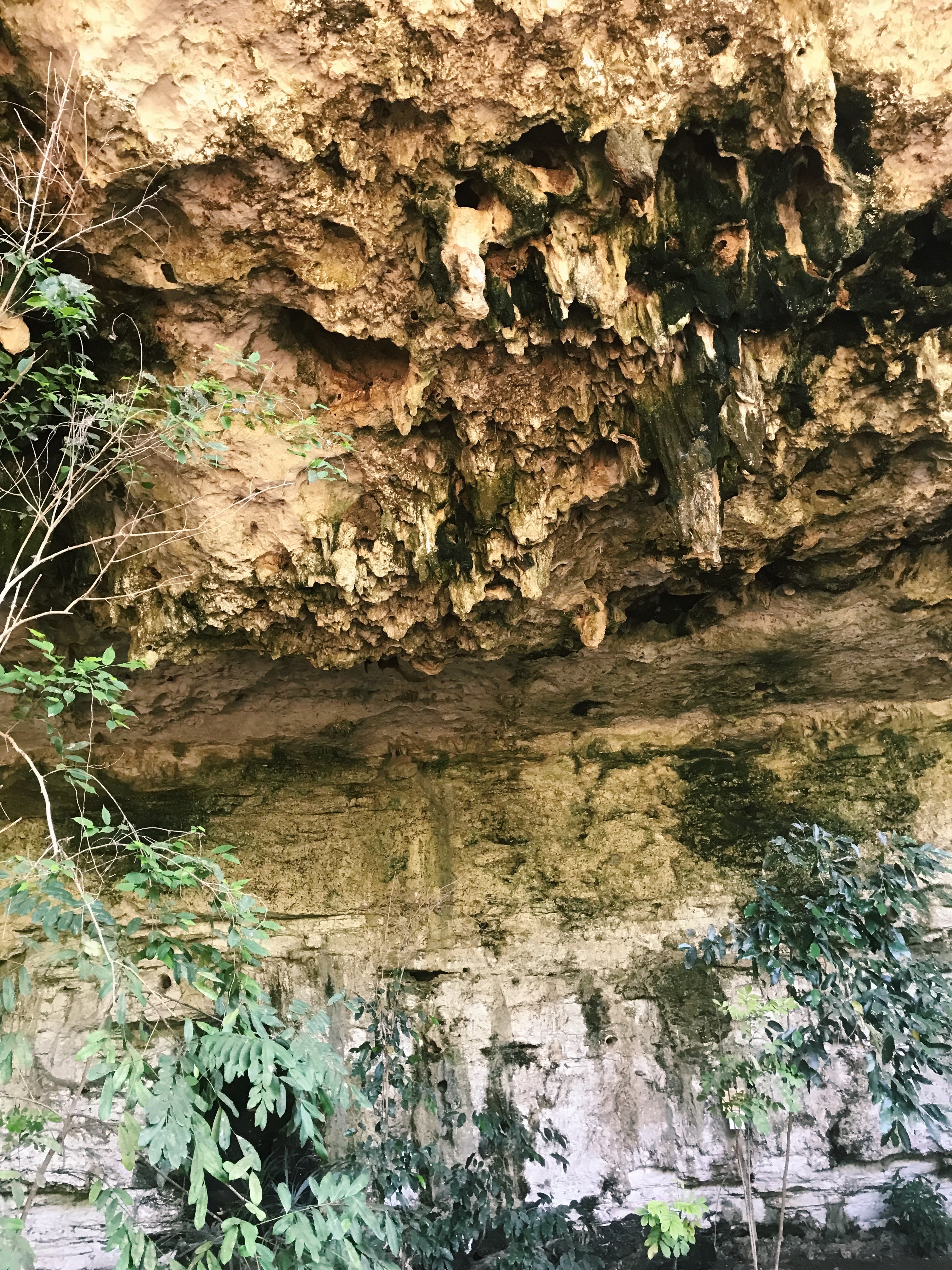
Inside cenote 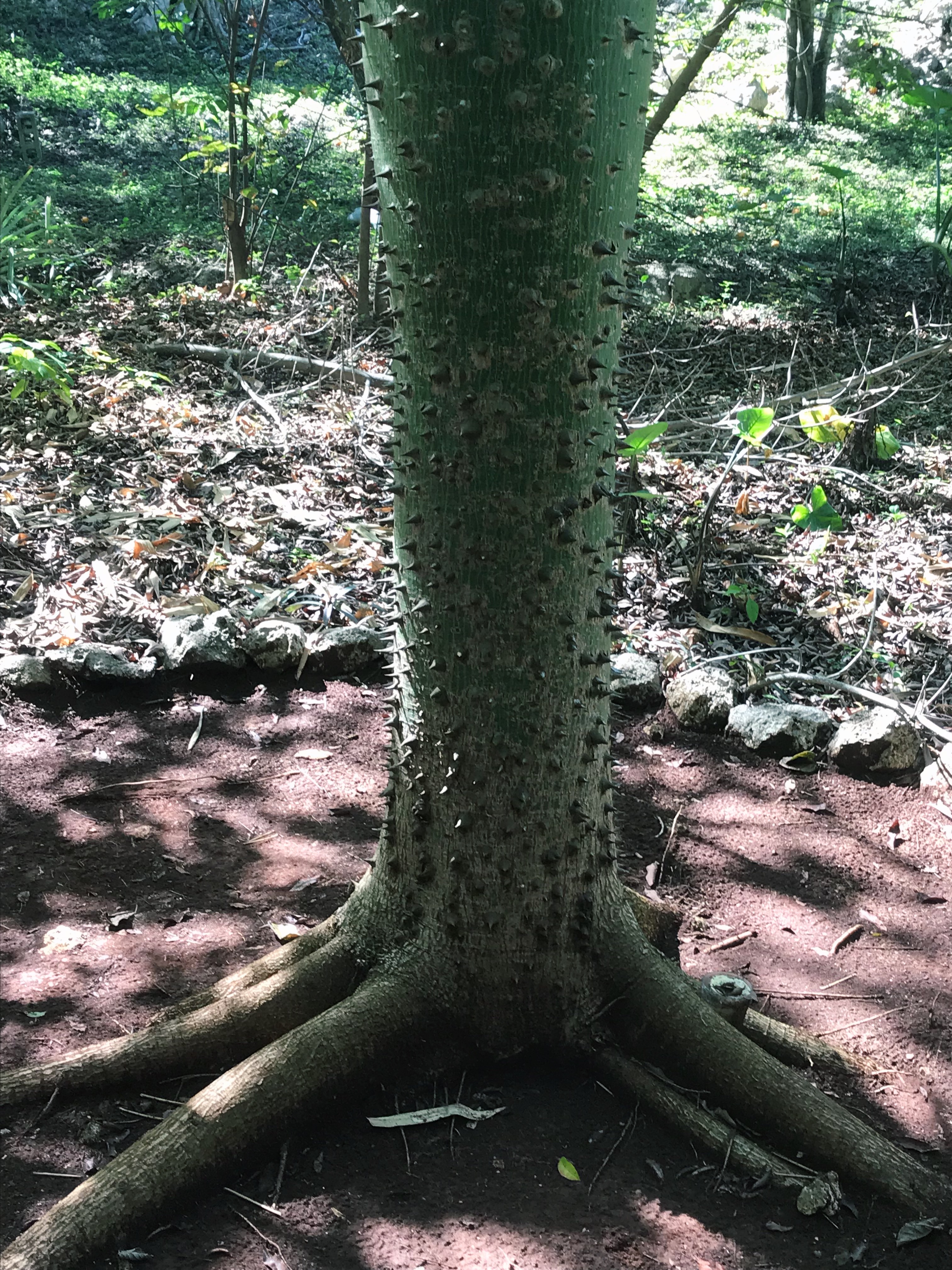
Spikes on cieba tree trunk 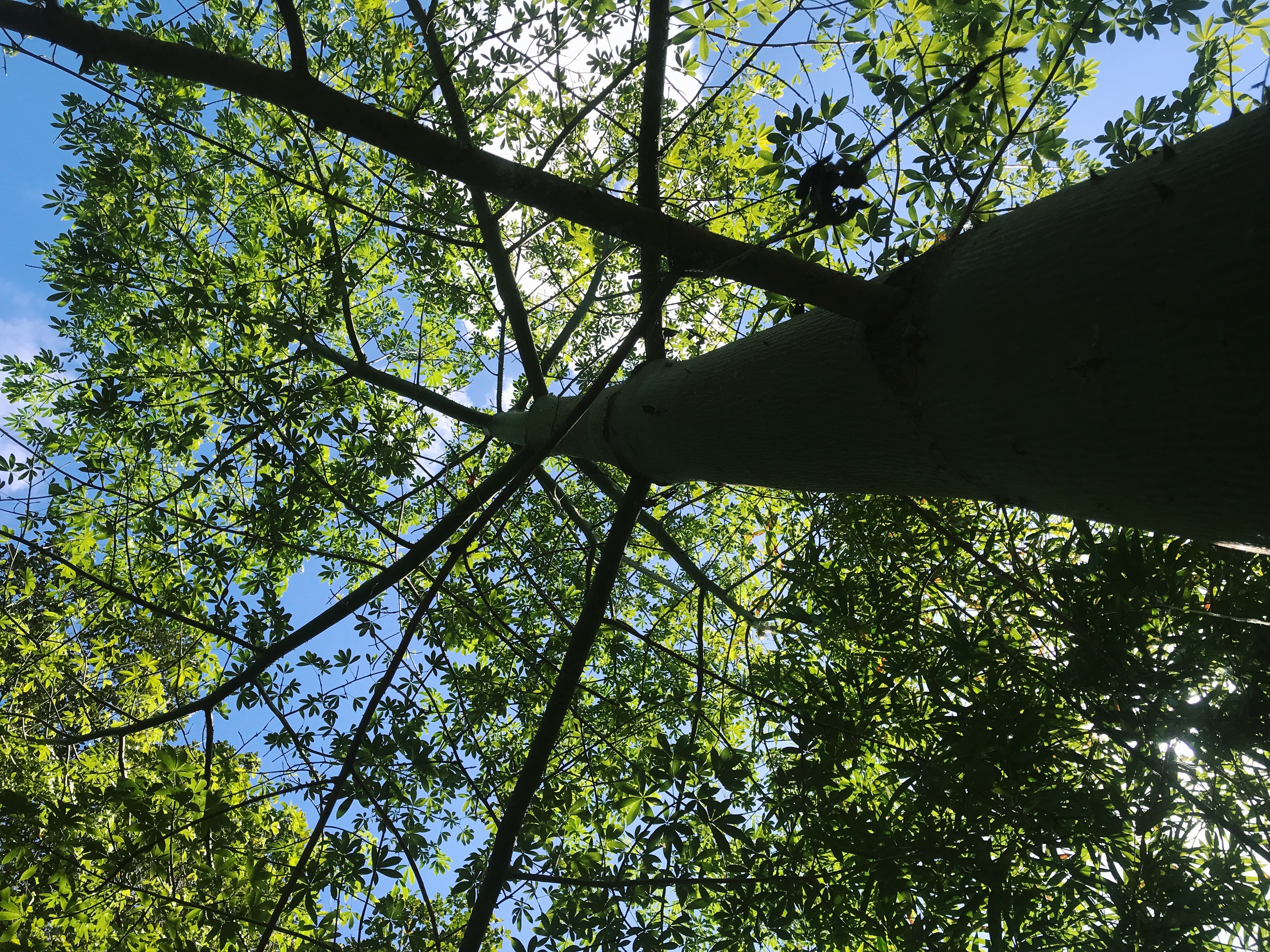
Cieba branches 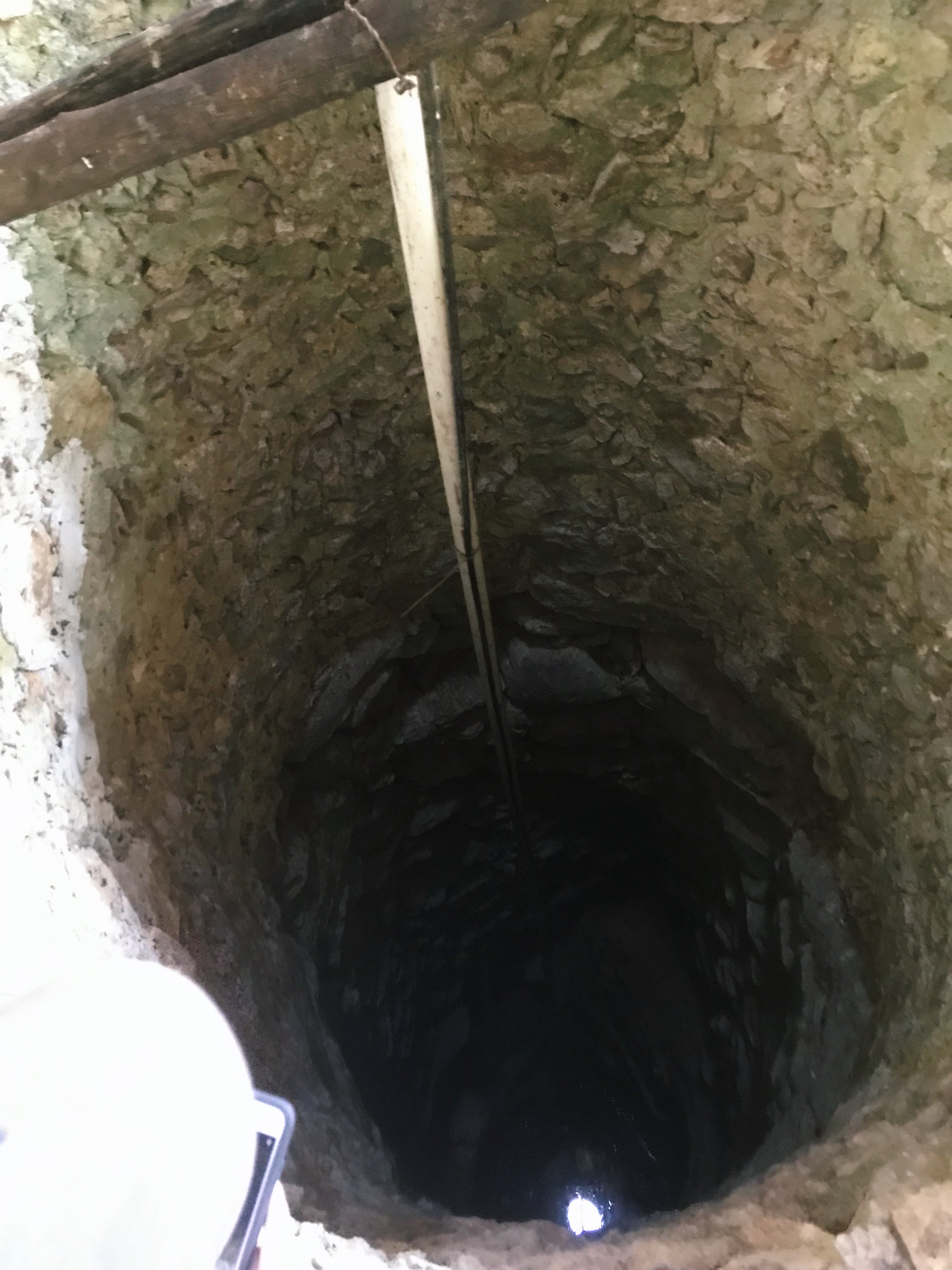
Well leading down to the cenote water 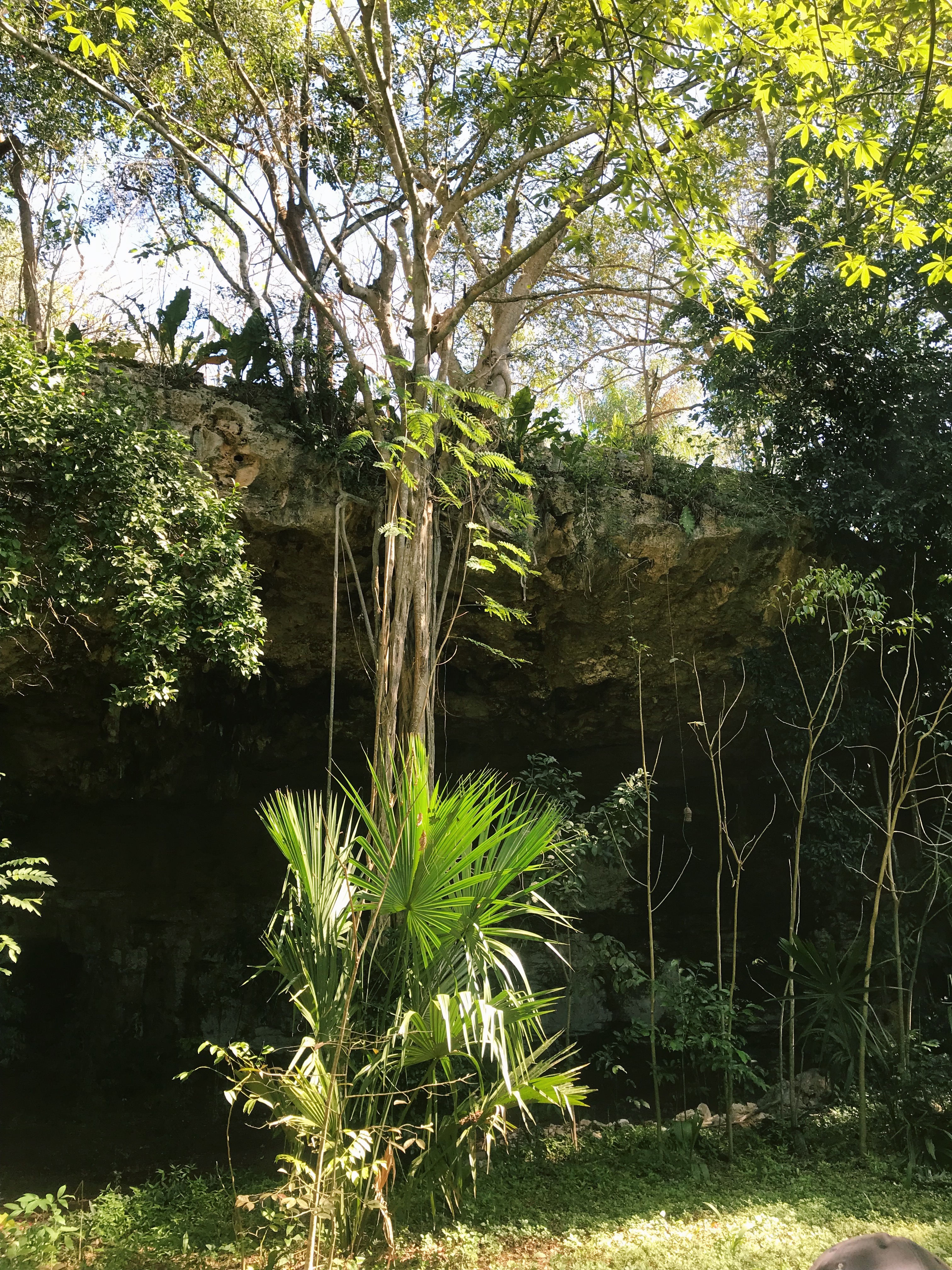
Example of plant life in dried cenote (notice how the roots reach down into the cenote and then into the ground)
There are 4 different species of bees that live in Xkopek, including xnuk, sakxik, limon kaab, and abeja k’ant’zak. Sakxik bees have wide wings and do not bite or sting. Due to the white coloration on their wings, they are also referred to as abejas de alas blancas. Limon kaab bees omit a chemical pheromone that smells like lemons. These bees cannot produce their own honey, so they steal from other hives. To protect their hives, each bee species have guard bees that stay at the entrances to ward off any invaders. The logo for Xkopek park is of an ancient Mayan glyph of a guard bee. The native Mayan bees are a lot smaller than I thought they would be and look more like flies than European bees. Mayan bees live in three main types of hives, those in the ground, those on the top underside of the cenote, and those in logs. The hives that are located in the cenote are not harvested for their honey (miel), instead, the workers harvest honey from bee boxes specifically designed to avoid destroying the hives during honey extraction. In ancient times, the Mayans would carve large holes in the logs of hives where they could extract the honey with their hands instead of breaking them open. The Mayans had great respect for bees and thought of them as a gift to the people from the gods. They had many medicinal uses for miel, including mixing it to create cough syrup. In addition to using the honey, the Mayans also use the pollen and propolis.
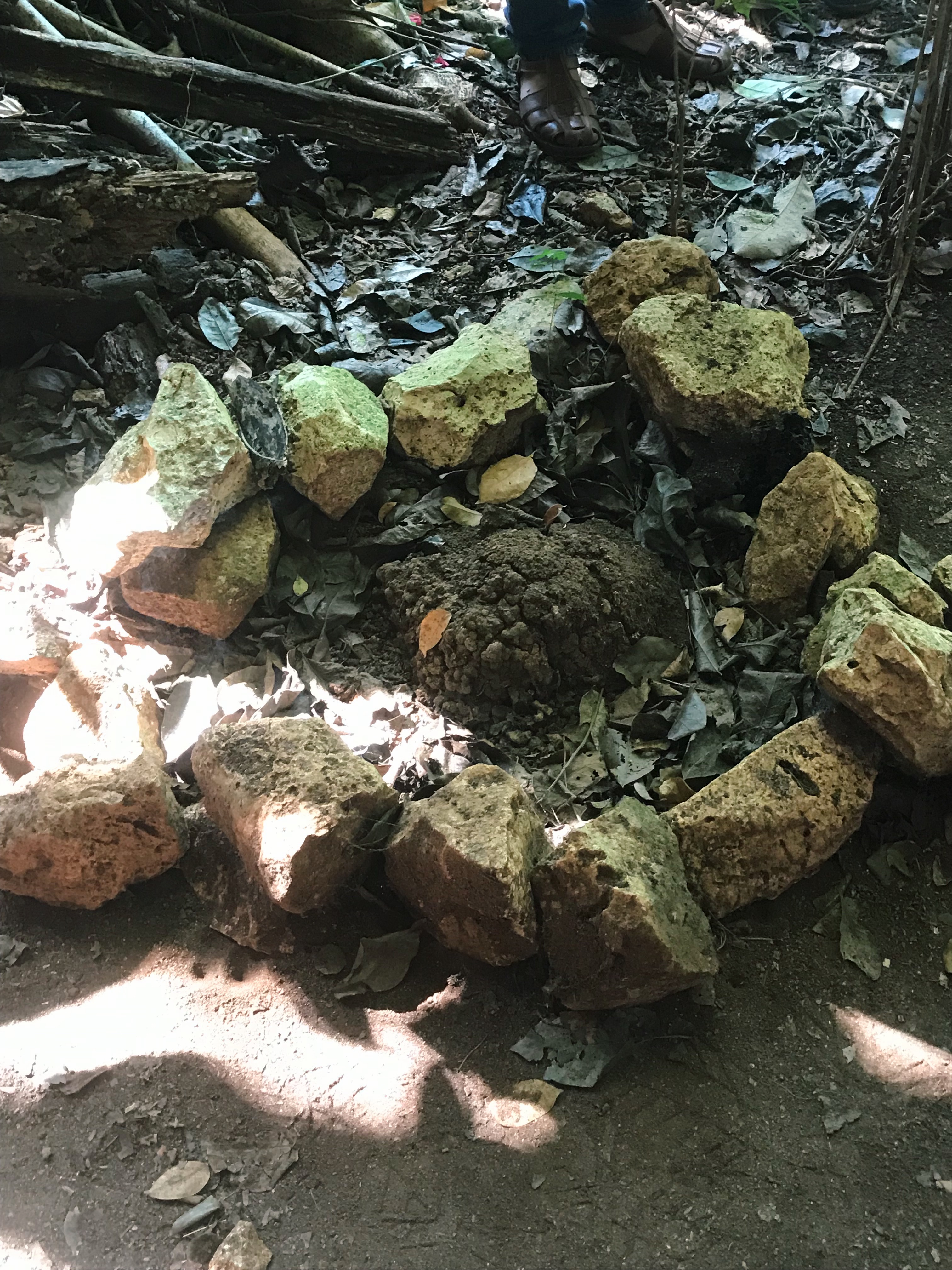
Beehive in the ground 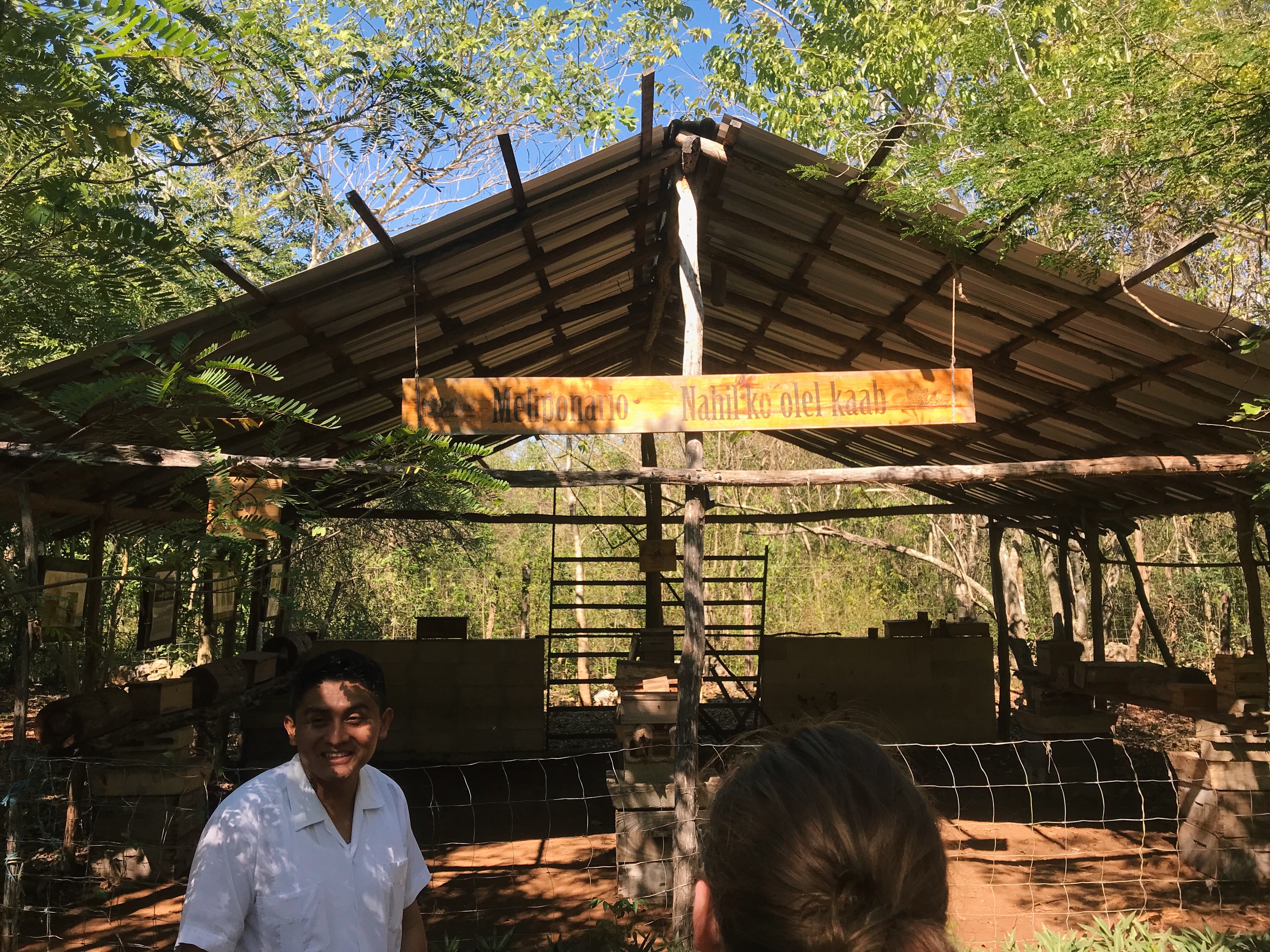
Little building area where they harvest the honey 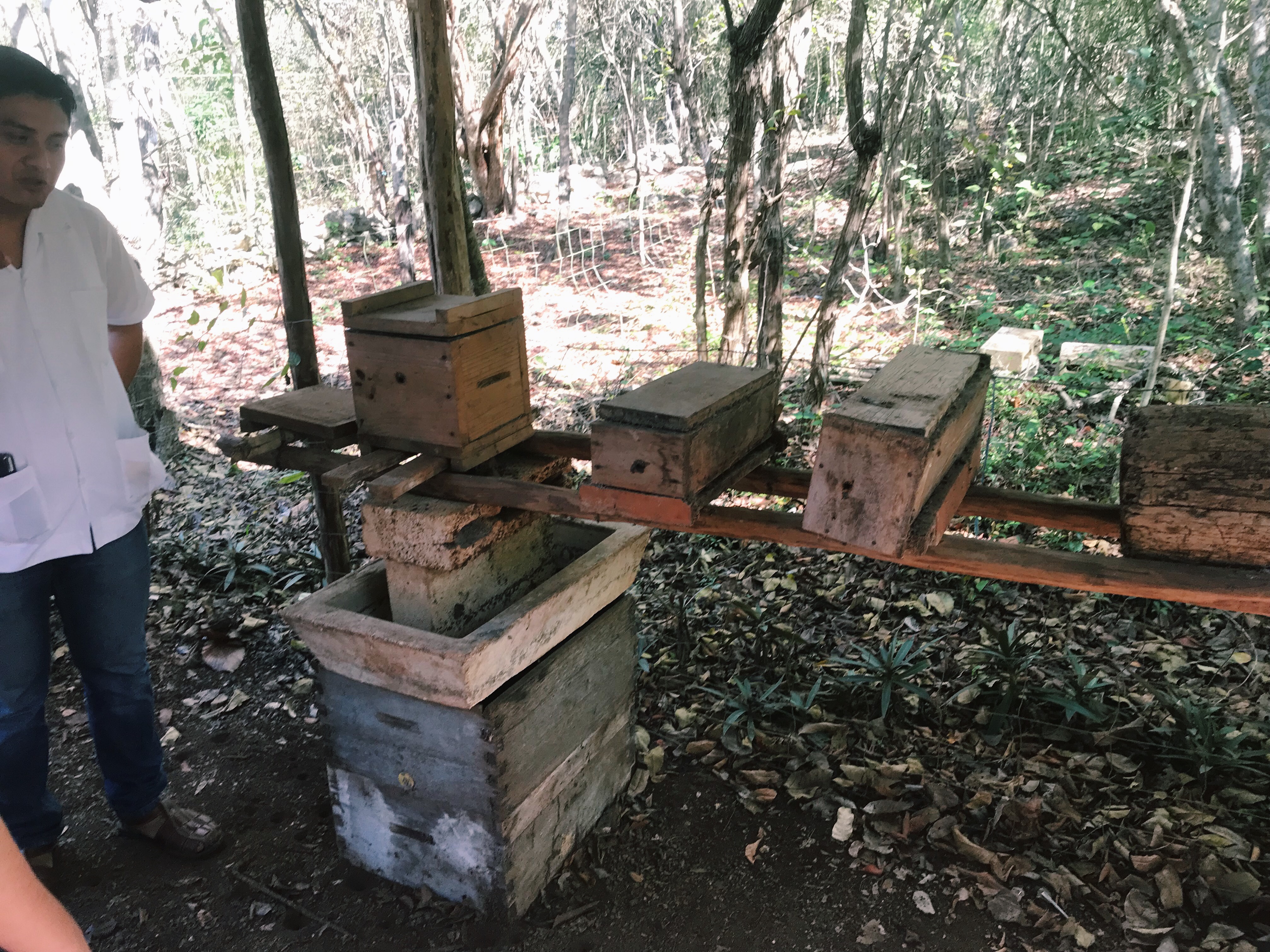
Bee boxes where honey is harvested 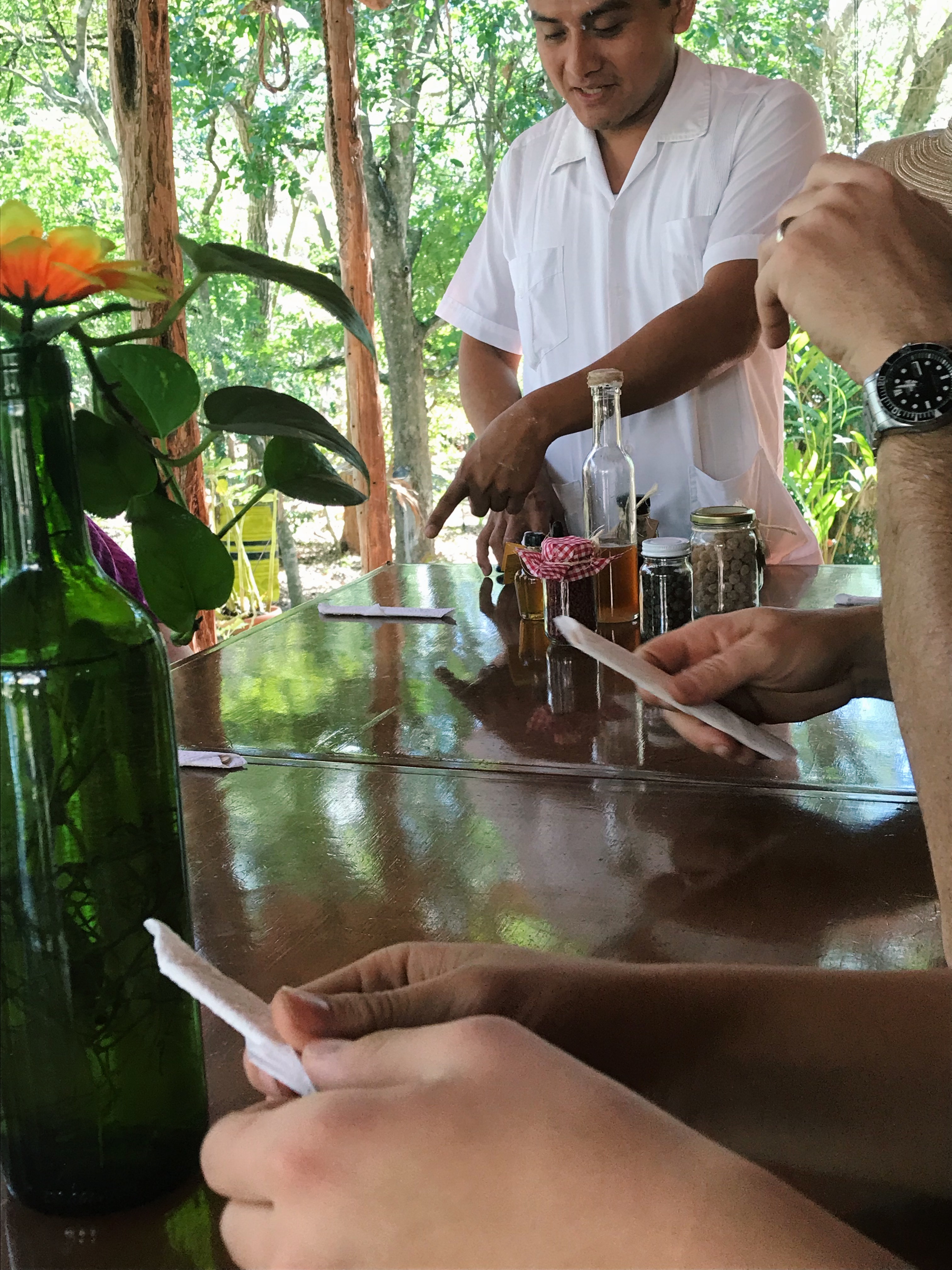
Jorge and the different honey products we were able to sample 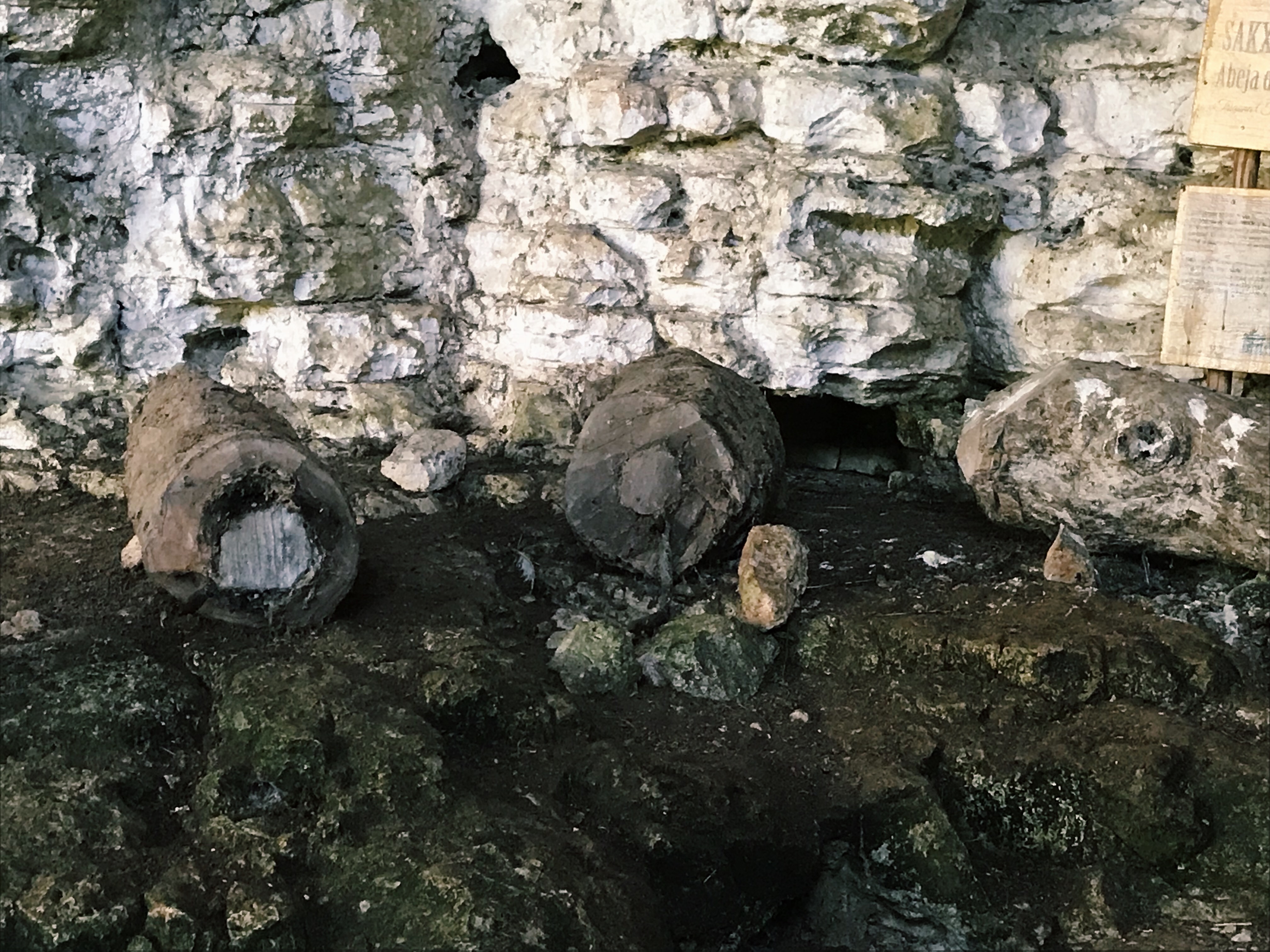
Beehives in logs
During our walk back to the hotel, we stopped in the plaza and visited una tienda de chocolate and a museum that explained the history of Valladolid through murals. We stopped to buy paletas (popsicles), and for dinner we ate sopes y panucho, which are similar to thick tortillas, with chicken, lettuce, and cebollas en vinagre. Today was also Jenah’s 20th birthday, so we went out to a restaurant and bar called Los Frappes to celebrate after dinner.
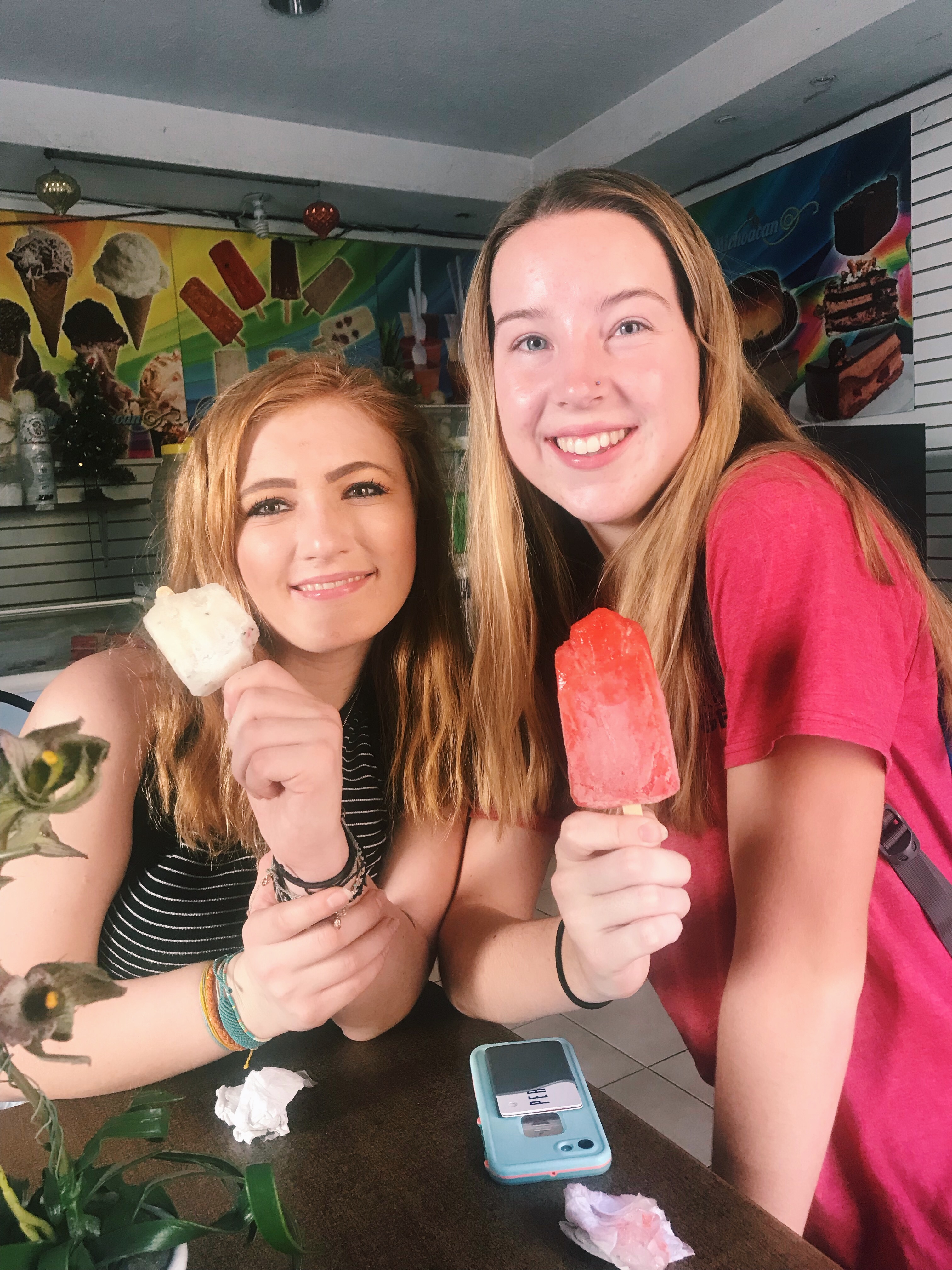
Jenah and I posing with the paletas 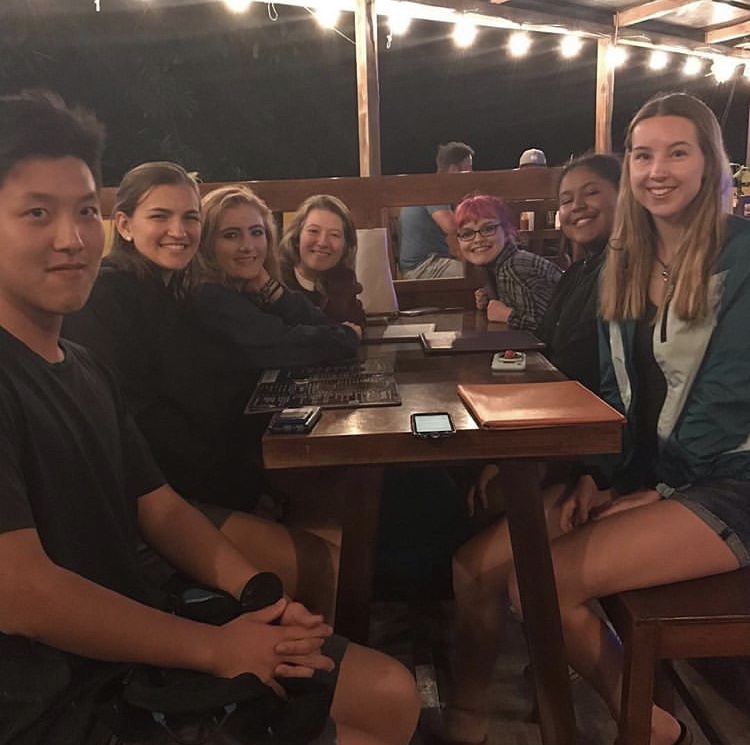
At Los Frappes to celebrate 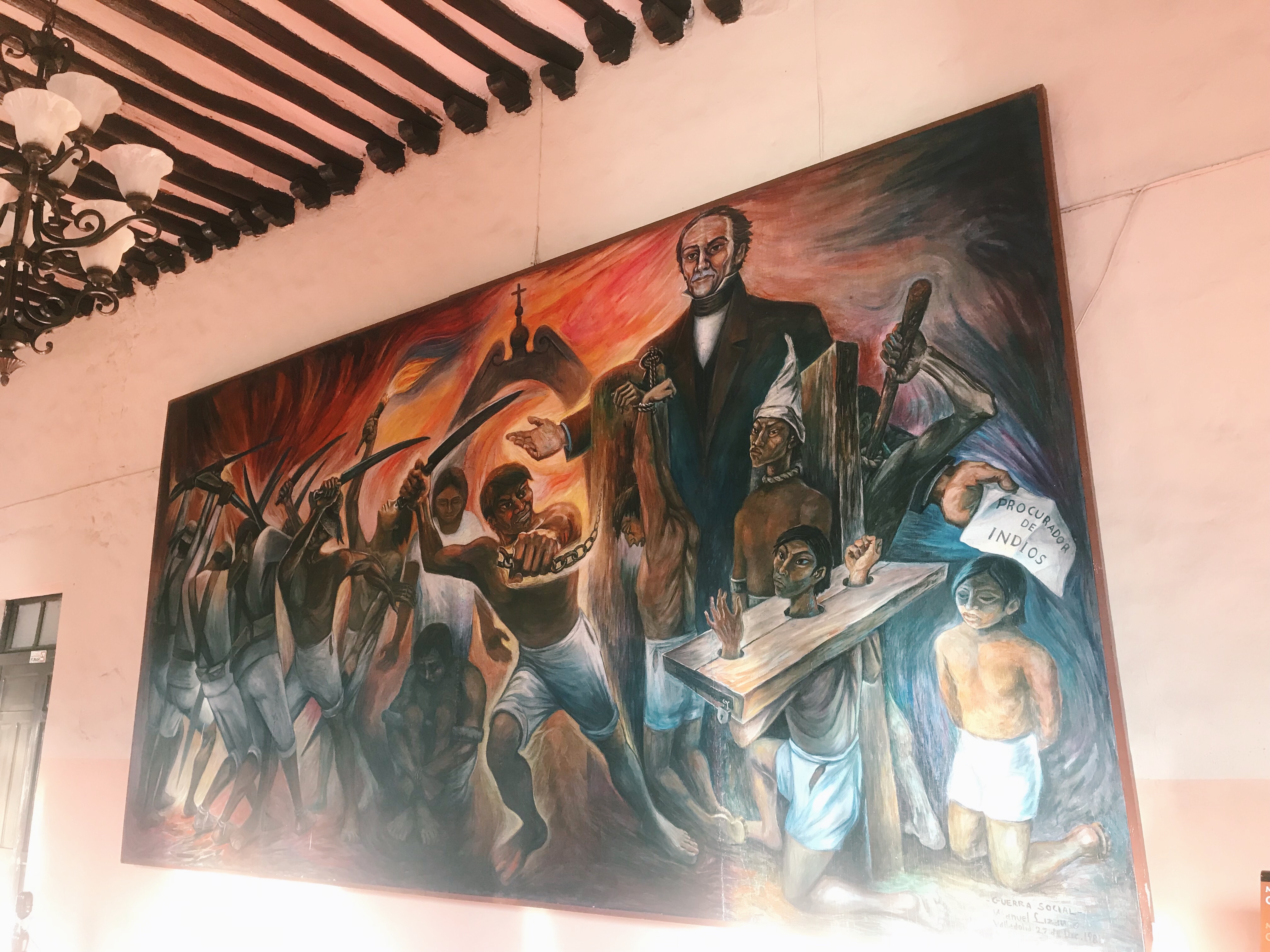
Mural depicting the enslavement of native peoples by the colonists
Today I learned a lot about how important bees were to the ancient Mayans and found it very interesting how they had such a close connection between nature and religion. The honey and honey products were thought to be sacred and the Mayans had so much respect for the bees that they have built entire temples for the god of bees and honey, Ah Muzen Cab. The Mayans were such a resourceful and advanced population, and it is devastating to think about how the colonists from Europe came in and destroyed their culture through exploitation and enslavement.
Jan. 11, 2019
 Explorando en Yucatán